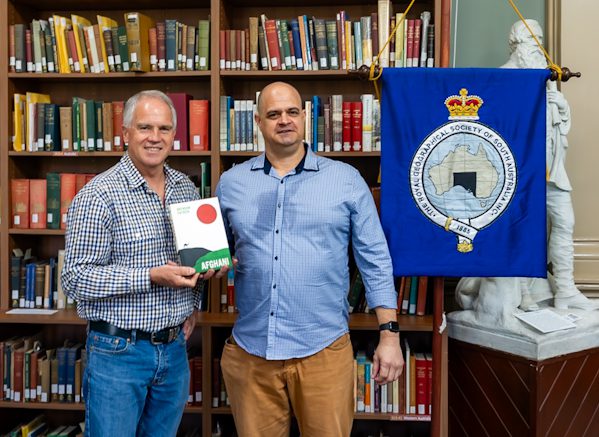
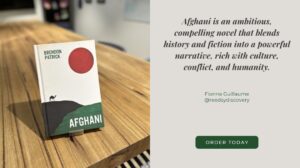
Brendon Patrick officially presents his novel: AFGHANI to the President of the RGSSA, Leigh Radford OAM
A descendant’s journey to reclaim erased history culminates in prestigious library recognition
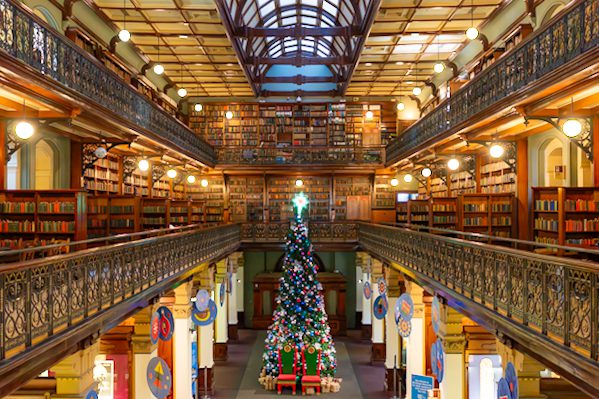
In a remarkable achievement that bridges personal heritage with national history, the novel AFGHANI was introduced into the Royal Geographical Society of South Australia’s special collections on 9 Dec 2025. This rare honour, which is typically reserved for scholarly works and historical documents. It represents a significant milestone not only for its author, Brendon Patrick, but for the recognition of Australia’s multicultural foundations.
From Silenced History to Special Collections
When I started this journey, I was just hoping people would read my story, the author said. Now it’s being preserved for generations to come!
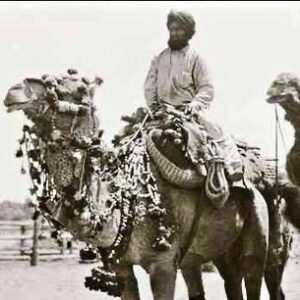
AFGHANI tells the compelling story of George Sher Gul, a 19th century Afghani cameleer whose contributions, under the employment of Henry Yorke Lyell Brown helped discover early Gold and Uranium deposits in South Australia. For the author, a direct descendant of these pioneering cameleers, the novel represents both a personal heritage journey and an effort to restore an important chapter of Australian history that has been largely erased from mainstream narratives.
The novel’s introduction into the special collection marks a poetic full circle moment. It’s now 150 years since Afghani cameleers first traversed Australia’s harsh interior, their story returns to South Australia, preserved among the very historical records that once overshadowed their contributions.
Self-Publishing as a Path to Historical Reclamation
The journey to publication wasn’t straightforward. Like many independent authors, the road involved countless late nights of writing, researching, editing, and marketing on a shoestring budget. The author also went so far as learn book promotion from YouTube tutorials, and wondering if anyone would ever care about these words, he’d poured his heart and soul into.
Yet this recognition from one of Australia’s most prestigious geographical and historical institutions proves that self-publishing can be a powerful vehicle for stories go untold. It further demonstrates that literary merit and historical significance can transcend traditional publishing pathways.
Reclaiming Australia’s Diverse Cultural Roots
The novel’s recognition comes at a time when Australia continues to grapple with questions of national identity and historical narrative. The Afghan cameleers, often called the Afghanis, were instrumental in opening up Australia’s interior through their knowledge of desert travel and their hardy camels, which were better suited to the harsh conditions than horses and bullocks.
Despite their crucial role in establishing supply lines, supporting exploration, and building infrastructure across the continent from the 1860s to the 1930s, their contributions have been systematically minimised in traditional Australian historical accounts.
Brendon Patrick’s AFGHANI serves as both historical fiction and cultural reclamation, offering readers a window into the lives of these pioneers while initiating important conversations about who we are as Australians and whose stories deserve to be remembered.
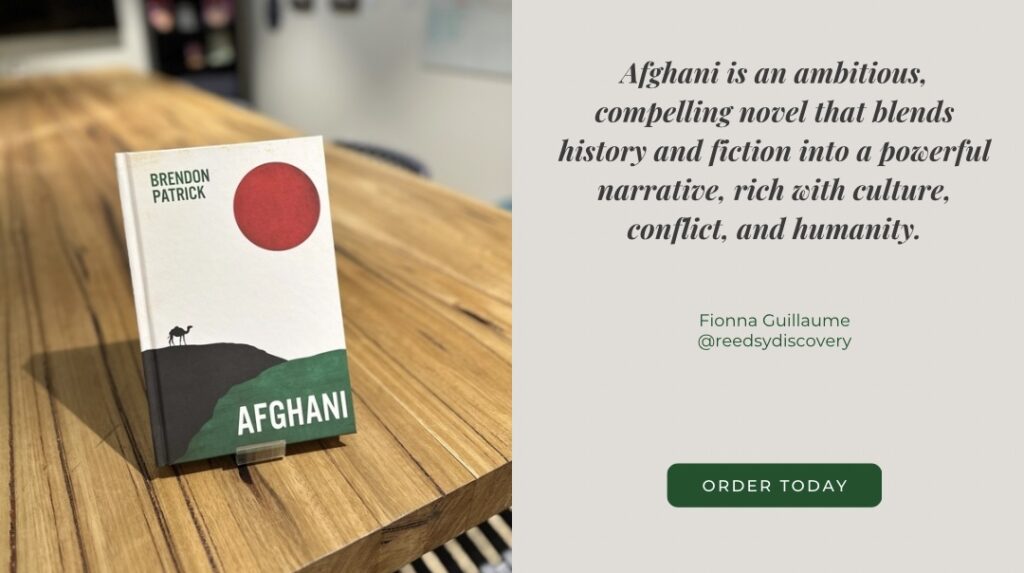
AFGHANI by Brendon Patrick is now available via Amazon Click Here to purchase
A Story Coming Full Circle
The Royal Geographical Society of South Australia’s decision to include AFGHANI in their special collections represents more than recognition of a single novel. It acknowledges the importance of diverse perspectives in understanding Australia’s complex history.
For the author, who personally delivered AFGHANI in Adelaide on 9 Dec 2025, this honour is the culmination of both a personal creative journey and a mission to ensure that the contributions of Afghani cameleers take their rightful place in Australia’s historical narrative.
The novel joins the special collections alongside works from literary legends and historical documents dating back to the 19th century, ensuring that this once-overlooked chapter of Australian history will be preserved and accessible to researchers, historians, and curious readers for generations to come.
Brendon Patrick resides in Brisbane QLD and is available for interviews or to provide review copies of AFGHANI. The novel offers a fresh perspective on Australia’s diverse cultural foundations and connects past with present in ways that start ongoing conversations about Australian identity.
Four years ago, my writing centred mostly around blog articles. Prior to that, it was all essays, work reports and writing for verbal briefings. Creative writing practice for me was uncharted territory.
But in the depths of Covid, after my fitness business was shut down, I went in search of a creative outlet.
Since then, I’ve written daily. Honed my skills. Tightened my prose and emerged from that daunting pandemic period with my own creative voice.
In this past year alone, I’ve completed, and self-published a professionally edited a debut novel. Currently I’m deep in the heart of a second work-in-progress.
I regularly blog. I’ve an upcoming essay that’s ready for submission into the Griffith Review (my fingers are firmly crossed), and I have a committed posting schedule on Substack.
However, my journey wasn’t always smooth sailing.
Creative writing can be intimidating stuff and frankly, it’s way harder than it looks!
My early work stunk.
My early drafts still stink.
The first chapters drag. There is no continuity, and the work is completely absent of any verifiable arcs.
And, to put it bluntly, my work is often a complete mess. But that is perfectly okay. And I will tell you why… shortly!
Writers, for the better part are avid readers, and we especially like to read in the genres we aspire to write in, because that’s where we pick up so much of our creative writing techniques. For me, this is very much how I started my creative writing journey.
Throughout this beginner’s guide, we’ll look at several approaches to start your creative writing practice. We’ll build some sustainable habits. And hopefully by the end we’ll overcome some of the obstacles that stop novices writers from completing their very first drafts.
So, whether you dream of writing short stories, novels, or poetry, these tested methods will help you grow your creative writing seeds into fully fledged works of art.
Why Creative Writing Feels So Hard at First
When you’re starting out, as a creative writer (just as you would with any other new hobby, or endeavours) it can often feel like leaping off a high cliff… without a parachute.
But what you’re actually standing on, here, is the edge of creativity. Which is a beautiful place to be.
A blank page might be staring back at you. That’s intimidating. But it also presents itself as a new opportunity. And while your mind could be filled with doubt, the possibilities here are endless. Right now is the perfect time to embrace the struggle.
The position isn’t unique to you. Hemingway experienced it. Jane Austin experienced it, and I bet even the most prolific writers like James Patterson have also experienced this universal experience. No matter the level.
The fear of not being good enough
Imposter syndrome. Writers face it daily. This ego-crippling self-doubt and monkey mind that needles every corner of our vulnerabilities is very real. It can completely halt progress.
But when this fear takes hold, and prevents you from achieving your writing goals, and causes you to be too scared to write it in the first place… know that it’s universal too.
Many new writers feel intimidated because they don’t believe they’re good enough, yet the paradox remains: you can’t become a better writer without ever writing.
So, be brave. Pick up the pen, typewriter, or whatever you’re choosing to create on. Shut out the noise and just focus one writing one decent sentence. Then another. And another etc etc.
Why your first drafts will always feel disappointing
I said in the intro that my first drafts stink.
But so does the second and the third.
I’m still in the process of discovery here, and I’m not afraid to fuck up the process.
In the back of my mind, I’m symbolically burning it anyway, but that is liberating for me, and I know that first drafts aren’t meant to be masterpieces. It’s all about me spilling my thoughts out onto a page.
No one will ever read these drafts. Not even me, because I’ve already torched it before I start the next draft. But the raw material is now out of my head. It’s been set free into the ether-verse and my final story (which I’m hearing deep inside) starts to emerge.
This is creative writing. And it’s re-writing. It’s raw. It’s unfiltered and as long as it moves something inside of you, then it does not matter one iota how that first draft reads. Just get it done, as slow, or as fast as you please. There is no timer on this, and truth of the matter is, no one is judging you (except for yourself) and there are no boundaries. Just get it done!
It’s an approach to openness, curiosity and a lack of preconceptions. Or, as Shunryu Suzuki wrote:
If your mind is empty… it is open to everything. There are many possibilities in the beginner’s mind, but in the expert’s mind, there are few.
When feeling stuck with your writing, cultivating this mindset creates space for curiosity, playfulness, and wonder.
You could even consider it childlike play because it frees you from expectations. It helps you approach your writing with fresh eyes. And, furthermore, it allows you to focus on the process rather than any of the outcomes.
Writing now becomes an adventure, and discovery in its purest form.
Building a Daily Creative Writing Practice
Consistent habits are undoubtedly what forms the backbone of any successful creative writing practice. Even the most brilliant creative ideas stay trapped in your mind… unless there’s a reliable system to bring them to life on the page.
Start small and stay consistent
The cornerstone of writing consistently is not about marathon sessions.
It is about showing up regularly.
So, begin with tiny, achievable goals.
Maybe that’s just 15 minutes daily or 300 words per session, and it might seem insignificant, they all stack up, because small efforts compound over time.
Additionally, once you begin writing, you will often want to continue beyond your initial target. But you can now officially call yourself a writer. And that brings about a monumental focus shift.
Choose a time that aligns with your natural energy patterns.
I’m an afternoon writer, but morning people should schedule writing sessions early, when your creativity is at its most heightened.
Simultaneously, select a frequency that works with your lifestyle. Daily writing works wonderfully for some, whilst others can thrive with dedicated weekend sessions.
Create a writing space that inspires you
Where you write significantly impacts how you write.
I write in my living room because I prefer the silence, and the solidarity. But sometimes I like to write in the local café too, because I still need some connectedness with people.
Whatever your workspace is, it should function as a sacred environment dedicated to creativity.
Primarily, we should be looking for a location that offers privacy and minimal foot traffic, allowing you to write, free from interruption.
If you like, personalise this space with elements that encourage both comfort and creativity. Maybe that’s artwork, travel mementos, or treasured books and pictures of those you love.
For me, this means sitting with my dogs. They’re little rat bags, but I couldn’t write without them by my side.
Write from personal experience
Perhaps the biggest inspiration, to writing is your own life experiences, but it also adds a layer of authenticity that readers instantly recognise.
My stories start out as simple ideas that have stemmed from life experience, but the true test is growth and stickability.
The best ideas don’t fade away. They are not easily forgotten, and often, they grow into a life of their own and become impossible to ignore. Readers also appreciate this genuine level of storytelling which reveals true vulnerability and honest emotion.
Let your characters speak for themselves
Dialogue in fiction is not real-life speech.
Literary dialogue is purposeful, and it is concise. It’s there to drive the story forward.
Each of your characters should have a distinctive voice that stands out, and this can be achieved through unique word choices, sentence structures, and speech patterns.
Additionally, dialogue should not be used for info dumping. Readers quickly recognise when characters are over-explaining things and will close your book.
Read widely and often
Immersing yourself in reading is essential practice for all writers.
As Roslyn Petelin notes:
Through reading, you unconsciously absorb crucial writing techniques including vocabulary expansion, effective dialogue, and structural elements.
Take breaks and live your life
Creative writing can take your mind down any number of rabbit holes. Some can be bright, and some can be dark. All of them can become all-consuming, so keeping a balance between writing and self-care is a practice that cannot be understated how you manage your wellbeing while writing will prove vital when you’re trying to sustain any creativity.
Engage in activities that recharge your creative writing batteries.
For me, that means yoga and gym exercises, but I also engage in photography which provides me a meditative counterpoint to my creative drive, but it also serves to freshen up that side of my brain!
Celebrate small wins
Many writers keep a close track of their word counts.
I think this is a great idea. If used wisely. But simply acknowledging small achievements will boost your motivation levels and self-confidence.
Celebrate completing each chapter and provide yourself with some positive feedback.
Share your work with a writing group. Because not only does this enhance your self-esteem, it also helps you to remain accountable and moving towards your goals.
Each victory, regardless of size, builds resilience for future challenges.
Conclusion
Creative writing undoubtedly presents new challenges for the beginner, yet the journey becomes remarkably fulfilling when approached with patience and mindfulness.
Fear often paralyses us, no matter the endeavor, but me must also view the blank page as a fresh opportunity.
Accept that the first drafts will and should always be a dog’s breakfast. Learn to wear that as your badge of honour.
Write without judgement. Do not chase perfection and get comfortable with embracing this messy reality as your gateway to genuine creativity.
Build daily habits. They serve as the foundation for writing success.
Start small with achievable goals. Craft an inspiring workspace. Track your progress without harsh self-judgement, and understand that consistent efforts compound over time, and will emanate throughout your skills with a new sense of confidence.
Simple, yet practical techniques are what truly elevates your creative writing practice, but drawing from personal experiences will add an authenticity which readers will connect with.
And finally, the path to becoming a writer isn’t about immediate perfection but rather consistent growth. Each word you write brings you closer to your creative goals. Celebrate the small victories. Maintain your writing streaks. And show up everyday.
At the end of all that, know that your writing journey belongs uniquely to you. There will be challenges but also rewards.
All that’s left to do is, choose your poison, then write.
Australia’s 150-Year Relationship with Afghan Cameleers in Australia
Australia and Afghanistan are two countries separated by vast oceans and disparate cultures. But each country also shares a profound yet overlooked historical connection which spans more than 150 years since the first Afghan Cameleers arrived in Australia.
This relationship didn’t begin via diplomatic exchanges or modern, global trade agreements. Instead, it began with the arrival of a small group of men and their camels on Australian shores in the 1860s.
These Afghani cameleers, as they were collectively known, arrived from across Central Asia, and would become instrumental in opening up Australia’s harsh interior by setting up trade routes, and contributing to nation-building projects that transformed the country.
Fast forward to 25 years ago, and Australian soldiers, like me found ourselves deployed to Afghanistan. It was a poignant twist of historical irony where Australians were now fighting in the ancestral homeland of people who had helped build their nation generations earlier.
Today I would like to welcome you a circular journey across three centuries.
I’d also add that this is not just a fascinating historical footnote, but a complex relationship that continues to affect both countries today.
The Arrival: Afghani Cameleers and Their Journey to Australia
The story begins in 1860, when Australia, grappling with the challenges of exploring and developing its vast interior, turned to an unconventional solution.
The harsh, arid conditions of the Australian outback need no introduction; however, even to the toughest of explorers, this region had proven far too demanding for European pack animals like horses and bullocks.
The solution came in the form of camels.
But it was also their skilled handlers—who shepherded these desert-adapted animals—that became pivotal in the early development of Australia, as the country welcomed in the 20th century.
The first officially recorded shipment of camels and their handlers arrived aboard the ship Undaunted at Port Melbourne in June 1860. This initial group of approximately 24 cameleers and their 24 camels would soon be followed by many more.
By the early 20th century, thousands of camels and hundreds of cameleers had made the journey to Australia, fundamentally changing the way the continent’s interior was traversed and developed.
Not Just Afghan: The Diverse Origins of Australia’s Afghani Cameleers
Despite being collectively known as Afghan(i), these cameleers came from a diverse range of backgrounds, and while many did indeed hail from regions of present-day Afghanistan, others came from Baluchistan (now part of Pakistan), the Punjab, Kashmir, Rajasthan, Egypt, Turkey, and Persia (Iran).
They brought with them not just their expertise with camels, but also diverse cultural practices, languages, and religious traditions. These men were primarily Islamic, but the cameleer crews also included Sikh and Hindu handlers.
The term Afghani became a convenient but imprecise label used by colonial authorities and the public, but this over-simplification of their identity would have significant consequences for how these pioneers were perceived, treated, and remembered in Australian history.
Nation Builders: The Critical Role of Afghani Cameleers in Australia’s Development
The impact which the Afghani cameleers—like my Great, great Grandfather George Sher Gul (who featured in my debut novel: Afghani)—had on Australian exploration and the country’s development cannot be overstated, because prior to their arrival, the harsh conditions of the interior had stymied many explorations attempts and made regular supply routes impossible to safely cross.
But the camels, with their ability to carry heavy loads (up to 600 kilograms), and to travel long distances without water, while negotiating arduous terrain, revolutionised inland transport.
Throughout their time, the Afghani Cameleers took up vital roles in many important expeditions, including:
Burke and Wills expedition (though this ended tragically, it highlighted the potential of camels)
(Thomas) Elder Expedition of 1891-1892
Calvert Expedition of 1896
Carnegie Expedition of 1896-1897
Beyond exploration, Afghani cameleers set up crucial supply lines to remote communities, mines, and pastoral stations.
In many cases, these camel trains were the only reliable connection between isolated outback settlements and coastal cities.
They transported everything from food and water to construction materials, mail, and even prefabricated buildings.
Infrastructure Projects: Building the Foundations of Modern Australia
Afghani cameleers contributed significantly to major infrastructure projects that would shape Australia’s development for generations to come, including:
The Overland Telegraph Line (1870-1872)
This monumental project connected Darwin to Adelaide with over 3,000 kilometres of telegraph wire, linking Australia to the rest of the world. Cameleers transported materials across difficult terrain where other forms of transport failed, carrying telegraph poles, wire, and other equipment essential to the project’s completion.
The Ghan Railway
Perhaps the most enduring symbol of the Afghani contribution to Australia is The Ghan railway.
Named in honour of the cameleers (though the name wasn’t officially adopted until 1929), this railway line originally ran from Port Augusta to Alice Springs. The Afghani Cameleers were crucial during its construction, transporting materials and supplies to work crews along the route.
Today’s modern Ghan railway, which now extends all the way to Darwin, stands as a physical monument to the Afghani contribution to Australia’s development.
Mining and Resource Development
The Australian gold rushes and later mining booms relied heavily on camel transport.
Afghani cameleers delivered equipment and supplies to remote mining sites and transported the extracted resources back to processing facilities and ports. They were particularly vital to the Western Australian goldfields, where water was scarce and traditional transport methods were often ineffective.
Life in a New Land: Culture, Community, and Discrimination
The Afghani cameleers brought their Islamic faith with them to Australia and set up the continent’s first mosques and prayer rooms.
The earliest of these was a simple structure built in Hergott Springs (now Marree) in 1861. More substantial mosques followed in:
Adelaide (1888)
Broken Hill (1891)
Perth (Little Syria, 1904)
Coolgardie (1896)
These mosques became important community centres for Muslims in Australia, places where faith could be practiced and their cultural ties maintained. They are the beginning of Islamic history in Australia, predating larger waves of Muslim immigration by decades.
Ghantowns: Communities and Social Life
As their numbers grew, Afghani cameleers set up their own communities, often referred to as Ghantowns, on the outskirts of established settlements.
These neighbourhoods typically included a mosque, specialised shops, and residencies.
Major Ghantowns developed in Marree, Broken Hill, Coolgardie, and Port Augusta.
Social life in these communities revolved around religious observances, traditional customs, and the camel business. However, the demographic reality—as most cameleers either arrived in Australia as single men or were forced to leave their families behind—created significant challenges. This was especially because colonial authorities rarely permitted cameleers to bring their wives or families to Australia, leading to profound isolation for many cameleers.
Some cameleers married or formed relationships with Aboriginal or European women, creating multicultural families, which ultimately created new, but long-lasting cultural connections, like the descendants of the Australian Muslim Cameleers.
These relationships were met with significant social disapproval and legal obstacles, at the time, but nonetheless they still formed an important part of Australia’s developing multicultural identity.
White Australia Policy and Decline
The implementation of the Immigration Restriction Act of 1901 (the foundation of the White Australia Policy) dealt a severe blow to cameleer communities and the policy often restricted non-European immigration and made it extremely difficult for existing cameleers to bring family members to Australia or to return to Australia if they traveled home to visit relatives.
Additionally, because of technological changes, and particularly the introduction of motorised transport in the early 20th century, the demand for camel transportation fell into a significant decline.
By the 1920s, the cameleer industry had all but disappeared, and many of the Afghani either returned to their homelands or moved to coastal cities seeking other employment.
Yet despite these challenges, some cameleers also adapted by transitioning to new businesses or finding niches where camels remained useful. Others proved themselves of worth in different industries, including retail businesses that served remote communities.
Legacy in the Landscape: Enduring Marks on Australia
The Afghani presence has left permanent marks on the Australian landscape through many place names and landmarks, including:
The Ghan Railway (named after the Afghan cameleers)
Ghantown Creek near Marree
Afghan Hill in Coolgardie
Mosque Hill in Cloncurry
Numerous Afghani Wells and Camel Wells across the outback
These toponyms serve as permanent reminders of the Afghani contribution to Australian development and history.
Architectural and Cultural Heritage
Several mosques built by Afghani cameleers still stand today, including the heritage-listed Marree Mosque.
Museums in former cameleer centres like Broken Hill and Alice Springs preserve artefacts, photographs, and stories from this era. The Afghani architecture of these mosques, which featured distinctive domes, minarets, and decorative elements all introduced new aesthetic influences on the Australian built environment.
Biological Legacy: Australia’s Feral Camel Population
When the camel transport industry declined, many camels were released into the wild—because their handlers refused to kill them.
These animals thrived in the Australian outback, creating what is now the world’s largest feral camel population—now estimated at over 1 million feral camels.
This population, while presenting environmental management challenges, stands as a living reminder of the cameleer era.
From Historical Contribution to Military Engagement: The Modern Era
For many decades, the contribution of Afghani cameleers to Australian development went overlooked in mainstream historical narratives. However, beginning in the 1980s, historians, community groups, and descendants of cameleers began working to rectify this omission.
Important milestones in this recognition include:
The establishment of the Ghan Preservation Society in Marree
Publication of scholarly works on cameleer history, including Australia’s Forgotten Pioneers by Christine Stevens
Creation of museum exhibits dedicated to cameleer contributions
Formal recognition through heritage listings of cameleer sites
Inclusion of cameleer history in educational curricula
This growing recognition of the Afghani contribution to Australian history provides vital context for understanding Australia’s later military involvement in Afghanistan.
Australia’s Military Engagement in Afghanistan (2001-2021)
In a profound historical irony, Australian forces were deployed to Afghanistan, as a response the September 11, 2001, terrorist attacks and because the Taliban harboured Osama Bin Laden.
Operation Slipper, Australia’s military contribution to the International Security Assistance Force (ISAF), represented the nation’s longest war, lasting from 2001 to 2021.
During this 20-year engagement:
Over 39,000 Australian Defence Force personnel served in Afghanistan
41 Australian soldiers lost their lives
Hundreds more were physically wounded
Thousands continue to deal with psychological impacts, including PTSD
Over 1600 soldiers, sailors and airmen have taken their own lives as a direct result of war wounds.
The Australian mission evolved over time, shifting from direct combat operations against Taliban and Al-Qaeda forces to training and capacity-building with the Afghan National Army and Police. Australian Special Forces, including the Special Air Service Regiment (SASR) and Commandos, played particularly significant roles in the conflict.
Cultural Understanding and Historical Parallels
The historical connection between Australia and Afghanistan provided a unique perspective for some Australian military personnel.
Soldiers, like me who were aware of the cameleer history sometimes found it offered valuable context for understanding the cultural landscape we were encountering.
Some military units even incorporated historical knowledge of the early Afghan Australian connection into their cultural awareness training.
For Afghan Australians, including descendants of the original cameleers (I’m potentially the only one who served as a soldier in Afghanistan), as well as more recent immigrants, the Australia’s military involvement in Afghanistan created complex emotions. However, many of us supported the efforts to combat extremism while maintaining a deep concern for the civilian impacts and hoping for a stable, peaceful future for Afghanistan.
Contemporary Connections: The Afghan Australian Community Today
The descendants of Afghani cameleers have integrated into contemporary Australian society while supporting the connections to their heritage.
Family names like Akbar, Khan, and Mahomet continue the legacy of these pioneers.
Organisations such as the Afghani Cameleer Heritage Association work to preserve and promote awareness of this history.
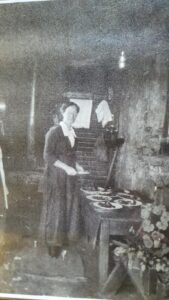
My Great, Great Grandmother, Lucy Sher Gul, who married Cameleer, George Sher Gul
Recent Immigration and Refugee Resettlement
Afghanistan has been a significant source of refugees to Australia, particularly following the Soviet invasion (1979), the Taliban’s rise to power (1990s), and the more recent instability.
The Afghan Australian community now numbers over 100,000 people and makes important contributions to Australian society in fields including business, education, arts, and public service.
Cultural Exchange and Understanding
Cultural exchanges between Australia and Afghanistan have increased in recent decades, including:
Educational partnerships between universities
Humanitarian and development projects
Sporting connections, including cricket diplomacy
Arts and cultural exhibitions
Business and trade relationships
These exchanges build upon the historical connection set up by the cameleers and show how the relationship between the two nations continues to evolve.
Conclusion: A Relationship Comes Full Circle
The 150-year relationship between Australia and Afghanistan is a remarkable historical narrative of connection, contribution, and complexity. From the arrival of those first cameleers who helped build a nation to the deployment of Australian troops in Afghanistan, the two countries have been linked in ways that transcend geopolitics.
As Australia moves on from its operations in Afghanistan and the Afghan people continue their struggle for stability and self-determination, the historical connections between these two nations provide valuable perspective. The legacy of the Afghani cameleers reminds us that cultural exchange and migration have shaped Australia’s development in significant ways, creating connections that last for generations.
Understanding this shared history offers opportunities for deeper cultural understanding, recognition of historical contributions, and perhaps most importantly, a foundation for future relationship-building based on mutual respect and appreciation of our intertwined past.
Australia presents people with nothing short of a pristine environment for both creativity and discovery. So… the fact that the country keeps some of the most vibrant voices going transcends pure luck. The good news is, there’ll be plenty new Australian books to read in 2025.
Yep, we’ve been keeping those good juices flowing and Australian publishers have been busy pumping out one of our most impressive collections to date.
And it’s true, each year promises to display plenty of new works, from both the endearing and the emerging talents who are more than happy to bring their fresh voices to our bookshelves.
Now, with that said, I’ve selected 10 Australian books, from 2025 that merits your attention.
Each read arrives in the forms which range from sophisticated crime fiction, etc
So… without any further fluffing about, let’s hop straight to it, and… hopefully by the end you’ll consider adding some of titles to your reading list.
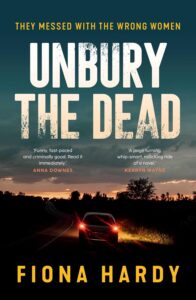
Fiona Hardy’s crime fiction debut introduces readers to two best friends Teddy and Alice.
They’re two fixers, of course, and they’ve appropriated themselves to navigating Melbourne’s criminal underworld. But, to get the job done, they’ll need to use their own internal intelligence, along with… nothing short of grit and determination.
To get the story rolling, Alice takes up a gig driving one of Australia’s wealthiest men to his final resting place—somewhere along the Victorian Coast— before news of his death hits the media.
Then, while all this is happening, Teddy goes digging through Melbourne’s suburbs, searching for a missing teenager.
But, just as all good writers do, Hardy ensures that their separate gigs cross paths.
And so… with all that in the meat works, and only after a startling revelation, they end up opposing their affluent employers.
Critics have described Unbury the Dead as a masterful blend of ever-changing crime and Australian noir, balancing grit and dry humour with effortless skill.
With that said, Hardy’s novel is no Pulp trash, and she employs the narrative—skilfully—to contrast the lives of the everyday battler against the well-to-do among Australia’s elite.
The story explores themes of friendship, morality, and justice via Teddy and Alice’s enduring relationship.
Readers who dig an unconventional protagonist will appreciate this fresh approach to crime fiction, but you will also find that there’s much to admire in this superbly fresh and pacey high-stakes drama.
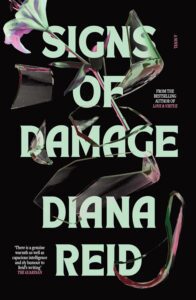
Diana Reid’s third novel—which bullocked its way onto bookstore shelves back in March 2025–promises to be a psychological thriller for the ages.
The narrative follows thirteen-year-old Cass.
Cass disappears during a family holiday in France, but then she’s discovered only a matter of hours later… in an old Icehouse no less without a mark or scratch on her body.
Now dig this… sixteen years later, Cass collapses in a seizure… at a family funeral of all the places.
This is a storyline which bounces between 2008 and 2024, and all the while it’s slowly and methodically uncovering all these hidden secrets which connect the Icehouse incident with the collapse, sixteen years after the fact.
Reid claims her latest drop is nothing more than a summer noir. However, readers will quickly notice how the narrative is all to do with the myriads of ways in which violence disrupts the status quo of life.
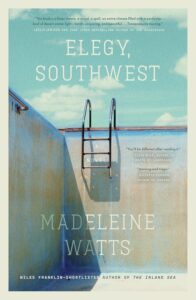
Madeleine Watts’: Elegy, Southwest hits the shelves as nothing short of a poignant exploration of love, grief, and environmental decline.
Set against a devastating Camp Fire, the novel follows married couple Eloise and Lewis on a journey across America’s Southwest… all while wildfires are consuming the state of California.
Lewis is busy processing his mother’s recent death, and Eloise scratches her own itch by researching the diminishing Colorado River… for a dissertation she’s working on.
Now it’s no coincidence to Eloise, but she suspects there might be a bun in her oven. But while all this is going on, she also begins seeing her husband’s own mental health decline.
And what sets this narrative apart, I suppose is its perspective.
Told Eloise’s eyes, the reader sees firsthand how Eloise is addressing Lewis—which is quite directly, but it places an impetus upon a specific point in time, which in their case is after an unnamed catastrophe forcibly separates them.
Ultimately… what Watts has crafted here is a tragic love story—albeit one with an intelligent and profound spin of the way we’re currently living alongside our own environments’ breakdown.
The result is an authentic work of self exploration.
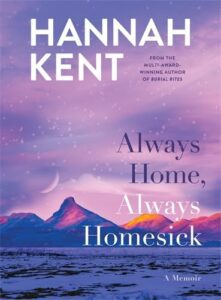
Hannah Kent is already a bestselling author… thanks to Burial Rites, so it should come as no surprise she’s hitting us with another banger’. However, in this climb up the literary mountain, she has ventured into the echelons of non-fiction.
And what readers will find, encapsulated within the book bindings is a captivating memoir about belonging… across multiple continents.
Always Home, Always Homesick finds its stride across three book sections.
The first is Kent’s own arrival… in Iceland as a seventeen-year-old exchange student, way back in 2003–when the planet was a little different.
The middle explores her return, some years later, to the very same country—albeit on a very planet now—and it’s here where she goes on a bit of a research journey to learn a little about Agnes Magnúsdóttir—the last woman executed in Iceland.
And consequently, or maybe not so consequentially, we all get to learn how Agnes became the foundation for Kent’s acclaimed novel.
The final part covers her most recent visit to Agnes’ execution site, where she now discovers a set of plaques that display lines from the aforementioned novel.
But what Kent’s achieved here is an elegantly crafted memoir that explores heimþrá (longing for home) and how one can belong simultaneously to two distinct places.
Kent also delves into Iceland’s literary culture and the longstanding traditions like Jólabókaflóð—the Christmas Eve book-giving custom that’s gained international recognition.
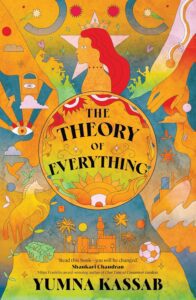
Yumna Kassab’s fifth book: The Theory of Everything promised to transcend literary conventions when it arrived back in March. And I reckon it well and truly hit this one out of the park.
But critics are already doing what critics love to do, and that’s assign some labels. And in this case, they’re describing The Theory of Everything as a fictional theory (for whatever that’s intended to mean), and as a rant or… a manifesto that defies conventional.
The book is effectively an anthology of five mini-novels or post-novels, all with their own unique titles: Game, Gender, Modern, Silver, and Absurd.
It opens with a powerfully violent allegory as it follows Ibrahim (an elite footballer), Lucille/Nour (a film star), and Jamal as they navigate questions surrounding and abounding in identity and belonging.
This work will appeal to readers who appreciate the intellectual challenge of literary innovation.
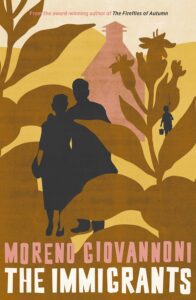
Moreno Giovannoni’s: The Immigrants: Fabula Mirabilis combines both fiction and memoir to bring home an authentic story of Italian migration… in post-WWII Australia, and the narrative begins with a young Italian migrant’s death in a petrol drum explosion… on a tobacco farm no less.
The focus then shifts to Ugo and Morena Giovannoni who are each working in tobacco fields north of Melbourne but end insight into their childhood via transcribed interviews where we learn about, courtship in Italy, and the challenges of immigrant life in Australian.
Giovannoni began writing in his sixties after a distinguished career as a translator and this work digs in deep to examine the overlooked costs of migration. The difficult agricultural conditions. Cultural discrimination, and the profound homesickness that goes along with it… if only to display his character’s resilience throughout a sense of displacement.
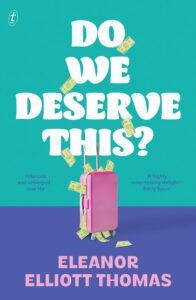
Do we deserve this… well bloody oath we do, and in Eleanor Elliott Thomas’s nuanced family drama we get a deep dive into questions of fortune, privilege, and dessert when a multimillion-dollar lottery ticket gets dropped into the melting pot.
Bean Halloway describes herself as the lone nobody in a family of ambitious somebodies, but she goes off and buys this lottery ticket, which was… intended to be for her glamorous mother Nina.
But an accident leaves Nina in a coma, and she never ends up receiving said ticket.
So, Bean and her siblings—which includes a dramatic pop star and a meticulous lawyer—decide to keep the ticket until their mother regains consciousness.
The situation gets a little tricky when an old romantic interest enters the frame.
Enter the gambling debt.
A vindictive former partner.
And the family secrets which are always waiting to appear.
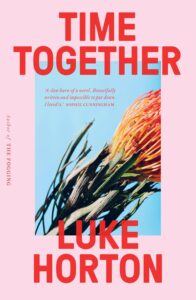
Luke Horton’s: Time Together is nothing short of a refined examination into the long-term friendship. But in between the covers, there’s so much more… such as midlife reflections…all brought to the reader through the lens of a beach holiday reunion.
Sound familiar? Well, it isn’t
And picture this if you will: a group of friends… all in their forties… meeting at Phil’s parents’ beach house—after his mother’s passing.
The gathering includes pragmatic Jo and her younger, and undeniably politically minded husband.
There’s high-strung Bella, who is joined by her partner Tim.
And then there’s the recently single Annie.
All have their children in-tow… including a pre-adolescent girl who mirrors most aspects of her mother’s temperament.
What Horton creates here is relatable, but will a restorative retreat… which gradually descends into a revelation of longstanding tensions challenge everyone’s long-held beliefs?
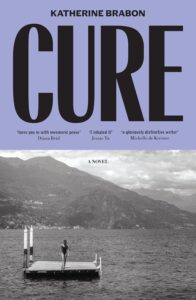
Katherine Brabon’s fourth novel hit the shelves via an insightful, if not exploratory perspective on chronic illness.
And when we peek deep inside of what that could mean, we soon find Vera and her teenage daughter Thea—who both share the same medical condition.
Each resolve to seek therapeutic intervention—in Italy.
But it’s here where the narrative veers off the predicted path and we begin to re-witness Vera’s past adolescent journey to Italy… all neatly juxtaposed against her daughter’s parallel experiences—all these years later.
But while Thea records her observations in a journal, Vera finds her own community in online forums where she can anonymously share her experiences.
Cure deeply complements Brabon’s earlier novel: Body Friend.
And while each novel examines women’s experiences with autoimmune conditions (circumstances Brabon understands personally) the atmospheric prose and shifting narrative in Cure moves to investigate the stories we construct about our own, individual wellness, healing, and memory—
The ultimatum lands in questioning whether narratives require factual accuracy to merit belief… or so the story goes!
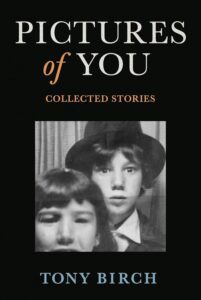
Our final choice showcases Pictures of You: Collected Stories by Tony Birch
This is, without any doubt the most comprehensive anthology which represents Birch’s twenty-year career.
Each narrative, and the overarching narratives capture extraordinary moments within ordinary lives… all to create an unexpected connection between strangers.
But it’s Birch’s commitment to marginalised communities which will captivate readers the most—a fact that will become clear throughout this collection. Yet… all in the same breath, the said commitment is equally complemented by his advocacy for environmental justices.
Pictures of You won’t last long on your TBR list, and because Birch’s writing moves seamlessly between poignant, melancholic, and the humorously profound moments, it demands to be read.
As a respected Aboriginal Australian author, academic, and activist, Birch made history as the first Indigenous recipient of the prestigious Patrick White Award in 2017. His stories continue his significant examination of colonial oppression and intergenerational trauma while illuminating humanity within overlooked lives.
The Evolution of Australian Literature
Australian literature continues its impressive run in 2025, and what this selection illustrates is our remarkable range of narrative approaches from a variety Australian writers.
It contains stories of sophisticated crime fiction to experimental literary forms and even the deeply psychological.
But what all ten titles represent most is a carefully curated sample of Australia’s vibrant literary output.
And, whether you’re into psychological suspense, climate fiction, or just a good old family narrative—with some emotional depth—then this collection aims to offer a little bit of something for everyone.
[if you’re interested in reading some of my work, then please check out AFGHANI. It’s available at all major online retailers]
Hello book lovers, readers, and even writers alike. Australian literature has been pumping out some absolute thumpers… world beaters in fact, for more than a century now. And with that said, it might be time for you to give the following 10 must read Australian books from 2025 a look.
If not, you’re missing out on some absolute ripper reads, and every single book on this list deserves a spot on any Australian bookshelf.
That said, I’ve gone and handpicked 10 must read Australian books for 2025.
These splendid tomes not only showcase our country’s best yarn-spinning talent. But they’ve also gone on to become award-winning classics. In their own rights. And transformed, over time into modern gems that have punched well above their weight class in the literary world.
Further to that, these books capture what makes the Australian experience so unique while tackling universal themes that’ll truly nail the essence of this country, and the people who make it special.
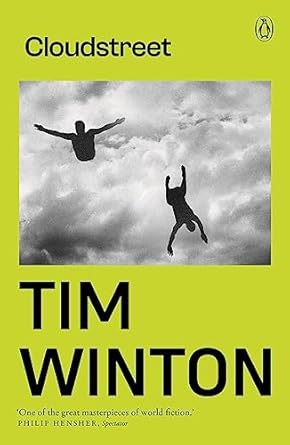
Tim Winton’s masterpiece stands for more than just the beating heart of Australian literature.
Following two working-class families. The Lambs and Pickles who share a massive house in Perth from the 1940s through to the ’60s. This novel digs deep into our national quest for belonging.
And what makes this book so special is how Winton challenges the classic Aussie myths: The battler. The ANZAC hero. Rural identities, and Australia as the lucky country[m1] .
His writing shifts between poetic descriptions to the fair dinkum Aussie slang. Thus creating something that’s become more than just your average novel. Or, as Alex Miller put it, it’s Australia’s most popular novel that’s leapt the fence to become part of the nation’s bloodstream.
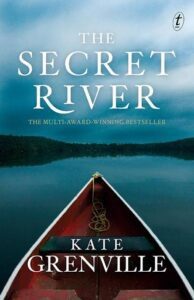
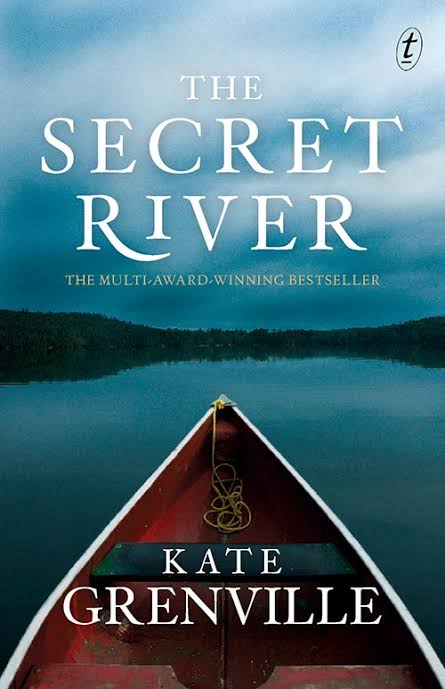
Kate Grenville’s unflinching look at our colonial past follows William Thornhill.
William’s a Thames boatman who gets transported to New South Wales, then claims his ‘selection’. Which just happens to be on Aboriginal land, along the Hawkesbury River.
And rest assured, this novel doesn’t sugarcoat a single thing.
Instead it dives straight into the violent clash between European settlers and Indigenous Australians. And it’s here where characters go on to represent different colonial attitudes.
These attitudes trend from extreme violence to idealistic cooperation.
The title itself comes from anthropologist W.E.H. Stanner’s reference to a secret river of blood flowing through Australian history. Thus acknowledging colonisation’s hidden violence.
Therefore, it isn’t any wonder the book sparked multiple heated debates among Australia’s so-called history wars!
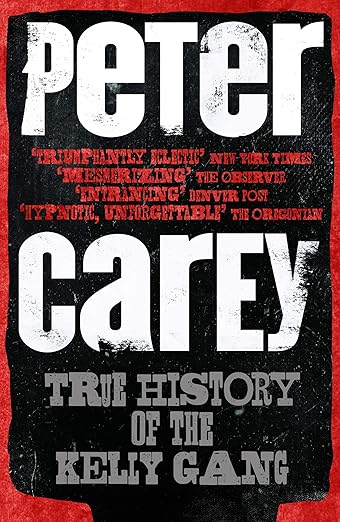
I bloody loved this book. And growing up among the throngs of kids equally enamoured by the Ned Kelly ideal, Carey’s Booker Prize-winning novel hands us a version of Ned Kelly’s story that was so unique that critics even dubbed it Kellyspeak
It was ungrammatical 19th-century writing with minimal punctuation. And, in fact it mirrors Kelly’s actual Jerilderie Letter. But the novel’s title is a dead giveaway about its fictional nature.
Even Carey himself said, Anyone who says true history is obviously writing a novel… No historian would ever say that. Yet that’s the juxtaposition exposed in Carey’s story. It’s uncannily faithful to the facts of Kelly’s life while weaving in fictional elements that give the bushranger some emotional depth.
That said, it isn’t any wonder it swept up thirteen major awards across different countries—so bloody brilliant!
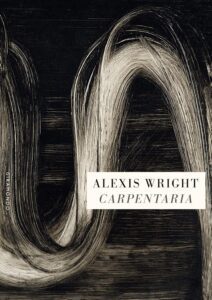
Now this one will smack you like a wet trout to the face.
And I mean that, too. Because when Alexis Wright’s epic hit bookshelves in 2006, it changed Australian literature… forever.
So, make no bones about it, this Miles Franklin Award-winner comes from Wright, a Waanyi woman who does more than just bring Aboriginal perspectives of modern Australia to life. But it also delivers readers a fresh portrayal of Indigenous life in the Northern regions of Australia.
Further to my point. Wright’s novel taps into the power of Indigenous oral traditions through three key Lawmen characters who act as keepers of cultural knowledge.
Many critics label it magical realist. But Wright pushes back against this, refusing to let Indigenous beliefs be seen as magic just because they’re different.
The storytelling voice sounds like some good yarn around a campfire. It makes you feel like you’re listening to an elder share some true wisdom!
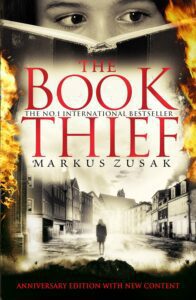
Markus Zusak’s haunting bestseller is set in Nazi Germany. But this rip-snorter of a tale has also sold more than 17 million copies worldwide and been translated into 63 languages.
But what exactly makes it stand out?
Is it because Death itself narrates the story… speaking directly to readers with lines like here is a Small Fact… you are going to die.
The story follows nine-year-old Liesel Meminger, whose basement becomes a haven for Max Vandenburg, a Jewish man hiding from the Nazis.
Their connection arrives through books… and stories which create moments of humanity in times of unspeakable cruelty.
Then there is Death’s final line, I am haunted by humans. Perhaps the most endearing line of the entire novel.
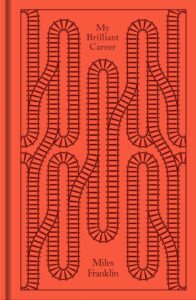
Miles Franklin was only 19-year-old when she penned this classic in 1901.
Plus, she wrote the better part of it at night… after finishing her farm chores.
The protagonist, Sybylla Melvyn, rails against 19th-century society’s expectations of women, bluntly calling traditional marriage the most horribly tied-down and unfair-to-women existence going.
Franklin championed women’s rights long before anyone decided to label it feminism.
And ultimately, in doing so she created a character who declares: It came home to me as a great blow that it was only men who could take the world by its ears and conquer their fate.
The book earned her a measly £24 despite positive reviews, and she later pulled it from publication because too many people described several similarities to her own life.
But then the 1970s feminist movement rediscovered this forgotten gem, and Gillian Armstrong’s acclaimed 1979 film adaptation cemented its place in our cultural consciousness.
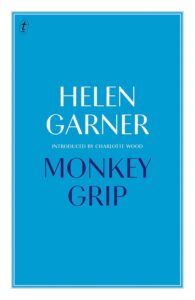
Helen Garner’s raw debut did more than merely transform Australian literature when it dropped in 1977.
Drawing directly from her personal diaries, it captures the vibrant yet chaotic world of 1970s inner-city Melbourne—a community of free spirits embracing drugs, making films, playing rock music, and championing women’s rights.
But beneath the cultural observations lies something more personal. A single mum Nora’s destructive relationship with Javo, who so happens to be a heroin addict.
Their bond becomes somewhat of an addiction of its own.
And, with Nora struggling with what she calls this crazy habit . One equally as damaging as Javo’s, she considers giving it all away. But ultimately, the story goes on to deliver a dead-honest look at how romantic obsession can become just as consuming as drug dependency.
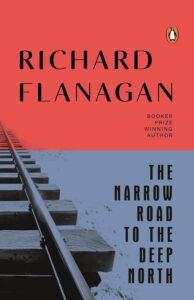
Richard Flanagan’s Man Booker Prize-winning novel was inspired by his father’s experiences as a POW on the Burma Death Railway.
It centres on Australian surgeon Dorrigo Evans, who fights impossible odds to protect his fellow prisoners, who are being forced to build the railway, which was a dreadful war-time project that killed one in three workers.
Throughout the story, the prisoners’ bodies deteriorate until they become little more than black-shadowed sockets waiting for worms.
Flanagan doesn’t just show the horrors—he explores how some societies normalise atrocities and how goodness and a lack of empathy can become one and the same, pushing ordinary people towards a great evil.
This a story which is as confronting as it is an essential read.
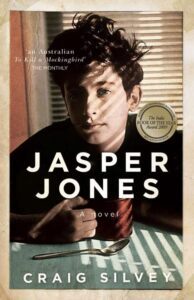
Often called an Australian To Kill a Mockingbird, Craig Silvey’s coming-of-age novel tackles racial prejudice in 1960s rural Australia, and during the Vietnam War era this is a brilliantly written novel.
Set in Corrigan, a town where racism flows deep, and where a half-Aboriginal teenager Jasper Jones becomes the town’s scapegoat.
The Vietnamese Lu family also face similar treatment when locals destroy their garden and attack An Lu.
There’s a brief moment of acceptance when Jeffrey Lu excels on the cricket field, but hours later, a mob bashes his father—showing how fleeting such tolerance can be.
Silvey demonstrates how racism stems from ignorance and how friendship might be our best weapon against it.
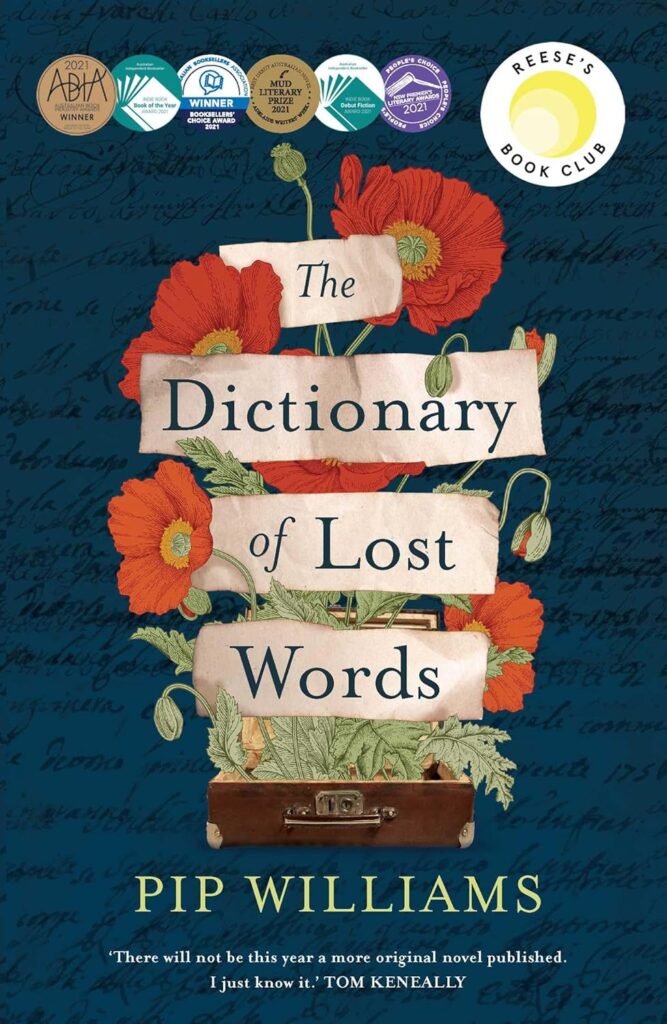
Pip Williams’ 2020 bestseller shows us the creation of the Oxford English Dictionary from a woman’s perspective. And it’s quickly become one of the most thought-provoking Australian novels in recent years.
The protagonist, Esme, discovers that words women commonly use… words often dismissed as vulgar or simply overlooked… rarely make it into the dictionary.
So she starts collecting these lost words in her treasure chest, gathering expressions from women who worked at Oxford’s Covered Market.
Williams brilliantly shows how language shapes our view of reality, while also noting that the first OED used quotations mostly from books written by blokes.
Therefore, Esme makes it her mission to save these forgotten expressions because she knows they’re just as important as the words of men.
Conclusion: Australian Literature’s Global Impact
Australian literature proves we can spin a yarn with the best of them.
These ten books showcase our nation’s storytelling excellence, from Tim Winton’s deep dive into belonging. To Alexis Wright’s groundbreaking Indigenous perspectives. Then beyond—
These 10 novels reflect Australia’s evolving identity, from over more than a century of writing.
Miles Franklin challenged gender norms when Federation was just kicking off, and while contemporary authors like Hannah Kent show we can confidently write about settings beyond our shores.
Our books have made waves internationally too. Markus Zusak’s: The Book Thief has reached over 17 million readers worldwide, and Richard Flanagan took home the prestigious Man Booker Prize.
Not bad for a bunch of Aussies!
So don’t come the raw one here—grab one of these literary gems before the years out, and maybe even make it a Chrissy present.
And, whether you’re drawn to Kate Grenville’s unflinching look at our colonial past or Helen Garner’s raw portrayal of 1970s counterculture, these books offer unique perspectives that’ll endure many more years of literary greatness.
[if you’re interested in reading some of my work, then please check out AFGHANI. It’s available at all major online retailers]
Think you know Aboriginal Australian historical literature?
Think again.
The story of this land wasn’t simply one of discovery.
No, it was carefully crafted over millennia by Aboriginal peoples who used sophisticated techniques like firestick farming to shape ecosystems and manage resources with remarkable precision.
I’ve spent years diving into Indigenous Australian Indigenous History Books, and what strikes me most is how these voices push far beyond the tired colonial tropes of convicts, and early explorers.
In 2024 we watched as the nation embraced the theme of Reconciliation.
But now… more than ever, and in the aftermath of failed referendum… there’s never been a better time to seek out these perspectives that have been sidelined for too long—
Ready to expand your book collection and your mind?
Ready to discover powerful Aboriginal perspectives that challenge colonial narratives and reveal Australia’s true history through these essential reads?
Well… here’s 10 game-changing Australian Indigenous history books you won’t find on many (if any) mainstream reading lists:
Why it’s significant: The first novel to present early colonial New South Wales entirely from an Aboriginal perspective.
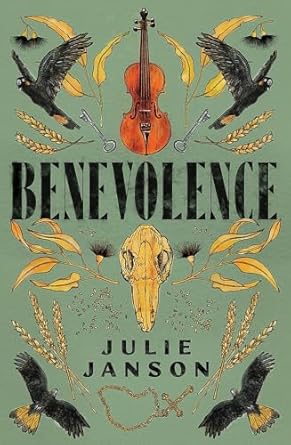
Benevolence begins by flipping the colonial narrative on its head.
Published in 2020 and rereleased in 2024 alongside its sequel Compassion, this groundbreaking novel takes us into early colonial New South Wales through a lens rarely seen in our history books.
We follow Darug woman Muraging (renamed Mary James by colonizers) as she navigates the treacherous cultural borderlands of 1816-35 around the Hawkesbury River.
Julie Janson, herself a Burruberongal woman of the Darug Aboriginal Nation, crafted this as her Aboriginal answer to The Secret River.
And what an answer it is.
Instead of depicting Aboriginal people as helpless victims, she reveals their fierce resistance and a remarkable resilience that resided among her people.
Why it’s significant: Documents a watershed Aboriginal workers’ strike that changed Australian labor relations forever.
Ever heard of the Pilbara strike?
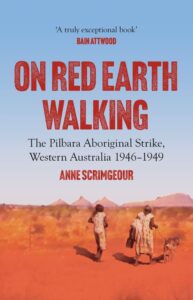
Most Australians haven’t, and that’s precisely the problem Anne Scrimgeour addresses in her eye-opening 2020 book.
For three years, Aboriginal workers (known as marrngu) walked off Western Australia’s pastoral stations in 1946, refusing to continue working under slave-like conditions.
Their courage dealt a decisive blow to a colonial control system that had exploited them for generations.
What makes Scrimgeour’s account so refreshing is her reliance on Aboriginal oral stories.
The strikers aren’t passive characters in someone else’s story; they’re the protagonists and strategic actors who grabbed destiny with both hands.
Why it’s significant: Challenges the hunter-gatherer myth with evidence of sophisticated Aboriginal agriculture and engineering.
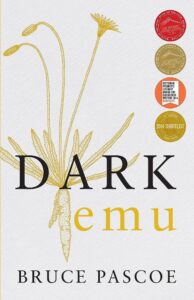
Few books have stirred as much conversation—or controversy—as Bruce Pascoe’s Dark Emu.
With over 360,000 copies sold, it’s become a cultural phenomenon that’s impossible to ignore.
The genius of Pascoe’s approach?
He lets European explorers’ own journals do the talking.
These first-hand accounts describe Aboriginal people harvesting crops, living in permanent settlements, and engineering complex aquaculture systems. Which is all a far cry from the simplistic hunter-gatherer label most Australian’s grew up believing.
While some academics have disputed specific claims, there’s no denying that Dark Emu has forever changed how we discuss Aboriginal history and land management.
Why it’s significant: Demonstrates how Indigenous language preservation becomes an act of cultural memory and resistance.
Words carry worlds within them.
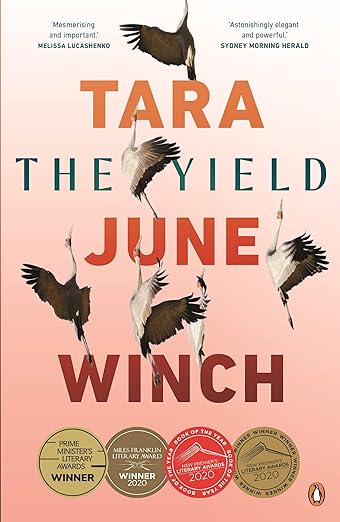
That’s the powerful truth at the heart of Wiradjuri author Tara June Winch’s The Yield, which swept the 2020 NSW Premier’s Literary Awards, taking home Book of the Year and two other major prizes.
Winch weaves together three narrative threads:
August Gondiwindi returning to Australia after her grandfather Albert’s death;
Albert’s loving compilation of Wiradjuri words;
and Reverend Greenleaf’s 1915 letter reflecting on his time among the Wiradjuri people.
The dictionary entries scattered throughout aren’t just linguistic curiosities; they’re portals into a civilisation that colonisers systematically attempted to erase.
When Albert defines the Wiradjuri word for yield, we learn it means both what the land gives us and what we give to it; which is a relationship of reciprocity utterly foreign to colonial extractive mindsets.
Why it’s significant: Directly addresses Australia’s failure to acknowledge its colonial past and ongoing racism.
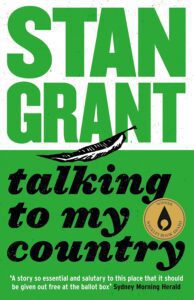
For journalist Stan Grant, watching Indigenous AFL star Adam Goodes being booed by crowds in 2015 was the catalyst for this powerful book that reads like an intimate letter to all Australians.
Grant moves seamlessly between personal stories and penetrating historical insights, showing how yesterday’s colonial violence reaches into today’s society.
When Grant asks why Indigenous Australians might feel hollow singing Australians all, let us rejoice, the question lands like a stone in still water, rippling outward to touch shores many prefer to leave undisturbed.
Yet his voice never becomes preachy—it’s more like that trusted friend who tells you the cold hard truth you need to hear.
Why it’s significant: Explores how Indigenous cultural knowledge exists alongside western literary traditions.
What happens when an Indigenous mother and her lawyer daughter embark on a literary pilgrimage through England?
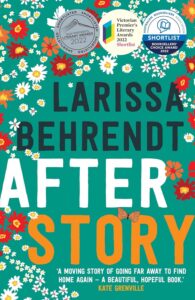
The 2022 Voss Literary Prize-winning After Story answers this question with surprising depth and aplomb.
As Della and Jasmine visit the hallowed grounds of canonical British literature, another story shadows their journey. And it’s the haunting disappearance of Jasmine’s sister Brittany—years earlier—which reveals a wound that stands in for a much larger, cultural trauma.
Behrendt, an Eualeyai/Kamilaroi woman, creates moments of beautiful recognition when Della connects seemingly disparate worlds.
Standing in an English garden, she recalls her Aunty Elaine’s wisdom about plant uses.
And while touring historic buildings, she reflects on Aboriginal construction techniques.
Through these parallels, Behrendt shows how western literary traditions have systematically undervalued Indigenous knowledge systems.
Why it’s significant: Sits on the frontier of truth-telling about massacres and reconciliation in Australian literature.
How do communities heal from historical trauma?
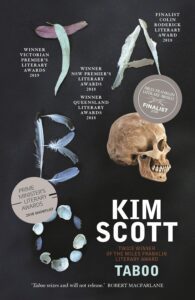
Kim Scott’s haunting novel tackles this question through the story of Noongar people visiting a taboo place.
Which in this case is a massacre site where their ancestors once killed a white man who’d stolen an Aboriginal woman.
Taboo emerged from a community that had recently negotiated a settlement with the Western Australian government, earning it the distinction of Australia’s first post-treaty novel.
Scott blends genres masterfully, and incorporates elements of fairy tale, gothic horror, social realism and creation stories.
But beneath the literary craftsmanship beats a heart of conviction: that language itself contains healing power for communities fractured by historical violence.
Why it’s significant: Meticulously examines systemic racism in law enforcement through one tragic death in custody.
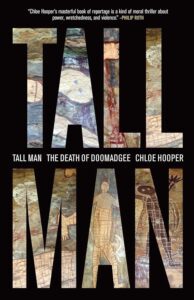
Chloe Hooper’s unflinching investigation into Cameron Doomadgee’s 2004 death in police custody on Palm Island reads with the narrative grip of a thriller and the moral weight of the best social justice journalism.
The story unfolds through four acts:
The Death
The Riot
The Inquest
The Trial
All This while weaving in Palm Island’s troubled colonial history.
Critics compared it to Capote’s: In Cold Blood.
But Hooper achieves something even more remarkable—
She humanises both Doomadgee and Senior Sergeant Chris Hurley without excusing the system that brought them together—with fatal consequences.
The book’s title comes from Indigenous mythology: the Tall Man who’s a fearsome spirit that only comes out at night.
This creates an eerie parallel to the police presence in Aboriginal communities.
Why it’s significant: Challenges the myth that Aboriginal people vanished from Sydney after colonization.
We’ve all heard the narrative—
Aboriginal people disappeared from Sydney shortly after European arrival.
But what if that story was simply convenient fiction?
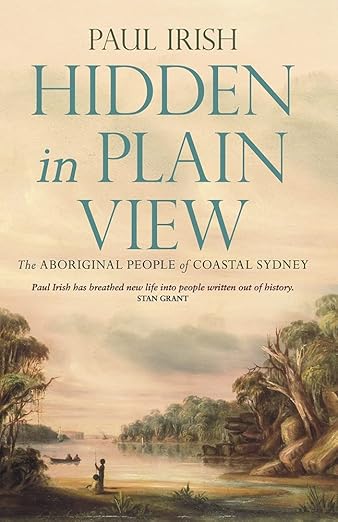
Paul Irish’s meticulously researched book shatters this misconception, showing how Aboriginal people maintained their presence and connection to country throughout Sydney’s colonial period.
From the harbour foreshores to the coastal headlands, Irish documents how Aboriginal communities adapted to colonial encroachment while maintaining cultural connections to place.
Winner of the 2018 NSW Premier’s Award for Community and Regional History, this book literally redraws the map of Sydney’s past.
Or, as Stan Grant noted: Irish has breathed new life into people written out of history—people who were always there, hidden in plain view.
Why it’s significant: Provides intimate personal testimony countering denial about the Stolen Generations.
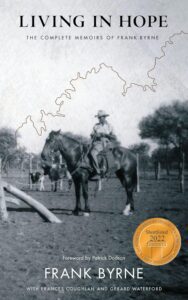
Frank Byrne’s slim memoir packs more emotional truth than books three times its length.
With unadorned prose that cuts to the bone, Byrne recounts being torn from his mother at age six on November 17, 1943.
Loaded up like cattle and transported to Moola Bulla, his childhood became a casualty of government policies designed to sever Aboriginal children from their families and culture.
What makes this 2018 Most Underrated Book Award winner so compelling is Byrne’s refusal to sugarcoat or sensationalise.
He wrote specifically to counter what he called the denial of truth about the Stolen Generations. A denial which persists… even today.
Why These Aboriginal History Books Matter in 2025
As we move deeper into the third decade of the 21st century, these ten books offer something increasingly precious—
Perspective.
They peel back the comfortable myths my generation were taught in school. But they also reveal a history both more painful and more extraordinary than conventional narratives allow.
These works remind us that Australian history spans beyond the brief timeframe since European arrival.
They also challenge us to see the land differently—
Not as a wilderness tamed by colonial ingenuity, but as a landscape already deeply shaped by human intelligence and care—prior to the First Fleets arrival.
Most importantly, they invite all readers into a more honest conversation about who we are and where we might go from here.
That’s why the 2024 Reconciliation theme Now more than ever resonated with so many.
And, with these books, we can see they’re not just about the past, but about building a shared future on foundations of truth.
Key Takeaways from These Essential Australian Indigenous Books:
Challenge mainstream narratives: These books reveal untold stories that amplify Indigenous voices often excluded from traditional historical accounts
Reframe colonial history: Aboriginal perspectives show sophisticated systems and resistance stories rather than simplistic victim narratives
Preserve cultural knowledge: Language preservation and storytelling become powerful acts of resistance against colonial erasure
Document systemic injustices: Personal testimonies expose ongoing impacts of policies like the Stolen Generations and deaths in custody
Foster reconciliation: Understanding uncomfortable truths while celebrating Indigenous resilience creates pathways to genuine healing
Uncover hidden histories: From Aboriginal presence in Sydney to successful labor strikes, these books make visible what was “hidden in plain view”.
[if you’re interested in reading some of my work, then please check out AFGHANI. It’s available at all major online retailers]
Looking for more Indigenous Australian literature?
Explore related guides on Indigenous Australian Storytelling
Easy to Use Methods for Captivating Time and Place
I’ve been crafting sensory rich Australian historical settings for several years now, and everyday I’m still learning the craft and, especially how to really bring those settings to life.
But if you’ve ever tried to capture the essence of Australia’s past in your fiction, then you’ll, no doubt understand how it can be a real uphill battle.
So… I thought I’d share some techniques, that I’ve picked up along the way and which have truly helped boost my historical fiction stories.
Ultimately, these are all things I wish someone had told me when I first started spilling my guts out onto the page and writing without any apparent rhyme or reason.
Over time, I’ve thankfully stuck to the task and eventually reached the point where I was able to publish my debut novel Afghani—a highly polished Historical Fiction novel about the 19th century pioneers of the Australian outback!
Those pioneers, in fact were the Afghani Cameleers and… being a direct descendant, I wanted to do their story justice.
And, without further ado, I’m highly confident that these tips and advice I’m about to share will help to boost your writing objectives too.
Navigating Sensory Rich Australian Historical Settings and Landscape: Unique Challenges Writers Face
Creating authentic and sensory rich Australian historical settings is prickly business.
How do you. With all honesty. Represent a land whose European written history spans just over two centuries while acknowledging that Indigenous cultural memory stretches back 60,000 years?
It’s a balancing act fraught with danger. And I imagine that writers juggle with this level of authenticity on a regular basis!
Yet when I first started writing historical fiction set, I made the rookie mistake of just tossing in some red dirt. A slice of Naan-e-Afghani. And some good ‘ol Aussie banter and tried calling it a story.
And thinking that maybe if I stuffed in a bounding kangaroo, or koala in there, too, then the story might take flight. All for good measure of course.
But I quickly realised authentic settings require so much more. Because to evoke some sort of meaningful depth I had to discover that weaving together sensory experiences is what actually transports readers. Both through time and place, but also through the writer’s perspective as well.
And I’ve since been inspired by authors like Kate Grenville. Her book: The Secret River, quite honestly changed how I approached the craft of developing historical settings within my own work.
Historical fiction is about writing plausible tales about what might have happened, which gives insight into what did happen.
~ Kate Grenville
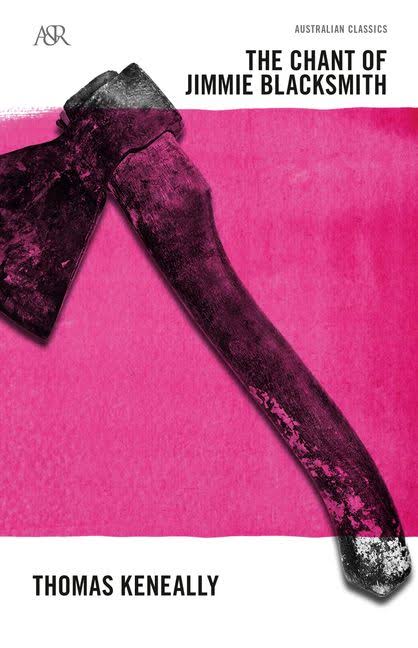
Thomas Keneally, and Melissa Lucashenko are a couple of more names. And, what makes their work so compelling is how they create settings that dump you right into the heart of the story.
The secondary bonus here is, that it keeps their stories true to the period. And that means keeping a connection with more modern readers.
I’ll never forget watching the TV adaption of The Secret River either. It left me feeling like I could smell the Hawkesbury River, hear the birds singing. I could smell the rum rations that every bludger appeared to be swilling.
And then I thought: wow… now that’s the kind of immersion I want to strive for in my own writing.
Now, before we dive in any further, I’d like to take a moment to acknowledge that… as writers of Australian historical fiction, we carry a responsibility.
Our words shape how readers understand a shared past.
And this isn’t about romanticising our country’s history. Nor is it about over-simplifying it.
But… that it’s about creating nuanced and respectful portrayals of yesteryear and not creating any harm along the way.
And trust me when I say this… I, for some self-masochistic reason, love learning the hard way. Always have. But after some early feedback from my editor, Ellie with her polite but firm signals about my portrayal of my characters and descriptions being far too vague and simple.
It was a tough pill to swallow.
Painful, too but ultimately necessary.
Crafting Immersive Australian Worlds: The Essential Sensory Palette for Australian Period Literature
When I started out, I leaned heavily on visual descriptions. Many writers do. Yet this has a tendency to lead into data-dumping and exorbitant exposition.
The sensory dimension of Australian historical settings: the blinding light, the smell of eucalyptus after rain, the deafening silence of the bush. These are what make our stories uniquely Australian.
~Thomas Keneally
And… as scenic as the architecture of early Melbourne city is. Or as breathtaking as the Outback can be. And as exciting as visiting Sydney’s The Rocks might appear. Australia ultimately demands to be experienced through all the senses.
Its unique sensory landscape is what makes it distinctively Australian, and writers just can’t afford to leave that out
Australian Light and Colour: Capturing the Distinctive Visual Elements of Historical Settings
Australia’s visual landscape has changed dramatically over time, and even—more so—exponentially in the past few decades—as Global Investors take hold (Sigh).
Well on the Eastern seaboard, and the mining regions at least, because the country’s interior has remained vitally the same, because—in and of itself—the dry, arid and even austere harshness of the environment effectively acts as its own defence mechanism.
Now, I’ve spent much of my life looking through historical photographs, in old books, and now mostly online and what struck me was not only the quality of many of those old photos, but their archival ability to survive the rigours of time—much like the Australian environment, in general.
And it’s quite ironic, when you think about it, plus… especially when you consider that harsh, unfiltered Australian sunlight is unmistakable as it blasts through the landscape in summer—right until the big old December storms come thundering in.
Nothing out here that isn’t strong and dependable will survive, and that’s just a simple fact of Australian life—
But did you know that early European painters also struggled to accurately capture the Australian light?
They kept using techniques developed for European landscapes.
Go figure—
But it resulted in paintings that looked nothing like the actual Australian scenery, and it wasn’t until the Heidelberg School in the late 19th century that painters began to truly capture that distinctive Australian light and colour.
I highly recommend checking this sort of thing out for yourself. And if you’re dead serious about writing on Australian history—or any country’s history, for that matter—then research historical photographs and paintings from your chosen era.
You can spend hours scrolling through Trove’s digital collections—they’re that deep and thorough!
Also, study how the human made environments evolved, from the ironbark rooftops… right up until the time where corrugated sheeting, which ultimately took over, becoming synonymous with the Australian landscape.
Then there’s the evolution of the Queenslander home, itself, with all those old timber homes raised on stilts… with tongue and groove interior walls or… even the imposing sandstone buildings of early colonial cities—Adelaide; the City of Churches is rife with them.
I captured hundreds of my own photographs, of these types of buildings. Most of them are old churches and cathedrals. But while the digital photograph may never capture that true sense of nostalgia, there’s still a myriad of stories in every detail, and on every wall!
Historical Soundscapes: Recreating Australia’s Authentic Period Acoustics
This is something I completely overlooked in my early writing!
Before motorised transport, cities had completely different soundscapes. Camels were used to transport supplies and goods across the middle of Australia.
Mostly because the environment, and lack of water was too harsh for horses and bullocks.
But the clop of horses’ hooves still made their way through the cobblestoned streets of Sydney and Melbourne. All while street vendors were all busy calling out their wares. All with their distinct accents and immigrant charm.
In rural settings, consider both natural sounds.
For instance, the kookaburras laugh—a sound that still wakes me at the crack-of-dawn.
It is a wild sort of laughter which they project. And one that ironically characterises this land.
But, quite spookily, the only thing which can overcome their cackles is the wind ripping its way through the old, dry gum leaves.
Then there’s the human-generated sounds. Like the rhythm of axe strokes as selectors cleared land. The squeak of old leather belts slowly turning the timber mills. Or the distant ring of a homestead bell calling workers home for supper.
Aboriginal languages formed part of Australia’s historical soundscape too. And many settlers became familiar with local Indigenous lexicon. In particularly those relating to the landscape’s features, such as flora, and fauna.
Words like billabong, coolibah, and waratah entered colonial vernacular, early on. And along my own travels, I discovered some fascinating recordings in the AIATSIS archives.
It contains early anthropologists’ recordings of traditional songs and language.
Listening to those recordings gave me goosebumps but also added a whole new dimension to my storytelling.
The absence of sound is important, too. And that profound silence, which often fills the bush—early in the morning, and late in the afternoons. It can pull visitors either into a state of nirvana, or complete despair.
Majorly because the bush’s silence is so complete that it alone carries with it physical presence.
European settlers often wrote about this silence in their journals. Most finding it either terrifying or transcendent, depending on their state or predicament.
[if you’re interested in reading some of my work, then please check out AFGHANI. It’s available at all major online retailers]
Evoking the Past Through Scent: Australia’s Historical Olfactory Landscape
I think smell is the sense I struggle with most in my writing. It’s so important. But it’s so difficult to describe!
For instance, how can you tell me what Vegemite on toast smells like?
My guess is that if you asked 5 different people, then you’d likely get 5 different answers.
You must also take into consideration that Australia has a distinctive olfactory landscape that has evolved over time.
The smell of eucalyptus after rain. It’s fresh, almost medicinal scent that permeates the air, or the acrid smell of bushfire smoke—synonymous with Australian summers—which can often evoke a sense of fear.
Then there’s the briny tang of coastal towns—think 1770, Pottsville and even Jarvis Bay.
It’d be remiss of me to omit the earthy scent of dusty streets. Long before bitumen roads took over (yes… I’m old enough to remember that!)
And finally… the yeasty aroma wafting from an artisan bakery.
Urban environments had their own pungent profiles too.
I grew-up near mushroom farms, pig and poultry farms. A meat works factory was nearby, and even a tannery.
Depending on the time of day, you were often hit with a different but distinct smell.
And I, at the very least, should mention the open sewers of early Melbourne and Sydney (ugh, right!), or the industrial smells of the old gelatine factories, the coal smoke that hung over cities, and let’s not forget the horses that left their own distinctive contributions… often adjacent to the sidewalks!
I read a visitor’s account from 1870s Sydney that described the smell as being assaulting upon the senses that no European city could rival.
It’s not exactly the touristy “where the bloody hell are ya” slogan, but it is quite evocative!
From Damper to Fine Dining: Authentic Australian Culinary History in Fiction
Food history provides such a rich vein for historical fiction writers, and I have found that including what my characters ate immediately grounded them within the story.
The most compelling Australian stories are those that engage with the full sensory palette—the taste of damper cooked on an open fire, the feeling of wool against skin in searing heat, the distinctive soundscape of kookaburras at dawn.
~ Melissa Lucashenko
But early colonial diets relied heavily on imported foods and adapted British cooking traditions.
For instance, salted beef and damper were staples for explorers and bush workers, and while native ingredients, like kangaroo meat, macadamia nuts, and various fruits, like the Bunya Nut were gradually incorporated, the Chinese gold miners also introduced their own new ingredients and cooking techniques, while the traditional foods of First Nations peoples varied, from region to region.
Class distinctions were reflected in people’s degustation habits, too, and where wealthy colonists might’ve enjoyed a multi-course meal—including imported delicacies—the working-class Australians often survived on a far simpler fanfare.
Seasonal availability also affected people’s diets—long before refrigeration and global supply chains arrived.
I once tried baking damper, based a traditional recipes and cooking fish that I’d caught, all using methods I had to learn as part of military survival training—and let me just say that I’m so glad there is no smoke alarms out in the bush because my neighbours would have copped an awful fright.
But that experience gave me details I never would have thought of prior.
For instance, the way the flour feels under your hands—when you don’t have running water, or a working kitchen bench—the smell as it cooks, the different texture compared to modern bread. Then trying to eat it all and not breaking half of your teeth.
But that’s damper, and it was never meant for fancy dining—or cavity prevention
Tactile Australia: Writing Touch-Based Sensory Details in Historical Narratives
Touch is perhaps the most intimate sense I can think of, and incorporating tactile details can draw readers deeply into your historical world. So, I highly recommend you at least consider, or imagine, for yourself, the physical sensations your characters might experience:
The gritty feel of dust coating skin, in the heart of an historic drought, or the cloying weight of woollen clothing in summer heat because you’re dressed up like Nurse Nightingale.
I couldn’t last 20 minutes before ripping that garb off.
Then there’s the bite of sandflies, midgies and mosquitoes, or the roughening texture of the furniture sitting in a selector’s hut versus the smooth, polished surfaces in a wealthy merchant’s home.
Maybe you can feel the sensation of perspiration constantly trickling down your back during a Queensland summer and herding cattle along an outback stocky route—long before electric fans and air-conditioned vehicles overtook their jobs.
Weather extremes can definitely provide the all defining tactile experiences of a searing Australian summer, too, and you only have to imagine how that sort of heat could have affected metal tools—often making them too hot to touch—or the bone-chilling damp of winter in southern regions—also making metal tools hard to touch.
Plus, there will always be this startling contrast between day and night temperatures in the desert.
I’ve slept out Kakadu country—plus in and around Katherine—multiple times back in my Army days, enduring the swelling Northern Territory humidity throughout the day, and only to feel myself freezing to death at night because all I decided to carry with me was a lightweight sleeping bag and mozzie net.
Beyond Backdrop: Australia’s Landscape as a Living Character in Historical Fiction
In Australian historical fiction, the landscape is never merely a backdrop; it’s an active presence, and its own self-sufficient player which shapes the main characters and drives the narrative.
The landscape in Australian fiction is never merely a backdrop. It’s an active presence that shapes characters and drives the narrative forward.
~ Kate Grenville
This was a huge revelation for me when I first started writing!
How Australian Geography Influenced Historical Characters
Colonial settlers arrived with preconceptions based on their homelands, and with the expectations of predictable seasons, familiar terrain, and manageable conditions, but even after living and growing up in Australia, the country never ceases to surprise me, but it must have been an extreme shock to Captain Cook and Co.
They were forced to adapt to the landscape… not the other way around—as they thought should be the case—and I love showing how my characters’ relationships with their environment evolves throughout a story.
And where someone fresh off the boat, like George Sher Gul, in Afghani, who was immediately smacked in the face with everything the country had to offer. From monsoonal rail, flowing rapids, the long desert stretches with no respite in between. And then the mosquitoes and the crocodiles.
His biggest lesson… to adapt and overcome!
But saying that Australia has an unpredictable climate would be a gross understatement. The near biblical droughts and flooding rains that Dorothea Mackellar captured so perfectly in: My Country didn’t just bug historical Australians; it greatly challenged their ability to survive.
The devastating Federation Drought (1895-1903) took away everything the farmers had and eventually reshaped rural communities.
Hearing stories about losing everything in the Federation Drought, didn’t just affect historical families. And after two centuries since colonisation, family stories devastating floor, fire and storm continue to blur the lines between fact and fiction.
In no uncertain terms has Australia, in all her abundant beauty ever been considered as forgiving—and that’s a recurring fact throughout Australian Historical fiction.
Essential Elements for Compelling Fiction
To write the Australian landscape authentically, I’ve learned to incorporate several undeniable factors:
Indigenous Connection to Country: Essential Context for Australian Period Literature
Any discussion of the Australian landscape should not be completed without acknowledging the profound connection of Indigenous Australians to Country.
I’m not talking politics here, because for Aboriginal and Torres Strait Islander peoples, the landscape isn’t simply a physical environment, but a living entity imbued with spiritual significance, ancestral stories, and cultural knowledge which is tied to the very core of their being.
In writing historical fiction about Australia, we must acknowledge that this continent contains not one history but many Indigenous perspectives spanning 60,000 years alongside more recent colonial narratives.
~ Melissa Lucashenko
If your historical fiction touches on Indigenous perspectives or interactions between Indigenous and non-Indigenous characters, my advice is to, again, research the specific relationship to Country that particular Indigenous nation (there’s over 250 individual nations, so you may have to do some serious groundwork here) in your setting.
Avoid generalisations, too because there’s also over 500 distinct Aboriginal language groups, otherwise known as Mobs, have their own distinct language, customs, and relationship to their land.
With that said, if you encounter any points of confusion or contention, then consulting with an Indigenous cultural advisor can point you in the right direction, and you can always (read: I strongly encourage you) to access a sensitivity reader.
The perspective these routes can offer have the ability to transform your understanding of that landscape.
Representing Australia’s Diverse Historical Heritage
Australian historical fiction must navigate a complex cultural landscape, especially when you consider how it’s been shaped by Indigenous cultures spanning sixty thousand years, British colonisation, waves of migration from diverse countries, and the evolution (and consequent devolution) of a distinctive Australian identity.
Authentic Representation and Perspective
A common failing in older Australian historical fiction, including some notable explanations and apologies (think Thomas Keneally and: The Chant of Jimmy the Blacksmith) was the erasure or misrepresentation of Aboriginal and Torres Strait Islander peoples.
We now, both as writers, and a nation have a responsibility to acknowledge the continuous Indigenous presence in the Australian landscape, which is, in and of itself quite fascinating and enamouring!
If writing from a non-Indigenous perspective about the colonial period, consider how your characters would have interacted with local Indigenous peoples, where once again it pays to mention Grenville’s: The Secret River.
Historical attitudes ranged from curiosity and respect to fear and hostility or, in extreme case, outright brutality. More so, while some of the more conscious settlers learned from Indigenous knowledge of the land; others participated in frontier violence and genocide.
I struggle with this in my own writing—in a very emotional way.
How do I accurately represent historical attitudes while not perpetuating harmful stereotypes?
I have found that focusing on individual, fully developed characters rather than types helps navigate this complexity. However, that is not me searching for an excuse to sidestep the issue, but a method to navigate the limitations of my characters’ perspectives. Eg, showing readers that a character’s biased view isn’t necessarily the truth of the situation, and that it isn’t necessarily my view either.
Social Structures in Historical Australia: Class Hierarchies and Their Impact
Class distinctions were a defining feature of colonial Australian society. And though they operated somewhat differently than in Britain, and more so on a more in an egalitarian space, but also because the gold rushes of the 1850s created social mobility that disrupted traditional hierarchies.
This ideal of egalitarianism, captured in the concept of mateship and loyalty that coexisted among a young society, despite the stark inequalities. Noting that at that time, Melbourne had become one of the richest cities in the world!
Social markers were important in historical Australia. People’s accents. Their dress. The manners, and vocabulary signalled one’s place in the hierarchy.
Writing Authentic Gender Experiences
Gender profoundly influenced how historical Australians experienced their environment, too and while frontier life sometimes needed flexibility in gender roles, social expectations remained as an imposing force.
For instance, a women’s freedom was often restricted by both practical considerations (clothing, transportation) and social expectations. Their access to education, property ownership, and economic independence evolved significantly over time.
Men’s experiences were shaped by expectations of physical prowess, emotional stoicism, and economic provision.
The Australian type celebrated in late 19th century literature: The Bushman, The Digger each created opportunities and constraints for men who didn’t conform to this ideal.
Authentic Australian Dialogue: Crafting Period-Appropriate Language for Australian Period Literature
Language is your primary tool when creating an historical atmosphere, and yet it still presents one of our greatest challenges.
For instance, how do you create dialogue and narration that feels authentic to the period without alienating modern readers or falling into a walking cliché or parody?
I struggled with this so much when I started writing!
After reader Hemingway’s: The Sun Also Rises, I fell in love with not only the character voices he created, but with the mythology of Hemingway himself. And that essentially led me to believing this was my benchmark, but to achieve those heights, I had to sound like Hemingway.
The only problem there being is, I’m Australian, and I’m definitely not Hemingway. Therefore, I sound nothing like him and nor do historical Australians. I was honestly writing myself into an abyss—
Historical Language Development for Writers
Australian English has evolved significantly since colonial times, and the early colonists brought various British and Irish regional dialects. But, over time, this introduction began to blend itself with influences from Aboriginal languages, American English, and the languages of multiple other immigrant groups.
By the late 19th century, visitors were commenting on the distinctive Australian accent and vocabulary. The following words also found their way into the Nations lexicon:
And while of these words had usages, back in Britain for example, the Australian adaptation often came with meanings specific to an Australian context.
Class and education strongly influenced language use, too, and a wealthy station owner educated in England would speak vastly differently from a drover or a shearer.
Regional variations existed too, with different colonies (later states) developing subtle linguistic differences. For example, in Brisbane would refer to the posts which supports the city’s powerlines as a ‘Power Pole’. But in Adelaide, their version is known as a ‘Stobie Pole’—a name which is weirdly unique to South Australia.
Balancing Language in Australian Period Fiction
The key to effective historical dialogue is suggesting period speech patterns without reproducing them verbatim.
The key to writing authentic Australian historical dialogue is suggesting period speech patterns without reproducing them verbatim.
Complete accuracy would render dialogue impenetrable to modern readers.
~ Richard Flanagan
Complete accuracy is boring, and quite honestly, verbose. Plus, it would probably render dialogue impenetrable to most modern readers!
I aim for what I call a historical flair… rather than shooting for period perfect accuracy.
Some approaches that work for me:
Research Techniques for Australian Period Literature: Finding the Perfect Balance
Research is the foundation of compelling historical fiction, yet it can also become its downfall if you handle it incorrectly.
The challenge for historical fiction writers is to balance authenticity with emotional resonance. Research provides the skeleton, but imagination adds the flesh and blood.
~ Thomas Keneally
I’ve fallen into the trap myself; either by not researching thoroughly enough or becoming so obsessed with research that I never actually get any writing done. Likely meaning that I’m using research as my crux which keeps me from putting pen to paper.
Primary sources like diaries, photographs, and newspaper clippings don’t just provide historical facts—they capture the emotional tenor of an era and reveal how people experienced their sensory world.
~ Jackie French
Unlocking Authentic Period Details
For creating sensory-rich Australian historical settings, the following primary sources are priceless:
Conclusion: Weaving Your Australian Historical Tapestry
The most effective Australian Period Literature integrates sensory details, historical research, character perspective, and emotional resonance into a seamless whole. But, as you develop your approach to historical settings, consider what makes your perspective unique:
Writing Australian period literature isn’t just about crafting convincing backdrops for your characters and plots, because it’s also about participating in our national conversation. This is the story about who we once were and have since become, and who we might be in the years to come. It’s about weaving in new threads into our complex but beautiful, and sometimes troubling tapestry of Australian history.
FAQ
What defines Australian period literature?
Australian period literature encompasses fiction set in historical Australian settings, typically exploring themes of identity, landscape, colonisation, and the unique social dynamics of Australia’s past.
It often features distinctive Australian dialogue, sensory descriptions of the landscape, and engagement with both colonial and Indigenous perspectives.
How important is historical accuracy in Australian period fiction?
While historical accuracy provides the foundation for believable fiction, Australian period authors generally aim for authenticity rather than perfect accuracy.
The goal is to create an emotionally resonant experience that captures the essence of the era while making the story accessible to modern readers.
What research sources are most valuable for writing Australian historical fiction?
Primary sources like diaries, newspapers, photographs, and letters provide the most authentic insights.
The National Library of Australia, state libraries, historical societies, and Trove (the digital collection) offer valuable resources.
Museums and heritage sites provide sensory details that cannot be fully captured in written records.
How do successful authors incorporate the Australian landscape in historical fiction?
The most compelling depictions treat the Australian landscape as an active character rather than mere backdrop.
This involves engaging all senses—the distinctive sounds of native birds, the smell of eucalyptus after rain, the quality of light, and the texture of the environment—to create an immersive experience.
What sensory elements are particularly important in Australian historical fiction?
Beyond visual descriptions, successful Australian period literature incorporates the distinctive sounds (kookaburras, cicadas), smells (eucalyptus, bushfire smoke), tastes (native foods, colonial cuisine), and tactile sensations (wool clothing in heat, red dust) that defined the historical Australian experience.
Other Articles Linked to How to Write Historical Dialogue
The past is a foreign country; they do things differently there
~ L.P. Hartley
One little anachronism and the spell is broken—
These words provided me with the perfect kick in the pants when I first started writing historical dialogue . They captured the challenge for me, but I’m guessing that’s something we’ve all faced when crafting historical dialogue.
But have you ever noticed how readers react when they spot words that kinda sit like a square peg, trying to squeeze into a round hole—it just doesn’t match the time period!
It’s a sure-fire way to seeing them slam the book shut!
Too make the climb even steeper, writing dialogue gets even trickier the further back in time. That’s because English takes on these weird, unfamiliar forms. But creating conversations that are authentic will transport readers to your desired time and space. And that’s precisely why we’re all doing this, right?
Written dialogue compared to actual historical speech is like a Rachmaninov sonata compared to cat videos on YouTube. We all watch and love them, but it’s never a fair comparison!
However, we don’t actually want perfect historical accuracy; that often has the effect of confusing the crap out of readers. So, our goal is to create an authentic illusion instead.
Language, throughout history, is often reflected through the social classes, too. And, a nobleman’s speech is going to be vastly from a street vendor’s words… and a 19th-century doctors vocabulary will heavily contrast with that of a medieval monk’s colloquial expressions. I learned this the hard way when a beta reader told me all my characters sounded exactly the same. Shit!
This piece explores ways to craft historical dialogue that balances authenticity with readability. You’ll learn everything from period-appropriate vocabulary to adjusting character voices based on social status. These techniques will help your historical characters speak in believable ways that chime in with readers, and I wish I’d had this guide when I started writing.
Historical dialogue succeeds when it bridges the gap between the past and the present. When it feels historically accurate yet accessible to a contemporary audience.
Historical dialogue sits in a unique position within the literary canon. It’s a space where real history meets today’s readability, and, unlike other parts of historical fiction, dialogue will bring its own set of challenges that can either pull readers into your story or have them running for the hills.
I use modern English but change it sideways a little, so that there are some unusual words, some Tudor rhythms, a suggestion of otherness.
~ Hilary Mantel, Booker Prize-winning author of Wolf Hall
Why modern speech doesn’t fit
The English language has seen dramatic changes through history, and the change often occurs, incrementally throughout the generations.
Aleyn spak first, Al hayl, Symond, y-fayth; How fares thy faire doghter and thy wyf?
Literally. WTF?
Hopefully, now, you’ll quickly see why truly authentic historical speech just doesn’t work in today’s fiction. I mean, who talks like that anymore?
However, we need to tread lightly here, when transforming the past to present, because modern expressions can destroy the historical illusion quickly. For instance, you would have never heard James Joyce using the word YEET!
Let’s look at some other examples that break immersion:
Modern language brings about modern thinking.
Historical fiction experts point out that characters from earlier periods: mustn’t express ideas they could not have had, and feelings they would not have had. For instance, they didn’t draw metaphors from a scientific worldview, but from a religious one. They weren’t democrats. And they weren’t feminists (at least not until the mid 19th century). But people back then saw their world through completely different eyes. If you’re writing with a set agenda, it can be troublesome learning to accept this!
Social class shaped how people spoke too. The upper classes used formal speech with complex sentences and refined vocabulary. Working-class characters spoke more directly, often using colloquialisms and slang.
People’s speech patterns differed too, changing based on who they talked to. I’ve found this little intricacy quite challenging when writing across gender lines.
The illusion of authenticity vs. actual accuracy
A central paradox exists in historical dialogue: authenticity is not the same as accuracy.
Historically accurate dialogue would confuse today’s readers, especially in stories set before the 18th century. Just try reader an accurate translation of: The Divine Comedy, which requires its own translation guide.
Historical novelists don’t want to misrepresent our ancestors, but we don’t want to make the reader impatient.
~ Hilary Mantel
Nowadays, writers must create what experts call the impression of accuracy while keeping the language relatable to modern audiences.
This impression often matters more than actual accuracy in storytelling. Writers perform a literary magic trick. We aim to craft dialogue that feels historically believable yet remains readable and engaging. It is like we’re all pulling off this elaborate con job, isn’t it?
Skilled writers create this illusion by:
Many historical fiction writers (me included, when I first started out) make their characters sound a certain, no matter the time period. It’s often the voice we here inside our own imaginations. Take the Victorian era as a predictable example. Speaking this way—on the page—creates its own problems. And because Victorian speech patterns were unique in history, almost no one in any other historical period spoke like the Victorians.
Stories set in Anglo-Saxon times might actually sound more authentic using today’s language (minus obvious modern terms) than stiff and uptight Victorian prose. Still, readers expect certain things to sound historical, even when these expectations don’t match reality. It does get frustrating at times, but these are the parameters we’re dealing with.
The goal isn’t to perfectly copy how people spoke. That’s quite impossible. Instead, writers should aim to transport readers mentally while keeping them grounded in the present.
Good historical dialogue builds a bridge between past and present. It feels true to the period yet; it should make sense to today’s readers.
Understand the Reader’s Expectations
Historical fiction readers bring a unique set of expectations that might catch even seasoned writers off guard. Therefore, writers need to understand these expectations and create dialogue that strikes a chord while it keeps a realistic appeal.
What readers want from historical dialogue
Readers long to lose themselves inside a good book. But they also want dialogue that takes them to a different era without reaching for a dictionary every second line. I know that would piss me off. Plus, it breaks my flow and concentration, so I end up losing my place in the book.
So, it goes without saying, that this would create an interesting challenge for writers, because readers need both authenticity and readability at the same time.
Here’s what readers look for in historical dialogue:
Many readers care more about how authentic the dialogue feels than actual historical accuracy.
As one historical fiction editor put it: Readers don’t necessarily know what’s historically accurate, but they know what feels right.
This feeling comes mostly from other historical fiction they’ve read, which means fictional standards sometimes matter more than historical facts. A weird paradox, right?
The dialogue should also reflect the societal structures of the time. A peasant, for instance will talk differently to a King than he would to other peasants.
These speech differences help readers get a grip on the social fabrics of the historical world.
How much accuracy is too much?
Readers want authenticity. But… too many cooks do spoil the broth, and though historical accuracy matters, we can often do more harm than good. Writers must know when to simplify and when to keep period details.
You might have too much accuracy if:
Historical accuracy becomes a problem when readers can’t enjoy or understand the story.
Medieval English would make no sense to today’s readers. Even Victorian English, which is easier to understand, can sound too formal if copied retentively.
On top of that, regional accents pose special problems. Writing out accents exactly might be historically accurate, but it often frustrates readers.
Take this Scottish dialogue, for instance: Och, dinnae fash yersel’ aboot it, hen. A’m no’ needin’ yer help th’ day.
Is it accurate? One hundred percent. Can I understand it; well, sorta, but I’m only guessing.
Most readers would prefer something simpler: Do not trouble yourself about it. I don’t need your help today.
With just a touch of accent in key phrases, this instantly becomes more immersive, and palatable.
Therefore, we should aim to create what historical fiction novelist Hilary Mantel calls a credible world rather than a perfect copy.
Historical dialogue is nothing more than a tool we employ in bringing the period to life while keeping the punters entertained.
So, once again… good historical dialogue isn’t about perfect recreation. Writers need to translate the past for modern readers while keeping its unique character and broth intact.
Technique 1: Use Period-Appropriate Vocabulary
The right vocabulary builds the foundation of believable historical dialogue. A single out-of-place word can break the illusion of your historical world and pull readers away from your story. Research skills and artistic judgment will help you strike the perfect balance between authentic period vocabulary and readability.
How to find era-specific words
Primary sources like letters, diaries, newspapers, and speeches from the time period can provide a sense of the vocabulary and expressions people used.
Writers need to understand when words entered the English language.
Many authors (including yours truly!) have made the mistake of using terms that didn’t exist during their story’s timeline.
These following resources will help you check when specific words came into use:
Primary sources from your chosen era offer valuable vocabulary insights too.
The period’s letters, plays, newspapers, and literature show words in their proper context.
Reading these materials can help you get a handle on the language’s rhythm and flow, along with all the specific, and relevant words.
Here’s a practical example: An author writing about 1848 had a character who tuned out during an argument. Research showed this phrase appeared in 1908. Some sixty years too late. The same character couldn’t update someone because that verb usage started in 1944. I’ve made similar mistakes… but it happens to us all!
Verbs often cause anachronism problems, too, and English nouns can change into verbs as language grows. The word impact existed as a noun until the 1870s before people used it as a verb. Google Ngram Viewer helps track these changes in word usage.
Avoiding overuse of archaic terms
Authentic vocabulary adds realism, but too many old-fashioned words make the text hard to read. A seasoned historical fiction editor once said: The biggest problem is that modern readers don’t know this language.
Ain’t that the truth!
The solution lies in balance.
A light touch of period-appropriate terms creates atmosphere without confusing readers. Think of historical vocabulary like seasoning—just enough to add flavour.
Authors sometimes believe more archaic language makes their work more authentic. This approach fails because modern writers can’t use old language naturally. We don’t speak it daily or hear it from others—making it hard to use correctly and making it easy for readers to quit.
Period-appropriate dialogue works best when the story comes first.
So, ask yourself this: Do you want readers to experience your characters’ world or show off your research?
The language should help tell your story, not create barriers for readers.
Watch for these warning signs of too much archaic language:
As I’ve stated, on multiple occasions, the goal isn’t perfect historical accuracy but creating believable authenticity. Choose words from your time period carefully. Avoid overwhelming readers with obscure terms and create dialogue that honours history and keeps the reader engaged.
Technique 2: Adjust Tone Based on Social Class
Societal classes have, undeniably shaped how people speak throughout history.
But they’ve also created clear linguistic markers that writers of historical fiction need to understand for believable dialogue. Most societies had deep social divisions, and language both showed these divisions and helped keep them in place.
How nobles, workers, and clergy spoke differently
The way people spoke in historical societies went way beyond their choice of words. Christian Europe’s three-estate system—clergy (First Estate), nobility (Second Estate), and commoners (Third Estate)—led to some quite distinguishable speaking styles.
Nobles developed speech patterns that showed their high status.
Their language had these features:
Rules about who could speak to whom and how they addressed each other were also crucial.
Or, as one source points out: Who entered the room before who was very important if you’re writing about the aristocracy, as well as getting their titles correct.
Commoners made up over 90% of the population in pre-revolutionary France.
They spoke more directly and practically because of their different priorities and education. The Third Estate itself had major differences between the bourgeoisie (middle class) and the working poor—also known as sans-culottes.
The clergy held a special position which formed a bridge between the classes.
Their speech was full of religious vocabulary, with Biblical references and Latin phrases mixed in with conversation, and the Church offered rare chances for social mobility, letting commoners rise to powerful positions.
Examples of class-based speech patterns
Research shows strong links between social class and speech patterns.
Studies have shown that people could detect a speaker’s social class just by hearing short speech samples.
Writers of historical fiction should adjust their dialogue based on each character’s background.
Here are some class-based differences:
Writers should heed on the side of caution when showing non-standard dialogue, too.
One source even cautions that dialogue can be unintentionally classist or racist when proper speech comes from those in power, suggesting that non-standard English speakers are ill-educated, ignorant, or inferior.
My suggestion here is to hire a sensitivity reader who can point out any indiscretions in your manuscript.
Social class boundaries have become blurred over time, but writers still need to understand historical speech patterns for authentic dialogue. Speech doesn’t just show social position; it helps maintain it. Characters knew these differences well and adapted, based on who they spoke to.
And now we, as creative writers, can build more authentic historical worlds by adjusting dialogue tone based on social class. This helps characters speak in ways that not only show off their personalities, but their place in social hierarchy.
Technique 3: Sprinkle in Historical Flavour
Writing authentic historical dialogue needs a delicate touch, too. And, just as a chef knows exactly how much seasoning works best, writers of historical fiction have to understand that strategic placement matters more than quantity.
Using dialects, idioms, and foreign words
The less is more principle makes historical dialogue work better.
Hilary Mantel, who wrote the acclaimed Wolf Hall trilogy, talks about her method: I use modern English but change it sideways a little, so that there are some unusual words, some Tudor rhythms, a suggestion of otherness.
This approach creates a 16th century English feel without alienating its modern readers. I’ve tried to follow her example, but it’s harder than it looks!
A single word can transport readers to a different time.
Larry McMurtry shows this in Lonesome Dove’s first dialogue:
You pigs git, Augustus said, kicking the shoat.
Head on down to the creek if you want to eat that snake.
The word git (instead of “get”) takes us right to the American frontier. It connects to the classic cowboy song Git Along, Little Dogies while keeping the text available to readers.
Foreign words and phrases add authenticity when used naturally. Here are some good approaches:
Your research should include interesting or period-specific phrases that catch your eye. Phrases from newspaper articles of your chosen era showed up in daily conversations too. These real expressions will impact your readers the same way they affected you.
I keep a special notebook just for these phrases!
When to explain unfamiliar terms
Even carefully chosen historical terms sometimes need explanation.
The trick lies in clarifying without breaking the story’s flow. Several methods work well:
Note that readers don’t need to understand every foreign term exactly. The word’s general role in context usually gives enough meaning to enjoy the story, and you really just have to trust that your readers will ‘get it’!
Technique 4: Research Real Sources
Primary sources like letters, diaries, newspapers, and speeches from the time period can provide a sense of the vocabulary and expressions people used.
~ Rebecca Pickens, Historical fiction writing coach at The Historical Fiction Company
Primary sources are the foundations of authentic historical dialogue.
The past comes alive through documents written by people who lived during your chosen era, but they’re also a great way to get insights that no modern reference book can match.
Using letters, plays, and newspapers
Letters are still one of the most valuable resources for historical dialogue writers.
Letter writing has been one of the most pervasive literate activities throughout history, dating back to the earliest forms of writing, and they hold a special place in our history because writers penned them at the time of historical events. They capture raw emotions and contemporary language patterns that retrospective accounts can only mimic.
POW letters during World War II reveal fascinating insights, too.
A captured Greaser Claude Bloss exchanged 223 letters with his wife Dorrie throughout the 5 years he was locked up. His letters gave an authentic glimpse into how people communicated during periods of extreme duress.
This, you must understand, is something we cannot fabricate convincingly without proper and thorough research.
Theatrical works offer another wealth of dialogue examples.
Unlike formal writing, plays aim to replicate natural speech patterns of their era.
Shakespeare, for instance, shows how different social classes spoke in Elizabethan England, while restoration comedies showcase the witty banter of 17th-century aristocrats.
Historical newspapers hold rich material for dialogue writers—such as:
Digital collections now make accessing historical newspapers easier.
The Centre for Research Libraries helps locate hard-to-find newspapers on microfilm.
Projects like Chronicling America give access to digitised newspapers dating back to 1690.
You can literally get lost for hours trawling through this material.
Tools like the Oxford English Dictionary
The Oxford English Dictionary (OED) stands as the preeminent resource for historical dialogue writers. Each word entry in the OED provides:
The OED shows that dialogue first appeared as a verb in the late 1500s, with earliest evidence from 1595. This precision helps writers avoid anachronisms that break reader immersion quickly.
The OED proves valuable especially when checking expressions commonly misused in historical fiction.
Research shows that tis and ’twas appeared from the 1500s onward, while ‘twere showed up mainly in 1800s writing.
Many writers sprinkle these terms into medieval dialogue incorrectly, but I’m guessing we’re all guilty of this too!
The Historical Thesaurus of the Oxford English Dictionary (HTOED) organises words chronologically.
One scholar calls it a map of English language development, while historical novelists find this resource helpful to avoid anachronistic dialogue.
Writers should immerse themselves in primary sources from their target period first.
Then they can use reference tools like the OED to verify specific word usage.
This approach grounds dialogue in authentic patterns while preventing embarrassing anachronisms that alert readers might notice.
Technique 5: Balance Clarity with Authenticity
The biggest challenge in crafting historical dialogue lies in striking the right balance between authenticity and clarity.
Historical dialogue works best when it bridges the gap between the past and the present—when it feels historically accurate yet available to a contemporary audience.
Modern readability vs. historical realism
Historical accuracy sometimes needs to give way to modern comprehension.
One expert points out that, It is sometimes better to err on the side of clarity, even at the cost of some original complexity.
This balance becomes especially vital in historical fiction where archaic language might push readers away.
The main goal isn’t to perfectly reproduce history but to create what we call the illusion of authenticity.
Just like stage makeup appears exaggerated up close but looks perfect from the audience’s view, historical dialogue succeeds when it gives readers enough period flavour without overwhelming them.
Cultural context and historical accuracy play vital roles—
A medieval knight shouldn’t be spouting modern slang.
Yet… going too far in the interests of period-accurate dialogue can alienate most readers.
How to simplify without losing flavour
These practical approaches help achieve this delicate balance:
Readability matters more than getting your historical diction 100% accurate.
Your main goal should focus on clarity while giving readers just enough older touches to evoke the time period.
Successful historical dialogue creates a delicate dance between realism and readability.
That means, you need to capture the essence of historical speech while removing elements that might confuse modern readers.
Technique 6: Test Your Dialogue
Your historical dialogue needs thorough testing before publication, no matter how much research you’ve done.
The right vocabulary and tone based on social class take hours to craft, but these final checks help your historical dialogue appeal to readers.
Reading aloud to catch awkward phrasing
Reading your historical dialogue aloud is the most powerful testing technique you can use.
Professional writers recommend this practice as their top addition to any writing routine for crafting dialogue.
My brain often skips over errors, repeated words, and odd phrasing during silent reading, b reading aloud makes me notice every word and quickly reveals:
You should release your inner actor while testing historical dialogue.
Think of yourself recording an audiobook, because this approach helps you spot places where readers might stumble or lose themselves in your historical world. I read everything aloud now, even if it makes my dogs think I’ve lost my mind!
Getting feedback from critique partners
Careful self-editing isn’t enough because blind spots always exist in our work.
The right critique partners are a great way to get feedback on historical dialogue.
The word qualified absolutely matters here, because you need fellow writers who understand historical fiction and correct grammar and syntax.
One expert even stresses that if someone who isn’t a writer offers to read your historical dialogue, to just SAY NO.
People who don’t write usually can’t spot character inconsistencies, plot problems, or modern speech patterns.
Your critique partners need specific questions about your dialogue, like:
Does the dialogue sound authentic to the period?
Are there places where modern phrasing breaks immersion?
Do different social classes sound distinct from each other?
Good communication matters most, because critiquing works both ways.
A strong critique partner relationship works like dating and needs clear expectations.
Their fresh eyes often catch problems you miss after months of writing.
[if you’re interested in reading some of my work, then please check out AFGHANI. It’s available at all major online retailers]
Conclusion
Final Thoughts on Crafting Believable Historical Dialogue
I like to create imaginary characters and events around a real historical situation. I want readers to feel: OK, this probably didn’t happen, but it might have.
~ Ken Follett
Period fiction writers face their biggest challenge in creating historical dialogue , yet it brings the most satisfaction.
This article explores how authentic-sounding conversation needs both careful research and creative judgment.
Your readers will stay immersed in your fictional world if you can balance historical accuracy with modern readability.
Note that creating the illusion of historical speech matters more than perfect accuracy.
Most modern readers would find actual medieval dialogue confusing, while Victorian patterns might sound forced and unnatural.
Your goal should be what Hilary Mantel calls a credible world where characters speak authentically without overwhelming your audience.
Research is without doubt the foundation of believable historical dialogue.
Primary sources like letters, newspapers, and plays are a great way to get insights into how people communicated in your chosen era.
The Oxford English Dictionary helps verify when specific words became common, which prevents embarrassing anachronisms that break reader immersion.
Speech variations based on social class play a crucial role.
Nobility used different speech patterns than commoners, while clergy spoke with distinct religious vocabulary. These differences showed and strengthened social hierarchies that today’s readers expect to see in historical fiction.
Reading your dialogue aloud and getting feedback from qualified critique partners will improve your work by a lot. This helps you spot awkward phrases that might look good on paper but sound strange when spoken.
Several techniques work together to create dialogue that keeps readers engaged while transporting them to another time.
You can use period-appropriate vocabulary, adjust tone for social class, add historical flavour, study primary sources, and find the sweet spot between clarity and authenticity.
These skills help you write conversations that feel real without becoming hard to read.
Your historical characters should have voices that show both their era and their unique personality.
Readers forget they’re reading fiction when you find the right balance, and historical dialogue works best not by copying exactly how people spoke, but by creating a believable illusion that makes the past come alive.
FAQs
How can I make historical dialogue sound authentic without being difficult to read? Balance period-appropriate vocabulary with modern readability.
Use a light sprinkling of era-specific terms and phrases to create atmosphere but keep most of the language neutral and accessible to contemporary readers.
Should I use actual historical speech patterns in my dialogue? No, actual historical speech would likely be incomprehensible to modern readers.
Instead, create an illusion of authenticity by adjusting tone, vocabulary, and phrasing to evoke the era while keeping the dialogue understandable.
How do I adjust dialogue for different social classes in historical fiction? Research how social class affected speech patterns in your chosen era.
Upper classes used more formal and complex language, while lower classes spoke more directly. Reflect these differences in your characters’ vocabulary, sentence structure, and forms of address.
What resources can help me write accurate historical dialogue?
Primary sources like letters, plays, and newspapers from your chosen era are invaluable.
The Oxford English Dictionary is useful for checking when words entered the language. Historical fiction set in similar periods can also provide inspiration for dialogue techniques.
How much historical accuracy is too much when it comes to dialogue?
Prioritise readability and storytelling over strict historical accuracy.
If readers need to re-read dialogue multiple times to understand it, or if the flow of conversation feels interrupted by unfamiliar terms, you’ve likely gone too far with historical authenticity.
Bibliography
Academic Resources
Oxford English Dictionary (OED). Oxford University Press.
Historical Thesaurus of the Oxford English Dictionary (HTOED). Oxford University Press.
Google Ngram Viewer. Google Books.
Etymology Online.
Corpus of Historical American English (COHA). Brigham Young University.
Centre for Research Libraries. Newspaper collections.
Chronicling America. Library of Congress. Digital newspaper archives dating back to 1690.
A Step-by-Step Research Guide for Historical Fiction
Finding Primary Sources for Historical fiction research can be one of the deepest and darkest rabbit holes a writer ever dives down. Trust me, I know! With over 26,000 historical pamphlets from 19th century Britain alone, the task can seem insurmountable.
My style is to research as I write. The approach has its own rewards, but damn, does it have its pitfalls too.
Diving into primary sources can be absolutely paralysing. And that’s just because of the sheer volume of materials alone.
The numbers are staggering—240,000 pages on life in London alone, plus another 3.35 million instances of historical names on record. Sometimes I just have to stop and come up for a breath or two.
But what are these resources good for?
Well, they give writers like us a unique chance to capture authentic details. In historical fiction, accuracy matters, and if you bugger it up, readers are going to let you know about it. But we really don’t have any excuse!
In the UK, digital libraries hold some 162 periodicals from the 17th to early 20th centuries, which can make searching for specific information feel like hunting for the proverbial needle in a haystack. Been there, done that—would rather dig my eyes out!
But alas, primary sources for historical fiction pop up everywhere.
You’ll find them in archived newspapers that show daily life at the time. Museums house millions of artefacts and oral stories with personal accounts from way back when; the opportunities go on and on.
And that leads us to the real questions: how can writers use these resources effectively? What exactly counts as a primary source? And where do we look to find the ones that will make our historical fiction ring true?
Without further ado, let’s hop-along on a step-by-step journey to finding and using primary sources. We’ll learn how to make your historical fiction not just accurate but actually immersive—instead of dead-set boring.
Ready to tap into the full potential of these primary source treasures? I sure am!
Deep and thorough research is what gives authority and authenticity to any writing.
~ Carol Fisher Saller, Editor of The Chicago Manual of Style Online’s Q&A and author
Raw, primary resources for historical fiction research can be found in many places. These include documents, artefacts, or other information sources such as the internet and libraries. They’ve mostly been studied by people who witnessed the events firsthand, created during that specific time period, or eyebleedingly researched by historians specialising in that time period or event.
Ultimately, it’s these resources which provide us with an authentic voice. Kinda like a looking glass into the past that shows us historical realities that secondary sources fall short on.
Definition and examples
Primary sources for historical fiction aren’t just original materials. They’re the closest connection we have to the past. These documents speak for themselves in ways secondary sources can’t divulge. They represent—to an extent—a subjective point of view from a primary witness.
It’s the timing of their creation which sets primary sources apart. These primary sources come from the exact time of the events they describe. And that’s mostly because they were literally there.
Historians group these sources into several categories:
Primary sources can switch roles based on how we choose to employ them. For instance, a memoir might serve as a primary source—especially if you’re studying its author’s life. But that same memoir becomes a secondary source when examined from a broader cultural perspective. Tricky-dicky, right?
Physical objects should get some special attention, too. As some historians point out, an object can be the very thing which inspires your line of questioning and spurs on your research process. I once found an antique medicine vial at a flea market once. Paid way too much for the thing, but it completely changed the direction of my story!
With that said, it’s not so ironic that items like jewellery or those old medicine vials can teach us a thing or two about history.
Why they matter in historical fiction
Here’s a fun fact for you: without primary sources, historical fiction cannot be written—it would simply just be fiction. Sources serve to add authentic flavour to your work. They help chime in on any chosen era, guiding you to create genuine voices while also informing you on historical events.
Each source shows us language patterns, finds relevant opinions, and reveals daily routines that textbooks might otherwise skip. Newspapers, advertisements, and personal accounts illuminate people’s values, speech patterns, and motivations, providing key elements for creating authentic characters.
These primary sources help writers avoid the common stuff-ups that always detract from the story. But then, reading materials from your story’s period also helps you to develop an exact feel for that era. I remember when I first read a bundle of my Great Grandfather letters—he’d sent to his wife—during WW1. The way he expressed himself was so different from what I’d imagined, but vastly different from how we speak today.
The closer you can get to your setting and to primary sources, the more authentic your history is going to be.
~ David B. Coe, Fantasy and Historical Fiction Author
[David B. Coe draws insights from his shift between fantasy and historical fiction.
His historical mystery series: The Case Files of Justis Fearsson shows his careful study of 1920s America.
He looks for personal journals and letters first then checks scholarly analyses.
He thinks these personal writings capture emotional truths that academic works might overlook.
This method shows how primary sources give readers a real taste of the era.]
While invaluable to writers, primary sources require careful reading. UCLA’s historians tell us to think about who the author was, why they wrote the document, and who they wrote it for. With that said, you need to watch out not just for hidden biases, but limited points of view, then illicit a little bit of context into what it is you’re reading. Because like they say: the winners often write history, so we often miss the other side of the story.
So now we’ve established that primary sources aren’t always perfect, let’s move along by turning our attention to medieval writers. They, for instance, often made numbers bigger to impress or provide shock value for their readers. Yet, ironically, these sources still manage to deliver a clearer picture of what happened compared to later accounts by people who weren’t there.
Writers of historical fiction can also lean on their sources to balance accuracy with storytelling. This means not just acknowledging the subjective nature of history but often making their fictional worlds more palatable.
Secondary sources can provide their own context too, but they can’t match primary sources for immediacy. Letters, diaries, and newspapers don’t just tell us what happened—they show it to us firsthand. This enables readers to feel and live through those times, which is what makes historical fiction so appealing.
In the following sections, I’ll show you how to find and use such sources, and how to turn raw research into vivid fiction that winds back the clock.
How to Identify the Right Time Period
The right historical period can make or break historical fiction—quite literally. You need a strong sense of the exact time your story takes place before you go digging up any primary sources. Because the purpose here is to do more than just set the scene—it’s gotta form part of your story’s DNA and shape your characters’ motivations, conflicts, and decisions.
Narrowing down your story’s era
Many of us start with nothing more than a general interest in a specific era or historical event. But, when I began drafting Afghani, this choice was practically made for me. I wanted to retell my own story and experiences in the Afghanistan War but also link that to my Afghani heritage and my family’s story. That enabled me to zoom in on a specific year or range of years. Though it felt restrictive at first, it made my research and storytelling ten times stronger.
So, once you’ve decided on an era—and perhaps a premise—it’s useful to narrow down your focus and research efforts. This is what you’re going to build your setting on—along with external conflicts and events, in whatever particular era you pick.
Now, let’s try this one on for size: say your story is set during World War II, specifically around the bombing of Darwin. It’s quite a specific event, and much of the details around it are all but set in stone. This means you’re going to have to decide whether your narrative happens before, during, or after that specific date. Ultimately, the choice will affect the direction your narrative takes and significantly influence which primary sources you’ll need.
But, all-in-all, your historical moment should take these three factors into account:
Start with a broad historical theme. This helps you to align yourself with something you love. Then, identify specific events which might marry up with those themes. Finally, research specific events and take a deep dive into their wider effects to uncover your angle.
History experts and fiction writers often use frameworks to organise their research. Two helpful approaches are:
Each will help you gain a fuller picture of your period of interest and ensure you don’t miss any details when collating your primary sources.
AFGHANI, by Brendon Patrick
Making plot and historical context line up
Your historical period is essential to your story, too. So it’s important not to jam it in there, just for decorative purposes. If you’re writing about the gold rush in 19th century Ballarat, and the gold rush isn’t integral to your story, that setting becomes superfluous. Your characters need to act in ways that make sense for their time, otherwise it won’t feel authentic. However, there are exceptions to this rule—it’s your story after all, so break them if you must. But, at the end of the day, your plot and conflicts still have to ring true regardless of your chosen era and adherence to said rules.
For example, let’s take a family of farmers struggling to keep their land after a series of crop failures. Prices are falling amid the Great Depression, and the bank is putting the blowtorch on them, because their mortgage is overdue. Is that a believable plot with a compelling conflict?
I’d say so.
On the flip side, a story about an orphan haphazardly striking it rich overnight, during the same time period, could be pushing credibility too far.
Need more guidance?
Give this a crack: choose or create a potential conflict from your story.
Picture it in various time periods. See how gender discrimination in academia would play out for a young woman today, then compare it to her grandmother’s generation. Notice how each era best fits its respective narrative.
Setting means both place and time. Adding these elements gives form to the mood and your characters. The era determines how characters speak, dress, think, and act. For instance, a woman in WWII-era France will likely behave in stark contrast to a woman in 14th-century France.
Research will help you pick the right time period, but that doesn’t mean you have to bury your head in old, leather-bound books.
You can just as easily start by watching films or TV shows set in that era. A few documentaries wouldn’t go astray, either. Then, after soaking up all that good oil, let your imagination take over.
Go out and find your research materials, then set ‘em aside and forget them.
Really!
Writing with your notes in front of you makes you feel bound by the facts, leading to analysis paralysis and preventing you from writing.
Remember, there’s no need for perfect accuracy in the first draft, but you cannot progress until it’s complete.
Finally, primary sources for historical fiction aren’t just there to research and learn from. They spark your creativity, dishing out both facts and inspiration for compelling and authentic historical fiction.
How to Research Primary Sources Online for Authentic Historical Fiction
We now live in a digital age where technology is moving faster than ever before. This changes how we locate our sources. With thousands of documents to explore, digital libraries are only a few clicks away, removing the necessity to travel or visit physical libraries. Although I highly recommend still doing both (there’s nothing like the smell of mouldy old library books!), let’s explore a digital world where all the treasures await.
Digital libraries and archives
Many of the biggest libraries now house massive collections of primary sources—in digitised formats. That’s a huge deal when you consider these collections were once only available as physical archives. The World Digital Library keeps cultural objects and historical documents from around the world. With support from UNESCO, the collection holds more than just books—there are also manuscripts, maps, newspapers, journals, prints, photographs, sound recordings, and films that span the centuries.
Other key digital libraries include:
These platforms have made historical materials available to everyone, regardless of location. Each platform is unique—in its own way. For instance, Hathi Trust links text to every library catalogue record with metadata via subject terms. The Internet Archive, however, focuses more on multimedia content.
University and government databases
Universities and government institutions also hang on to some pretty impressive sources. The National Archives, for example, keeps government records that display Australia’s history. The U.S. National Archives alone makes thousands of online primary source documents publicly available.
Universities also manage specialised databases.
The British Historical Primary Sources has over 26,000 pamphlets from the 19th century. These collections often cover specific historical periods or themes. Examples include The Vietnam War and American Foreign Policy. The Making of the Modern World shows digital facsimile images of economic works published between 1450 and 1850.
Government databases themselves offer unique materials. Take The U.S. Congressional Serial Set (1817-1980) and American State Papers (1789-1838), which give insights into American political history. The National Library of Australia’s Trove platform also houses its own plethora of resources.
Specialised historical collections
If you’re looking to go beyond general repositories and focus on specific times and subjects, you’re in luck. There are specialised collections that go above and beyond the generalised. The Australian War Memorial is a great example of this, combining a shrine, museum, and an archive that documents Australia’s entire military history. Then there’s the British Library’s Making of the Modern World has works published between 1450-1914.
Marginalised voices and specific historical movements aren’t being left out in the cold either. Take the Women and Social Movements International collection, which features writings of female activists stored in over 300 repositories, including personal diaries and letters. Women, War and Society (1914-1918) displays women’s roles in Britain’s conflicts, with a plethora of photographs and documents from the Imperial War Museum.
But it’s not just war memorials keeping local and regional history alive. The University of Leicester keeps directories and resources full of Leicester’s history. The Royal Historical Society of Victoria keeps a substantial collection focusing on the Victorian experience in Australian history, including books, manuscripts, ephemera, pioneer registers, scrapbooks, journals, photos, and maps.
All these resources work best when you get your head around their search capabilities, though, the content of this scope is often limited by access restrictions. Because, while some resources are free, others require paid institutional subscriptions or membership. Nevertheless, they give writers an exceptional chance to hear authentic voices from the past, so a one-time payment might be worth your while.
Using Newspapers and Magazines
You don’t necessarily have to pay for research materials but.
There’s no shortage of newspapers and magazines in the world, just begging for your research. Some of these have also been reproduced in subsequent publications, so you don’t have to have to worry about ripping through artefacts.
These are also a great way to gain insights into daily life throughout history.
Just think of them as time capsules that preserve the authentic language and concerns of a bygone era. They often contain a rich vein of otherwise forgotten material from sources like everyday people.
And imagine all those articles in the local paper and the public interviews they contain, then picture the same incidences occurring two centuries ago. These are often firsthand accounts of events and some of the richest sources of information.
Understanding daily life and language
Old newspapers put you right in the middle of the picture, too, and often reveal linguistic patterns and social rhythms from the era. This lets us get a better sense of the language of the day and what was important in that community.
I can’t think of a more relevant source that brings authentic voices to life. But it’s also a fantastic opportunity for writers to develop characters whose views match that exact time and place.
I wanted the dialog and attitudes of the historical characters to be as authentic and accurate as possible; my goal was to put only the trivial elements of conversation into their mouths.
~ Mary Doria Russell, Author of historical novel: Dreamers of the Day
[Russell’s approach shows deep respect for people in history.
She taught anthropology before becoming a writer, which gives her research a scientific edge.
For her book: Dreamers of the Day, which includes T.E. Lawrence and Winston Churchill as characters, she dug into newspaper interviews, speeches, and personal letters.
Russell looked at newspapers from that time to understand not just what these figures said, but how they said it. Their usual phrases speaking tricks, and word choices.
This method shows how newspapers offer voices from the past that help writers create real-sounding dialogue.]
You’ll also gain an understanding of the era by reading societal attitudes that textbooks often miss. For instance, looking at child welfare cases from the late 19th century through local publications, you’ll find that social workers couldn’t comprehend how the lower classes were living. Yet these were the people they were supposedly helping. Can you imagine the class tensions that could arise from that situation. Now, imagine the depth and detail that can give to your fictional characters?
It’s also worth noting that these sources can and will contain some level of bias. Our time is no exception, nor was it in 1718. But understanding these biases will give you multiple perspectives, creating a richer portrayal of the era.
Finding ads, events, and editorials
News articles aren’t the only treasures that bring historical settings to life. I show many examples of this in my novel Afghani, but they’re all great inspiration for character development:
Headlines can also help set up your story.
Your character might have been met by a historic moment or even taken part in it. This sort of detail can orient your readers.
Human interest stories are just as authentic, as are recipe sections of publications, which can provide visual explanations of how food was prepared. Movie listings and entertainment reviews also reveal popular diversions. All this adds up to make newspapers an essential source for writers wanting to recreate authentic worlds.
Photographs, Maps, and Visual Records
Visual primary sources give us insights that written documents can’t match. Photos and maps act as windows to the past and show intricate details about historical periods that written descriptions might miss.
After all, history is a type of fantasy. For all the primary source research, in the end, the past world the historian builds is as weird and remote from our own as Middle Earth or Narnia, yet oddly familiar.
~ Ysabeau S. Wilce, Historical Fiction Author
[Wilce draws an interesting parallel between historical research and fantasy world-building giving us a new way to look at visual sources.
As the creator of the Flora Segunda series, which mixes historical elements with fantasy, Wilce builds rich detailed worlds based on careful study of 19th-century California.
Her remark shows that even with lots of primary sources, recreating history always needs some imagination.
Wilce turns to historical photos and maps to start her world-building.
She examines the finer points of clothes, buildings, and land features before letting her imagination fill in what’s missing.
This shows how visual records give crucial concrete details that written sources might leave out.]
How images reveal setting and culture
Photos do more than just document history. A camera’s presence can turn an everyday moment into a story in itself and change how people act and present themselves. So, we shouldn’t see photos as neutral snapshots of reality but as carefully crafted narratives.
To analyse historical photos for your fiction:
Photos also spread history. To cite an instance, the Picture Post magazine asked readers to keep issues as a complete record of the year’s events – a slice of history in vivid intelligible, entertaining form.
Photos don’t just preserve history—they inform our memory and understanding of it.
As a novelist, I’ve learned that portraits show hairstyles, jewellery, and clothing details that textbooks rarely cover.
Group photos also reveal social hierarchies through positioning and posture—great material for creating authentic character interactions.
Female academics in 1960’s Afghanistan – Image Source, The Atlantic
Art historians study photos’ physical traits, production methods, and artistic traditions.
Historians and ethnographers focus on documentary value. How well photos capture their subjects helps historical fiction writers create better stories.
Using historical maps for accuracy
Historical maps hide secrets that modern tech helps us find.
Placing old maps on top of current ones shows geographical changes, old transport routes, and settlement patterns we wouldn’t otherwise see.
But keep this in mind: old maps have intentional distortions that show the mapmaker’s biases and technical limits, too.
These distortions are, by themselves, worth studying. Analysis methods show which areas mapmakers knew well (drawn more precisely) versus less familiar places.
Real-life applications for historical fiction:
Historical maps are essential tools for period fiction. One writer shares:
While writing Paris In Ruins which is set in 1870 Paris, I used a map drawn in 1871 to ensure that I referenced the correct street names… as well as the locations of parks, churches, government buildings, and other important places.
New methods like GIS mapping, LiDAR technology, and 3D modelling let us study historical maps better than ever.
This tech helps rebuild historical landscapes accurately and shows features like old roads and farming systems hidden under modern buildings.
Careful study of photos and maps reveals authentic details that make historical fiction truly immersive. These visual sources are the proof of daily life that brings fictional worlds to life.
[if you’re interested in reading some of my work, then please check out AFGHANI. It’s available at all major online retailers]
Oral Histories and Personal Accounts
Oral histories capture the human voice in ways other primary sources can’t. These recordings preserve personal experiences that tend to fade away over time. They give historical fiction writers a unique way to witness authentic emotions, dialects, and views from people who lived through crucial events.
Where to find recorded interviews
Libraries house many oral history collections that researchers haven’t fully explored yet. And curators often point out that these recordings are generally: precious documentation that is inaccessible or ignored.
The Queensland Police Museum’s situation shows this clearly. Multiple oral history interviews just sit in a drawer because they don’t have enough staff or resources to make use of them.
But here’s how you can find these hidden gems:
Some collections highlight voices we rarely get to hear, like the Australians with Chinese heritage oral history project and the Bringing Them Home Oral History project about Indigenous Australians’ experiences. These collections offer broader and richer views for historical fiction writers.
Using personal stories to build characters
Personal histories give writers rich material to develop characters.
They provide real dialogue patterns, emotional responses, and life experiences.
Padma Viswanathan wrote The Toss of the Lemon (2008) based on talks with her grandmother about her own grandmother’s life as a Brahmin widow.
Dave Eggers did something similar. His book: What is the What, comes straight from conversations with Sudanese refugee Valentino Achak Deng.
To build strong characters from oral histories:
The best fictional characters come from understanding both events and people’s feelings about them.
Gabrielle Wang talks about this in her book: The Garden of Empress Cassia:
I gave Mimi problems that I faced. You know, hating being Chinese, self-loathing about being Chinese, ashamed of the parents… But of course, in a novel—in a children’s novel—you can make it have a happy ending.
Writers need to think about the ethics of using personal stories, too.
Terry Whitebeach talked to her son about life in rural Tasmania and changed names and mixed character details in her novel: Bantam.
Reaching Out to Experts and Communities
The most detailed archives might not have all the answers to your historical questions.
You can get valuable primary source insights by chatting with experts and communities when traditional research methods hit a dead-end.
Contacting historians and professors
Most experts’ welcome questions from writers who show genuine interest in their work.
Specialists are usually delighted to talk about the subjects they love, provided you approach them courteously and un-demandingly, and thank them generously.
The postal museum’s staff was more than happy to help when I asked them about pre-telegraph era in Australia, and how people communicated across the continent.
Here are some effective ways to make academic connections:
The key is to present yourself as a serious researcher.
As one professor explains to me: If I’m intrigued and interested.
And that’s how you’ll likely get a response.
Your questions should be specific and show that you’ve done your homework.
Using social media and forums
Online communities can share collective knowledge about historical periods. To name just one example: Australian Cameleers, a Facebook group, is populated by experts and authors who’ve written on the subject, and descendants of the original Afghani Cameleers.
You’ll also find great insights from historical re-enactors, local history groups, obsessive collectors of material culture, and devotees of a particular historical figure.
Here’s where to find research-rich content on social media:
These platforms help you build connections around your research interests. You’ll discover firsthand accounts, fresh sources, and insider information that traditional primary sources couldn’t bargain for.
Organising and Citing Your Research
Whether it’s Fiction or nonfiction, a writer must be scrupulous in quoting words precisely and crediting their source.
~ Carol Fisher Saller, Editor of The Chicago Manual of Style Online’s Q&A and author
A good plan helps you organise your primary source research without getting buried, neck deep, in historical details.
Scrivener proves invaluable for historical novelists. It professionally eases the gathering and organisation of all your research material. It can even import Web pages, so you don’t have to go hunting for that bookmark you forgot, or that note you stuffed deep inside your jeans pocket, then put it through the wash.
Keeping track of sources
Your research findings need a consistent management system. These options can help:
The best organisation system prevents what researchers call: note confusion.
Your information becomes easy to find later when you categorise findings with a clear and definite header at the start.
Avoiding historical inaccuracies
Careful citation practices help to keep historical accuracy in your fiction.
This becomes a crucial factor when you research specific details: like how long it would take for a cut to turn septic and kill someone in the 1690s.
Good documentation lets you check your sources again… and again!
These steps help keep accuracy:
Note that 90 percent of the details you unearth during your research should never be used in your novel.
Your story needs an authentic historical world. It’s not meant to be a showcase of everything you’ve learned along the way.
Conclusion
The Power of Primary Sources for Historical Fiction
This piece takes us through the vast landscape of primary source for historical fiction research.
Without a doubt, these historical treasures help create fiction that doesn’t just tell about the past, it quite literally transports readers back in time.
Primary sources also breathe authentic life into our historical narratives.
Writers can examine yellowed newspapers to capture period-appropriate dialogue, dissect photographs for clothing details, and listen to oral histories that reveal emotional truths.
Our work depends on our being able to research and accurately portray other peoples’ lives. Otherwise, we could only write about ourselves.
~ Ian McEwan, Acclaimed Novelist
[McEwan’s words stem from his study for his historical novel: Atonement, where he looked at many original sources like nurses’ journals from WWII.
As a regarded modern literary novelist, McEwan’s focus on research holds special importance. This quote sums up the key reason historical fiction writers need original sources; they build the crucial link between how we see things now and past events.
McEwan has talked about the moral duty historical fiction writers have to their subjects thinking that studying original sources is not just about getting facts right but about showing respect for people from the past.
This backs up my point about how original sources can change the way we create meaningful historical fiction.]
These firsthand accounts provide the foundation for compelling storytelling.
Your main goal isn’t just historical accuracy but creating an immersive world where readers forget they’re reading fiction.
The newspapers, maps, photographs, and personal accounts you find serve as building blocks for characters who feel genuinely of their time. Not just modern people dressed in period-correct costumes.
Digital technology has made archives accessible to more people, not just academic researchers. You can now search through thousands of historical documents regardless of your location or academic credentials.
But all the same, the sheer volume of available materials requires strategic organisation. Tools like Scrivener, OneNote, or specialised research trackers help manage your findings so you don’t become overwhelmed.
Experience shows that successful historical fiction needs both meticulous research and the wisdom to know when creativity should take precedence. Even the most accurate historical details must serve your story rather than overshadow it.
Research often reveals unexpected narrative possibilities, too.
It’s a chance to discover a newspaper advertisement or an offhand comment in an oral history interview, which might spark the idea that changes your entire story.
This marriage of historical fact and creative inspiration produces fiction that feels authentic because it’s grounded in real experiences.
Finally, your research deserves genuine curiosity rather than obligation.
Your enthusiasm to discover the past will translate directly to the page, creating historical fiction that educates while it entertains, and engages as it clarifies.
Happy researching. And happy writing!
FAQs
What are some key primary sources for historical fiction research?
How can I effectively organise my historical research?
Are historical fiction novels considered primary sources?
Where can I find reliable primary sources online?
How do I balance historical accuracy with storytelling in my novel?
I’m a sentimental fella, and history has always captivated me. So, it goes without saying that I fell straight into learning what is historical fiction when I began my writing journey.
Now I’m here, I find that it’s an amazing genre that blends made-up stories with real historical events. And I absolutely love how it teaches, and entertains in the very same breath!
Many readers might think this genre is pretty recent, but guess what? Its roots stretch back thousands of years. Works like The Iliad (around 762 BCE) contain elements that absolutely land within historical fiction canon.[1]
As Hilary Mantel, two-time Booker Prize winner, once said. ‘Historical fiction comes alive when the writer can transport readers to another time and let them live there.’
This transportation has literally been happening throughout the millennias’.
However, the genre we know today really took shape in the early 19th century.
Sir Walter Scott’s Waverley (1814) laid the platform for historical novels and set the standard for weaving historical events with fictional characters. And historical novel grew as an offshoot of the novel itself.
Further to that, literary realism went on to shape its development by showing everyday experiences of ordinary people. But over time, the definition of historical fiction has been moulded to include various literary forms that tell history through fictional narratives.
With that said, I want to take you through the remarkable 200-year journey of what is historical fiction. So, humour me here, as we travel from ancient epics to those modern dual-timeline narratives that are everywhere these days![4]
Throughout the article, I hope to show you how historical fiction’s meaning has changed through different eras. So, let’s discover why this genre continues to engage readers.
And let’s face it – who doesn’t love a story that brings the past to life!
Rise of indie publishing and self-published authors
Changing reader expectations
The Origins of Historical Fiction: From Ancient Epics to Modern Novels
People were telling historical stories long before anyone came up with the term historical fiction.
When I first started researching this genre’s history, I was stunned to discover that humans have mixed history with imagination. Even as far back as our earliest civilisations!
Ancient epics and early storytelling
Historical fiction has its roots in ancient civilisations where fact and myth naturally merged.
But what is historical fiction has a rich tradition in world literature, with fascinating examples found across so many cultures.
Three of the Four Classics of Chinese novels tell stories set in the distant past:
These early works often mixed historical records with creative storytelling.
But the Ancient Greek novelists generally preferred writing about people and places from earlier times!
Homer’s The Iliad, composed around 762 BCE, represents one of the earliest Western examples. And it’s here where historical events blend with artistic interpretation.[5]
And even today, scholars continue to debate whether it belongs in historical fiction or epic poetry. So, I guess that goes to show just how much the meaning of historical fiction has morphed over time.
Historical elements in classical literature
Classical literature appeared in ancient Greece around 500 to 320 BCE and created storytelling patterns that shaped Western literature for thousands of years.
I can still remember having my mind blown when I first realised how much these ancient patterns still influence our modern stories!
Epic poetry moved from spoken to written form during this time. It goes on to preserve mythological stories that often-contained historical elements.
Homer’s epics created narrative rules that became common in classical literature, usually written in dactylic hexameter—the standard meter for classical epic poetry.
These works often started in medias res (in the middle of the action). It’s a technique historical fiction writers still use today. Myself included. And I still remember the first time I tried this technique. It completely transformed how I approached storytelling!
Pierre Vidal-Naquet suggests that Plato created the foundation for historical novels through his myth of Atlantis in the dialogs Timaeus and Critias.
This early mix of fictional narrative with ‘supposed’ historical events shows the deep roots of historical fiction in classical literature.
The Tale of Genji, written before 1021, stands as an early Japanese example of fictionalised history.
Its author believed her work could show a fuller and therefore ‘truer version of history than factual accounts alone. And I guess that’s an argument many historical fiction writers still make today.
The role of oral traditions
Before writing existed, oral traditions served as humanity’s only way to form and maintain societies and their institutions.
This early storytelling method shaped how historical narratives grew and spread.
Research across six continents shows that oral tradition remains the main form of communication even today, despite more people learning to read.
Isn’t that surprising?
But it also shows how vital oral storytelling is to human culture and our understanding of history.
American scholars Milman Parry and Albert Lord recorded more than 1,500 orally performed epic poems in the former Yugoslavia during the 1930s.
Their work showed how storytellers used systematic forms of expression. Special oral languages made of formulaic phrases, typical scenes, and story patterns. It all helped with memorisation for artistic performances.
This research helps explain works like The Iliad and Odyssey, which came from oral traditions. Which had very similar composition rules. And, ultimately, that tradition goes on to provide us with a better explanation of Homer’s identity and his connection to these texts through studying oral tradition.
The Judeo-Christian Bible. The Mesopotamian Epic of Gilgamesh. And the medieval English Beowulf all have one thing in common—their strong oral tradition roots.
Though varied, oral traditions share common features across time and place. In that, they follow rules. Use special languages and performance settings. Employ flexible patterns to help composition and memory, involve active audiences. And, ultimately serve clear purposes to their relevant societies.
So, I guess you see how understanding oral traditions helps us learn about historical fiction’s evolution from these ancient storytelling practices. But it’s a genre which continues to mix facts with compelling stories that strike a chord with readers across generations, and even millennia.
The Rise of the Historical Novel in the 19th Century
The literary world changed forever in the early 19th century with a new way of experiencing the past through storytelling.
Stories with historical elements had existed for centuries. But the historical novel emerged as a distinctive literary form during this time and established what we now know as the historical fiction genre.
Sir Walter Scott became the undisputed pioneer of the historical novel.
He had earned fame as a poet before making a crucial choice in 1814. And, in that same year, he anonymously published Waverley, with the subtitle ‘Tis Sixty Years Since. It’s a book that scholars widely call the first true historical novel in Western tradition.[6]
Scott chose anonymity with purpose. He later wrote: I shall not own Waverley; my chief reason is that it would prevent me of the pleasure of writing again.
Scott’s literary breakthrough turned into a soaring win. His later works came out simply as by the author of Waverley, and readers came to know the series as the Waverley Novels.
But these books fascinated European readers for almost a century and set new standards for historical storytelling.
Scott revolutionised writing with his narrative approach.
His novels always featured a middling character. Someone. Usually an ordinary person. Often caught between conflicting social groups. This let readers see historical conflicts through relatable points of view.
Looking at history from below instead of from commanders’ perspectives became a hallmark of historical fiction, and I highly recommend using this technique in your own writing, then see if it makes a difference in how readers connect with the story!
Influence of Romanticism and nationalism
The rise of the historical novel was closely tied to the Romantic movement.
And I guess you could call this a cultural and artistic response to Enlightenment rationalism. However, romanticism celebrated the past, emotional sensitivity, and nature, which created perfect conditions for historical fiction to blossom. Which I find… quite romantic—
Scott’s works reflected the second phase of Romanticism (around 1805-1830s).
And it was in this period where writers showed a stronger sense of cultural nationalism and renewed interest in national origins.
People started collecting and imitating folklore. Folk ballads, too. And medieval works that had been ignored in the past. Meaning that historical fiction often became a way to express these nationalistic feelings.
Scott’s Scottish novels like Waverley (1814) and Rob Roy (1817) created huge interest in Scottish history. Simultaneously they explain it. And writers throughout Europe picked up on this pattern and begun employing historical settings to explore and build-up national identities.
Many 19th-century historical novelists shared an interesting approach to national identity.
They often showed a nation’s character through outsiders’ eyes. This was typically an English traveler meeting a foreign culture etc. But it helped authors look at their own cultural heritage from different perspectives. I had to use this approach when I was drafting ‘Afghani’. And for me it became much more than just a writing experience. That’s because it was truly eye-opening how it let me see my own culture (and the culture of my ancestors) in a new light!
Spread across Europe and America
Scott’s ideas spread faster beyond Britain.
His approach to historical fiction inspired writers across Europe and America who adapted his methods to their own national stories.
European writers who followed Scott’s lead included Alessandro Manzoni in Italy. Victor Hugo and Honoré de Balzac in France. And Willibald Alexis and Theodor Fontane in Germany. Writers like Bernhard Severin Ingemann. Miklós Jósika. Mór Jókai. Jakob van Lennep, and others also adopted Scott’s storytelling approach.
American writers embraced the historical novel too.
Samuel Woodworth published The Champions of American Freedom in 1816.
James Fenimore Cooper became America’s leading historical novelist.
Cooper’s own works included his Leatherstocking Tales, where he adapted Scott’s narrative techniques to uniquely American settings.
Historical novels stayed popular throughout the 19th century.
They made up much of all novels published in Britain and France between 1820-1840.
Great historical fiction kept appearing later too. And these included works by Leo Tolstoy in Russia and Eduard Bornhöhe in Estonia.
This broad adoption shows how historical novels met modern readers’ hunger for history during times of rapid social change.
The genre crossed language and cultural boundaries. Then it went on to become a worldwide phenomenon that still shapes our understanding of the past.
Realism and the Evolution of Narrative Style
The historical novel grew and changed throughout the 19th century, going on to transform into a narrative style which revolutionised the genre.
Margaret Atwood masterfully blends historical elements into her works like Alias Grace. And she observes that the past belongs to those who claim it. And those who are willing to explore it. Or… to infuse it with meaning for those alive today.
Literary realism also grew as a powerful force against romanticism and changed how writers crafted historical settings and characters. But it was this development which marked a significant point in defining what historical fiction meant to authors and readers.
The effect of literary realism
Realism dominated Western literary representation. But its success is closely linked to capitalist modernity. The rise of the novel. The emergence of the bourgeoisie, and growing middle-class readership.
The historical novel grew from the novel itself and used realism to explain history through common people’s views—rather than some aristocratic heroes.
Literary realism wanted to move audiences away from intangible, fairy-tale-like narratives about the upper-class, and grandiose characters.
The focus shifted to simple, authentic stories of middle and lower-class individuals.
This movement changed the historical fiction definition by emphasizing mimesis. The faithful imitation or representation of the physical world. As opposed to the idealised visions of the past.
Nineteenth-century realist writers often reflected on their form.
They created theories that set realism apart from romance and sentimental fiction.
But it was our deepest understanding of realism which came through its comparison, and onto later modernist forms. This resulted in a more diverse approach to historical representation.
Depicting ordinary lives in historical settings
Realist historical fiction showed historical development as a resultant made up of the components of ceaseless class struggles and their bloody resolution rather than a bird’s-eye view of a philosophy of history.
This change let audiences examine not just history’s mixture but also the tiny individual threads that wove it.
The historical fiction genre goes on to develop, and to show everyday experiences as they might have happened in past eras.
Stories are focused on familiar people and places. Especially the middle and lower classes of society. And writers need to be telling these stories truthfully, and without dramatising or romanticising them. This, of course, often goes beyond style and crosses into philosophy.
Plus, the realist approach suggests that history developed not through great historical figures. But all the way through millions of individual decisions that shaped historical progression. And this is the view which democratised historical narratives. All by making ordinary experiences worthy of literary attention.
Tolstoy and the philosophy of history
Leo Tolstoy’s historical fiction, especially in War and Peace, showed a deep philosophical exploration of history through narrative.
He believed history developed not through great historical figures but through millions of individual decisions that shaped historical events.
His unique approach did cop a bit of criticism. However, he gave a great explanation via his historical representations. Plus, Tolstoy’s battle scenes often showed even commanding officers, like Prince Bagration at Austerlitz having limited awareness of actual events.
These battles appeared chaotic. Yet historians created coherent narratives about the influence of leaders. Which was a view Tolstoy heavily doubted, because he saw history’s fabric as detailed and diverse. Without grand historical laws. And, without purpose.
He also believed that only unconscious activity bears fruit, and the individual who plays a part in historical events never understands their significance.
This view suggested that historical fiction meaning should include the limits of human understanding. Or limits we’re confronted with when facing history’s complexity.
Isaiah Berlin described Tolstoy as a fox who thought himself a hedgehog when dealing with freedom and necessity in history. And the tension between determinism and free will became central to the historical novel as it matured. But writers and readers had to face how historical understandings were developing.
How to Write Historical Fiction: Balancing Authenticity and Creativity
Readers, writers, and critics all face a fascinating challenge when attempting to define historical fiction. That’s because the genre has grown and changed over many years. Yet no one can agree on a single definition.
Plus, people see it differently based on how they view history and literature, and where these two align.
Historical fiction definition and meaning
What is Historical fiction has a simple core idea, in that it’s any story set in the past.[2]
Philippa Gregory, who is renowned for her Tudor novels. And she explains that historical fiction is not just about recreating the past, but about finding the human truths that transcend time. We write about then, but we mean now!.
This description brings up several questions in its own roundabout ways. But first we need to know how far back the story should go and whose past we’re actually talking about.
The Historical Novel Society[10] says historical fiction covers stories written at least fifty years after the events described.[3]
Many people in the field see this 50-year rule as a gold standard. That’s because this gap gives enough time to look back at events with a clear, and detached point of view.
One expert in the field even points out that: The idea is to take readers out of the events of their lifetime.
But different groups suggest different time periods.
The Historical Writers Association likes 35 years as the cutoff point, while the Walter Scott Prize wants 60 years.
More than that, critics like Sarah Johnson say these books should be set before the middle of the last century.
But time isn’t the only factor.
These stories need settings people can recognise from history. Yet they often weave in real events and historical figures, or, at the very least, real people.
You’ll find historical fiction in many forms.
There’s literary works to romance. Fantasy. Mystery. And thrillers. However, the boundaries are changing everyday. Now more and more we’re beginning to see time-travel, or dual-timelines and the like slipping their way into the genre.
The story must happen in a real place during an actual period in history, and writers have to pay close attention to social rules, living conditions, and small details in order to make an authentic story.
The story needs to be historically accurate, too, and characters should match their time period in how they look, talk, and act. Even made-up characters must behave in ways that make sense for their era and deal with problems people faced back then, otherwise your readers are going to sniff it out and eventually put down the book.
Margaret Atwood suggests: these books should cover times before the writer came to consciousness.
This means writers should rely on research rather than personal experience.
Some critics say a real historical novel should be so tied to its time that the story couldn’t happen in any other period, but this just goes to show how the historical setting should shape the whole story, not just serve as a backdrop.
Balancing fact and imagination
Good research paired with good writing is the true essence of historical fiction, but writers must walk a fine line between historical truth and creative freedom.
I spend a year researching before I begin writing. But historical accuracy is just the foundation. The story must stand on its own as entertainment, or all that research is wasted.
Historical fiction has some firm rules:
But writers can still get creative in areas such as dialogue, how they craft their descriptions, tone, made-up characters, and even how broad their overall story is.
Readers know authors did their homework, when they are working through the finished, but, like us, they also need some room to imagine, so use that to your advantage.
As one example, let’s see what one reader says: Most book lovers agree that Historical Fiction is the closest we’ll get to actual time travel.
This captures why people love these books, because it takes us back in time through facts and storytelling.
Historical fiction makes us think hard about what historical truth really means, but sometimes, it’s our imagination which can show us deeper truths, as being more than just the facts.
In fact, Alexandre Dumas showed with The Count of Monte Cristo that great storytelling can overcome historical mistakes if the story’s world stays believable.
Popular Historical Fiction Sub-genres the Reader’s Love
Historical fiction has grown remarkably through the centuries.
The genre now includes many specialised sub-genres that mix history with imagination.
Writers can now emphasise with different aspects of the historical storytelling journey through these unique sub-genres.
Historical romance and family sagas
Historical romance stands as one of the most popular sub-genres, and these types of stories typically feature romantic relationships between characters in an historical backdrop.
These novels show how society worked in the past while providing readers with some emotional connection to the story.
Regency, Medieval, and Victorian settings also remain reader favourites, but family sagas have carved their own special place in historical fiction, and it’s these stories which follow families or connected families across generations.
Writers like to lean into these types of narrative because it shows how historical events and social accounts change depending on a particular point of view.
Susan Howatch, R.F. Delderfield, and Philippa Carr lead this genre, with books like Ann Patchett’s: The Dutch House and Min Jin Lee’s Pachinko also showing how family stories can light up broader historical context, in an enlightening manner.
Historical mysteries and thrillers
Mystery and thriller writers have created their own special place in historical fiction. Historical mysteries feature detectives or amateur sleuths who solve crimes in past settings. These stories blend authentic period details with gripping mysteries.
Historical thrillers set in the past feature suspense and intrigue. Books like The Alienist by Caleb Carr and The Day of the Jackal by Frederick Forsyth show how historical settings boost the suspense elements central to thrillers. The Name of the Rose by Umberto Eco proves that historical mysteries can mix deep thinking with page-turning excitement.
Alternate history and historical fantasy
Alternate history fascinates readers through the speculative fiction sub-genre, and it’s here that writers can create their what if scenarios by tinkering with key historical events.
This approach shows how different choices might have changed politics, society, and culture.
And now historical fantasy adds to it a magical, or even supernatural elements to an historical setting. But, unlike alternate history, these stories still stick—hard and fast—to a real, historical timeline, while also adding fantasy elements.
The sub-genre includes mythological retellings, alchemy and magic, and historical urban fantasy.
Susanna Clarke’s: Jonathan Strange & Mr Norrell, for instance is set during the Napoleonic Wars—showing us this perfect blend of history and magic.
Fictional biographies and docufiction
Biographical fiction mixes made-up elements with real-life events of historical figures, too, and while writers base these novels on actual people, it adds a creative touche to fill historical void.
Philippa Gregory’s: The Other Boleyn Girl and Paula McLain’s: The Paris Wife each give readers a more intimate view of historical figures.
Docufiction merges documentary and fiction elements to strengthen reality through art. But this mixed approach often uses non-professional actors who play themselves in fictional scenarios. The style raises questions about the real truth, but it also shows how historical fiction keeps growing beyond its traditional nooks, thus enabling the genre stays fresh and adaptive to new ways of understanding the past.
Global Perspectives in Historical Fiction
Historical fiction exists in rich and varied forms beyond European and American traditions, and different cultures have their own unique ways of understanding and interpreting their pasts through storytelling.
Historical fiction in non-Western cultures
Chinese literary tradition has a remarkable legacy of historical storytelling that goes back centuries, where Chinese authors crafted sophisticated narratives blending history with creative interpretation long before European classics like Beowulf came into existence.
The Four Classics of Chinese novels show this clearly, and three of them set their stories in historical periods.
These works show how historical fiction meaning goes well beyond Western literary boundaries.
Japanese literature leaves its mark too, and The Tale of Genji from the 11th century stands alone as what many call the world’s first novel, because it’s a narrative which expertly mixed court history with fictional elements.
Arabic, Chinese, and Latin American contributions
Arabic and Latin American literary traditions share their own fascinating links.
Latin American classics, for example, found their way into Arabic translations throughout the 20th and 21st centuries, creating an exchange between continents that brought about fresh views to the historical fiction genre.
Gabriel García Márquez’s:One Hundred Years of Solitude led the Goodreads’ list of historical fiction set in Latin America and brought global recognition to Latin American historical fiction.
Chinese historical novels developed their own unique features by organising chapters, so each one had two major events and ended with a cliffhanger; developing a technique they learned through oral storytelling.
Cross-cultural storytelling
Modern authors bridge the cultural divide through historical fiction more than ever before, and writer, Tong Ge displays this approach with expert nous by combining her personal history with a broader historical context, because she believes in creating authentic historical fiction with the added touches of cultural sensitivity and emotional depth.
Women’s historical fiction from global perspectives has grown significantly, too, and these works often draw from intersectional, transnational, and even de-colonial approaches. Plus, they bring women’s historical experiences to light and challenge colonial, hetero-patriarchal, or official histories. But these narratives also serve another crucial role, in that they start conversations between women’s past experiences and present situations. And it’s in this setting where historical injustices can become a powerful call to action.
Historical Fiction Today: Modern Trends and Future Directions
Recent studies show some interesting changes in the historical fiction world, where modern authors now picking different time periods, in stark comparison to writers of the past.
World War II and 20th-century settings
Modern historical novelists love writing about the 20th century.
The Walter Scott Prize submissions reveal that 38% of historical novels take place in the 20th century.
Victorian era settings come second at 19%, while publishers seem to agree that 42% of all upcoming historical novels are being set in the first half of the twentieth century.
The World War II era stands out in 20th-century historical fiction:
And it makes sense, too because we have so much research materials available to us, and memoirs, oral histories, newspapers, or magazines that grant us access to real first-person accounts of daily life.
Plus, WWII also gives writers a clear good-versus-evil story that appeals to readers.
Dual timelines and time-slip narratives
Authors now use dual-timeline structures more often to connect past and present storylines. These stories usually have:
Kate Morton, whose novels often feature dual timelines, notes that:
Connecting past and present allows readers to see how history echoes through generations. It’s not just about what happened then, but how it continues to shape us now.
Readers who enjoy both contemporary and historical fiction love these novels, and present-day characters help make historical events feel more relevant to modern readers.
Myth retellings and classic reimagining
Modern authors have taken up retelling ancient myths and classic literature with great enthusiasm, and it’s a trend which has literally exploded, with the focus lying on:
These new versions do more than just retell old stories. They—more or less—reshape familiar tales through a fresh set of eyes.
Diversity, Representation, and the Indie Boom
Diversity and independent publishing have sparked a renaissance within historical fiction that has expanded its creative side by developing how readers connect with stories of the past.
Underrepresented voices in historical fiction
Historical fiction now tells more stories from marginalised communities, and writers actively pursue women’s historical experiences with the aim of challenging the colonial, heteropatriarchal/official history, with publishers like Jacaranda Books purposefully looking for historical fiction from underrepresented groups, strong female characters, women’s stories, and even the urban literary landscape.
But these changes go well beyond subject matter, and into authorship itself.
For instance, The OwnVoices campaign, launched in 2015, supports books where authors share their main characters’ identity through first-hand cultural knowledge that adds an authenticity that research alone cannot match. Plus, sensitivity readers play a vital role in that historical accuracy.
Rise of indie publishing and self-published authors
Independent publishers have given historical fiction writers unique advantages, and unlike major publishing houses, indie presses give individual attention and editorial support. Plus, they’re willing to take on more risks when it comes to unconventional narratives, because they’re able to maintain a flexibility that helps diverse storytelling to thrive.
Self-publishing has become a powerful alternative that offers:
Award-winning historical novelist Anna Belfrage shows this path’s success, and she notes she does very well in the independent space after leaving behind the soul-draining and rather vicious hunt for an agent/publisher.
Changing reader expectations
Modern readers are now showing a growing interest in diverse historical viewpoints, and their attitudes toward publishing methods have also changed alongside that, and Belfrage has discovered that readers frankly do not care whether you’re traditionally published or not; they judge you by your work.
But historical authenticity balanced with compelling narrative matters more now than ever, and Self-publishing helps to preserve that historical accuracy while also speeding up the path from manuscript to market, and it’s these changes which have helped the historical fiction genre expand beyond its traditional roots.
[if you’re interested in reading some of my work, then please check out AFGHANI. It’s available at all major online retailers]
Conclusion
What is Historical fiction, and what makes it one of literature’s most enduring and flexible genres, and it has grown by a lot since Sir Walter Scott first published Waverley two centuries ago. This experience shows how the genre moved from epic poetry and oral traditions to modern stories that blend fact with imagination.
The genre’s remarkable flexibility explains why readers love it so much, but that it also keeps reinventing itself through Tolstoy’s philosophical views of history and other storytelling traditions from around the world—including modern dual-timeline stories etc. Yet it stays true to its main purpose: bringing the past to life.
What makes a story historical fiction stays fluid, and whether we use the 50-year rule or look at cultural distance from the author’s time, or even in spite of that, the core tension between historical accuracy and creative interpretation continually drives its progress.
Historical fiction today now welcomes voices and points of view that were once pushed aside, thus causing voices from other cultures and communities to be left out in historical cold. But this modern shift gets to create a deeper, more nuanced view of our shared past, and fosters an openness that extends into publishing too.
Indie presses and self-published authors have breathed new life into the genre with fresh ideas and different viewpoints.
World War II settings, mythological retellings, and time-slip narratives go to show how today’s writers adapt historical fiction for modern readers while still honouring the genre’s rich traditions. And though approaches differ, all good historical fiction does something special… it turns distant events into deeply human stories that strike a chord across time.
Historical fiction gives readers something unique: both escape and understanding.
As Pulitzer Prize winner Geraldine Brooks puts it:
Good historical fiction brings forward something that relates to our lives today, some thread of continuity that runs through human experience in any age.
Now we get to visit different times and places while learning more about our own world, and it’s the genre which now shows us that while historical circumstances change, human nature stays the same across centuries, and that it’s this aspect which creates deep connections between past and present.
I don’t doubt, not even for a minute that historical fiction will keep growing and finding new ways to interpret the past while addressing current concerns, but after 200 years of growth, many untold stories are still waiting for their storytellers to come to the fold, so this genre can fascinate readers for generations to come.
FAQs
What is historical fiction?
What is Historical fiction is typically writing set at least 50 years in the past, in a recognisable historical period and place.
It blends fictional narratives with real historical events and often includes both invented characters and actual historical figures.
The genre aims to bring history to life through storytelling while maintaining a level of historical accuracy.
How has historical fiction evolved over time?
Historical fiction has evolved from ancient epics and oral traditions to the modern novel form pioneered by Sir Walter Scott in the early 19th century.[7]
It has since expanded to include various sub-genres like historical romance, mysteries, and alternate history.
Recent trends include a focus on 20th-century settings, particularly World War II, and an increase in diverse voices and perspectives.
What are some popular sub-genres of historical fiction?
Popular sub-genres include historical romance, family sagas, historical mysteries and thrillers, alternate history, and historical fantasy.
Each sub-genre offers unique approaches to exploring the past, allowing writers to emphasise different aspects of historical storytelling while appealing to varied reader interests.
How do authors balance historical accuracy with creative storytelling?
Authors typically conduct thorough research to ensure historical accuracy in major events, dates, and portrayals of real historical figures.
However, they also use creative license in areas like dialog, descriptions, and fictional characters to craft compelling narratives.[8]
The goal is to create an authentic historical atmosphere while telling an engaging story.
How has diversity impacted modern historical fiction?
Diversity has significantly influenced modern historical fiction, with an increasing focus on underrepresented voices and perspectives.[9]
This includes stories from marginalised communities, feminist retellings of classic tales, and narratives that challenge traditional historical accounts.
The rise of indie publishing has also allowed for a broader range of historical stories to reach readers.
Other articles linked to What is Historical Fiction
1. Lukács, Georg. (1962). The Historical Novel. Beacon Press.
2. Johnson, Sarah. (2002). Historical Fiction: A Guide to the Genre. Libraries Unlimited.
3. de Groot, Jerome. (2010). The Historical Novel. Routledge.
4. Wallace, Diane. (2005). The Woman’s Historical Novel: British Women Writers, 1900-2000. Palgrave Macmillan.
5. Doctorow, E.L. (1983). “False Documents.” In E.L. Doctorow: Essays and Conversations, edited by Richard Trenner. Princeton University Press.
6. de Groot, Jerome. (2009). Consuming History: Historians and Heritage in Contemporary Popular Culture. Routledge.
7. American Historical Association. (2021). “Seeking Truths through Fiction: Historians on Writing Historical Genre Fiction.” Perspectives on History.
8. Atwood, Margaret. (1998). “In Search of Alias Grace: On Writing Canadian Historical Fiction.” American Historical Review 103(5): 1503-1516.
9. Weed, Tim. (2015). “Imagination and Research: The Two Sides of Historical Fiction.” Literary Hub, August 7, 2015.
10. Historical Novel Society. “Defining the Genre.” https://historicalnovelsociety.org/guides/defining-the-genre/
Manage Consent
To provide the best experiences, we use technologies like cookies to store and/or access device information. Consenting to these technologies will allow us to process data such as browsing behavior or unique IDs on this site. Not consenting or withdrawing consent, may adversely affect certain features and functions.
Functional
Always active
The technical storage or access is strictly necessary for the legitimate purpose of enabling the use of a specific service explicitly requested by the subscriber or user, or for the sole purpose of carrying out the transmission of a communication over an electronic communications network.
Preferences
The technical storage or access is necessary for the legitimate purpose of storing preferences that are not requested by the subscriber or user.
Statistics
The technical storage or access that is used exclusively for statistical purposes.The technical storage or access that is used exclusively for anonymous statistical purposes. Without a subpoena, voluntary compliance on the part of your Internet Service Provider, or additional records from a third party, information stored or retrieved for this purpose alone cannot usually be used to identify you.
Marketing
The technical storage or access is required to create user profiles to send advertising, or to track the user on a website or across several websites for similar marketing purposes.