Category: Pillar Content

  • 5 Essential Sensory Rich Australian Historical Settings

    5 Essential Sensory Rich Australian Historical Settings

    Easy to Use Methods for Captivating Time and Place

    I’ve been crafting sensory rich Australian historical settings for several years now, and everyday I’m still learning the craft and, especially how to really bring those settings to life.

    But if you’ve ever tried to capture the essence of Australia’s past in your fiction, then you’ll, no doubt understand how it can be a real uphill battle.

    So… I thought I’d share some techniques, that I’ve picked up along the way and which have truly helped boost my historical fiction stories.

    Ultimately, these are all things I wish someone had told me when I first started spilling my guts out onto the page and writing without any apparent rhyme or reason.

    Over time, I’ve thankfully stuck to the task and eventually reached the point where I was able to publish my debut novel Afghani—a highly polished Historical Fiction novel about the 19th century pioneers of the Australian outback!

    Those pioneers, in fact were the Afghani Cameleers and… being a direct descendant, I wanted to do their story justice.

    And, without further ado, I’m highly confident that these tips and advice I’m about to share will help to boost your writing objectives too.

    Navigating Sensory Rich Australian Historical Settings and Landscape: The Unique Challenges Writers Face

    Crafting Immersive Australian Worlds: The Essential Sensory Palette for Historical Fiction

    Australian Light and Color: Capturing the Distinctive Visual Elements of Historical Settings

    Historical Soundscapes: Recreating Australia’s Authentic Period Acoustics

    Evoking the Past Through Scent: Australia’s Historical Olfactory Landscape

    From Damper to Fine Dining: Authentic Australian Culinary History in Fiction

    Tactile Australia: Writing Touch-Based Sensory Details in Historical Narratives

    Beyond Backdrop: Australia’s Landscape as a Living Character in Historical Fiction

    • How Australian geography influenced historical characters
    • Essential elements for compelling fiction

    Indigenous Connection to Country: Essential Context for Australian Historical Fiction

    • Representing Australia’s diverse historical heritage
    • Authentic representation and perspective

    Social Structures in Historical Australia: Class Hierarchies and Their Impact

    • Writing authentic gender experiences

    Authentic Australian Dialogue: Crafting Period-Appropriate Language for Historical Fiction

    • Historical language development for writers
    • Balancing language in Australian period fiction

    Research Techniques for Australian Historical Fiction: Finding the Perfect Balance

    • Unlocking authentic period details

    Creating authentic and sensory rich Australian historical settings is prickly business.

    How do you. With all honesty. Represent a land whose European written history spans just over two centuries while acknowledging that Indigenous cultural memory stretches back 60,000 years?

    It’s a balancing act fraught with danger. And I imagine that writers juggle with this level of authenticity on a regular basis!

    Yet when I first started writing historical fiction set, I made the rookie mistake of just tossing in some red dirt. A slice of Naan-e-Afghani. And some good ‘ol Aussie banter and tried calling it a story.

    And thinking that maybe if I stuffed in a bounding kangaroo, or koala in there, too, then the story might take flight. All for good measure of course.

    But I quickly realised authentic settings require so much more. Because to evoke some sort of meaningful depth I had to discover that weaving together sensory experiences is what actually transports readers. Both through time and place, but also through the writer’s perspective as well.

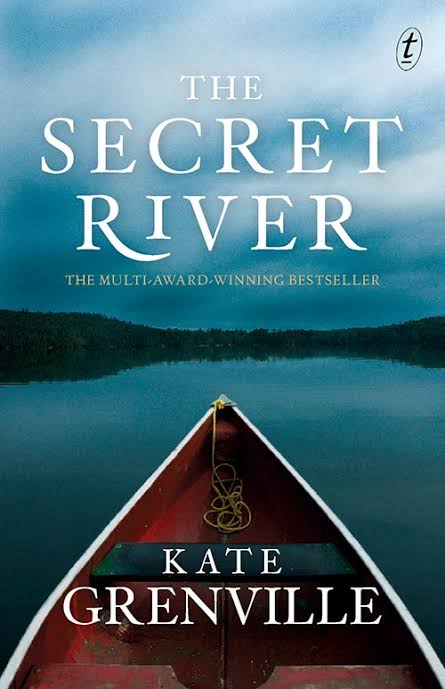
    And I’ve since been inspired by authors like Kate Grenville. Her book: The Secret River, quite honestly changed how I approached the craft of developing historical settings within my own work.

    Historical fiction is about writing plausible tales about what might have happened, which gives insight into what did happen.

    ~ Kate Grenville

    Thomas Keneally, and Melissa Lucashenko are a couple of more names. And, what makes their work so compelling is how they create settings that dump you right into the heart of the story.

    The secondary bonus here is, that it keeps their stories true to the period. And that means keeping a connection with more modern readers.

    I’ll never forget watching the TV adaption of The Secret River either. It left me feeling like I could smell the Hawkesbury River, hear the birds singing. I could smell the rum rations that every bludger appeared to be swilling.

    And then I thought: wow… now that’s the kind of immersion I want to strive for in my own writing.

    Now, before we dive in any further, I’d like to take a moment to acknowledge that… as writers of Australian historical fiction, we carry a responsibility.

    Our words shape how readers understand a shared past.

    And this isn’t about romanticising our country’s history. Nor is it about over-simplifying it.

    But… that it’s about creating nuanced and respectful portrayals of yesteryear and not creating any harm along the way.

    And trust me when I say this… I, for some self-masochistic reason, love learning the hard way. Always have. But after some early feedback from my editor, Ellie with her polite but firm signals about my portrayal of my characters and descriptions being far too vague and simple.

    It was a tough pill to swallow.

    Painful, too but ultimately necessary.
    Crafting Immersive Australian Worlds: The Essential Sensory Palette for Australian Period Literature

    When I started out, I leaned heavily on visual descriptions. Many writers do. Yet this has a tendency to lead into data-dumping and exorbitant exposition.

    The sensory dimension of Australian historical settings: the blinding light, the smell of eucalyptus after rain, the deafening silence of the bush. These are what make our stories uniquely Australian.

    ~Thomas Keneally

    And… as scenic as the architecture of early Melbourne city is. Or as breathtaking as the Outback can be. And as exciting as visiting Sydney’s The Rocks might appear. Australia ultimately demands to be experienced through all the senses.

    Its unique sensory landscape is what makes it distinctively Australian, and writers just can’t afford to leave that out

    Australian Light and Colour: Capturing the Distinctive Visual Elements of Historical Settings

    Australia’s visual landscape has changed dramatically over time, and even—more so—exponentially in the past few decades—as Global Investors take hold (Sigh).

    Well on the Eastern seaboard, and the mining regions at least, because the country’s interior has remained vitally the same, because—in and of itself—the dry, arid and even austere harshness of the environment effectively acts as its own defence mechanism.

    Now, I’ve spent much of my life looking through historical photographs, in old books, and now mostly online and what struck me was not only the quality of many of those old photos, but their archival ability to survive the rigours of time—much like the Australian environment, in general.

    And it’s quite ironic, when you think about it, plus… especially when you consider that harsh, unfiltered Australian sunlight is unmistakable as it blasts through the landscape in summer—right until the big old December storms come thundering in.

    Nothing out here that isn’t strong and dependable will survive, and that’s just a simple fact of Australian life—

    But did you know that early European painters also struggled to accurately capture the Australian light?

    They kept using techniques developed for European landscapes.

    Go figure—

    But it resulted in paintings that looked nothing like the actual Australian scenery, and it wasn’t until the Heidelberg School in the late 19th century that painters began to truly capture that distinctive Australian light and colour.

    I highly recommend checking this sort of thing out for yourself. And if you’re dead serious about writing on Australian history—or any country’s history, for that matter—then research historical photographs and paintings from your chosen era.

    You can spend hours scrolling through Trove’s digital collections—they’re that deep and thorough!

    Also, study how the human made environments evolved, from the ironbark rooftops… right up until the time where corrugated sheeting, which ultimately took over, becoming synonymous with the Australian landscape.

    Then there’s the evolution of the Queenslander home, itself, with all those old timber homes raised on stilts… with tongue and groove interior walls or… even the imposing sandstone buildings of early colonial cities—Adelaide; the City of Churches is rife with them.

    I captured hundreds of my own photographs, of these types of buildings. Most of them are old churches and cathedrals. But while the digital photograph may never capture that true sense of nostalgia, there’s still a myriad of stories in every detail, and on every wall!

    Historical Soundscapes: Recreating Australia’s Authentic Period Acoustics

    This is something I completely overlooked in my early writing!

    Before motorised transport, cities had completely different soundscapes. Camels were used to transport supplies and goods across the middle of Australia.

    Mostly because the environment, and lack of water was too harsh for horses and bullocks.

    But the clop of horses’ hooves still made their way through the cobblestoned streets of Sydney and Melbourne. All while street vendors were all busy calling out their wares. All with their distinct accents and immigrant charm.

    In rural settings, consider both natural sounds.

    For instance, the kookaburras laugh—a sound that still wakes me at the crack-of-dawn.

    It is a wild sort of laughter which they project. And one that ironically characterises this land.

    But, quite spookily, the only thing which can overcome their cackles is the wind ripping its way through the old, dry gum leaves.

    Then there’s the human-generated sounds. Like the rhythm of axe strokes as selectors cleared land. The squeak of old leather belts slowly turning the timber mills. Or the distant ring of a homestead bell calling workers home for supper.

    Aboriginal languages formed part of Australia’s historical soundscape too.  And many settlers became familiar with local Indigenous lexicon. In particularly those relating to the landscape’s features, such as flora, and fauna.

    Words like billabong, coolibah, and waratah entered colonial vernacular, early on. And along my own travels, I discovered some fascinating recordings in the AIATSIS archives.

    It contains early anthropologists’ recordings of traditional songs and language.

    Listening to those recordings gave me goosebumps but also added a whole new dimension to my storytelling.

    The absence of sound is important, too. And that profound silence, which often fills the bush—early in the morning, and late in the afternoons. It can pull visitors either into a state of nirvana, or complete despair.

    Majorly because the bush’s silence is so complete that it alone carries with it physical presence.

    European settlers often wrote about this silence in their journals. Most finding it either terrifying or transcendent, depending on their state or predicament.

    [if you’re interested in reading some of my work, then please check out AFGHANI. It’s available at all major online retailers]

    Afghani, by Brendon Patrick

    Evoking the Past Through Scent: Australia’s Historical Olfactory Landscape

    I think smell is the sense I struggle with most in my writing. It’s so important. But it’s so difficult to describe!

    For instance, how can you tell me what Vegemite on toast smells like?

    My guess is that if you asked 5 different people, then you’d likely get 5 different answers.

    You must also take into consideration that Australia has a distinctive olfactory landscape that has evolved over time.

    The smell of eucalyptus after rain. It’s fresh, almost medicinal scent that permeates the air, or the acrid smell of bushfire smoke—synonymous with Australian summers—which can often evoke a sense of fear.

    Then there’s the briny tang of coastal towns—think 1770, Pottsville and even Jarvis Bay.

    It’d be remiss of me to omit the earthy scent of dusty streets. Long before bitumen roads took over (yes… I’m old enough to remember that!)

    And finally… the yeasty aroma wafting from an artisan bakery.

    Urban environments had their own pungent profiles too.

    I grew-up near mushroom farms, pig and poultry farms. A meat works factory was nearby, and even a tannery.

    Depending on the time of day, you were often hit with a different but distinct smell.

    And I, at the very least, should mention the open sewers of early Melbourne and Sydney (ugh, right!), or the industrial smells of the old gelatine factories, the coal smoke that hung over cities, and let’s not forget the horses that left their own distinctive contributions… often adjacent to the sidewalks!

    I read a visitor’s account from 1870s Sydney that described the smell as being assaulting upon the senses that no European city could rival.

    It’s not exactly the touristy “where the bloody hell are ya” slogan, but it is quite evocative!

    From Damper to Fine Dining: Authentic Australian Culinary History in Fiction

    Food history provides such a rich vein for historical fiction writers, and I have found that including what my characters ate immediately grounded them within the story.

    The most compelling Australian stories are those that engage with the full sensory palette—the taste of damper cooked on an open fire, the feeling of wool against skin in searing heat, the distinctive soundscape of kookaburras at dawn.

    ~ Melissa Lucashenko

    But early colonial diets relied heavily on imported foods and adapted British cooking traditions.

    For instance, salted beef and damper were staples for explorers and bush workers, and while native ingredients, like kangaroo meat, macadamia nuts, and various fruits, like the Bunya Nut  were gradually incorporated, the Chinese gold miners also introduced their own new ingredients and cooking techniques, while the traditional foods of First Nations peoples varied, from region to region.

    Class distinctions were reflected in people’s degustation habits, too, and where wealthy colonists might’ve enjoyed a multi-course meal—including imported delicacies—the working-class Australians often survived on a far simpler fanfare.

    Seasonal availability also affected people’s diets—long before refrigeration and global supply chains arrived.

    I once tried baking damper, based a traditional recipes and cooking fish that I’d caught, all using methods I had to learn as part of military survival training—and let me just say that I’m so glad there is no smoke alarms out in the bush because my neighbours would have copped an awful fright.

    But that experience gave me details I never would have thought of prior.

    For instance, the way the flour feels under your hands—when you don’t have running water, or a working kitchen bench—the smell as it cooks, the different texture compared to modern bread. Then trying to eat it all and not breaking half of your teeth.

    But that’s damper, and it was never meant for fancy dining—or cavity prevention

    Tactile Australia: Writing Touch-Based Sensory Details in Historical Narratives

    Touch is perhaps the most intimate sense I can think of, and incorporating tactile details can draw readers deeply into your historical world. So, I highly recommend you at least consider, or imagine, for yourself, the physical sensations your characters might experience:

    The gritty feel of dust coating skin, in the heart of an historic drought, or the cloying weight of woollen clothing in summer heat because you’re dressed up like Nurse Nightingale.

    I couldn’t last 20 minutes before ripping that garb off.

    Then there’s the bite of sandflies, midgies and mosquitoes, or the roughening texture of the furniture sitting in a selector’s hut versus the smooth, polished surfaces in a wealthy merchant’s home.

    Maybe you can feel the sensation of perspiration constantly trickling down your back during a Queensland summer and herding cattle along an outback stocky route—long before electric fans and air-conditioned vehicles overtook their jobs.

    Weather extremes can definitely provide the all defining tactile experiences of a searing Australian summer, too, and you only have to imagine how that sort of heat could have affected metal tools—often making them too hot to touch—or the bone-chilling damp of winter in southern regions—also making metal tools hard to touch.

    Plus, there will always be this startling contrast between day and night temperatures in the desert.

    I’ve slept out Kakadu country—plus in and around Katherine—multiple times back in my Army days, enduring the swelling Northern Territory humidity throughout the day, and only to feel myself freezing to death at night because all I decided to carry with me was a lightweight sleeping bag and mozzie net.

    Beyond Backdrop: Australia’s Landscape as a Living Character in Historical Fiction

    In Australian historical fiction, the landscape is never merely a backdrop; it’s an active presence, and its own self-sufficient player which shapes the main characters and drives the narrative.

    The landscape in Australian fiction is never merely a backdrop. It’s an active presence that shapes characters and drives the narrative forward.

    ~ Kate Grenville

    This was a huge revelation for me when I first started writing!

    How Australian Geography Influenced Historical Characters

    Colonial settlers arrived with preconceptions based on their homelands, and with the expectations of predictable seasons, familiar terrain, and manageable conditions, but even after living and growing up in Australia, the country never ceases to surprise me, but it must have been an extreme shock to Captain Cook and Co.

    They were forced to adapt to the landscape… not the other way around—as they thought should be the case—and I love showing how my characters’ relationships with their environment evolves throughout a story.

    And where someone fresh off the boat, like George Sher Gul, in Afghani, who was immediately smacked in the face with everything the country had to offer. From monsoonal rail, flowing rapids, the long desert stretches with no respite in between. And then the mosquitoes and the crocodiles.

    His biggest lesson… to adapt and overcome!

    But saying that Australia has an unpredictable climate would be a gross understatement. The near biblical droughts and flooding rains that Dorothea Mackellar captured so perfectly in: My Country didn’t just bug historical Australians; it greatly challenged their ability to survive.

    The devastating Federation Drought (1895-1903) took away everything the farmers had and eventually reshaped rural communities.

    Hearing stories about losing everything in the Federation Drought, didn’t just affect historical families. And after two centuries since colonisation, family stories devastating floor, fire and storm continue to blur the lines between fact and fiction.

    In no uncertain terms has Australia, in all her abundant beauty ever been considered as forgiving—and that’s a recurring fact throughout Australian Historical fiction.

    Essential Elements for Compelling Fiction

    To write the Australian landscape authentically, I’ve learned to incorporate several undeniable factors:
    Indigenous Connection to Country: Essential Context for Australian Period Literature

    Any discussion of the Australian landscape should not be completed without acknowledging the profound connection of Indigenous Australians to Country.

    I’m not talking politics here, because for Aboriginal and Torres Strait Islander peoples, the landscape isn’t simply a physical environment, but a living entity imbued with spiritual significance, ancestral stories, and cultural knowledge which is tied to the very core of their being.

    In writing historical fiction about Australia, we must acknowledge that this continent contains not one history but many Indigenous perspectives spanning 60,000 years alongside more recent colonial narratives.

    ~ Melissa Lucashenko

    If your historical fiction touches on Indigenous perspectives or interactions between Indigenous and non-Indigenous characters, my advice is to, again, research the specific relationship to Country that particular Indigenous nation (there’s over 250 individual nations, so you may have to do some serious groundwork here) in your setting.

    Avoid generalisations, too because there’s also over 500 distinct Aboriginal language groups, otherwise known as Mobs, have their own distinct language, customs, and relationship to their land.

    With that said, if you encounter any points of confusion or contention, then consulting with an Indigenous cultural advisor can point you in the right direction, and you can always (read: I strongly encourage you) to access a sensitivity reader.

    The perspective these routes can offer have the ability to transform your understanding of that landscape.

    Representing Australia’s Diverse Historical Heritage

    Australian historical fiction must navigate a complex cultural landscape, especially when you consider how it’s been shaped by Indigenous cultures spanning sixty thousand years, British colonisation, waves of migration from diverse countries, and the evolution (and consequent devolution) of a distinctive Australian identity.

    Authentic Representation and Perspective

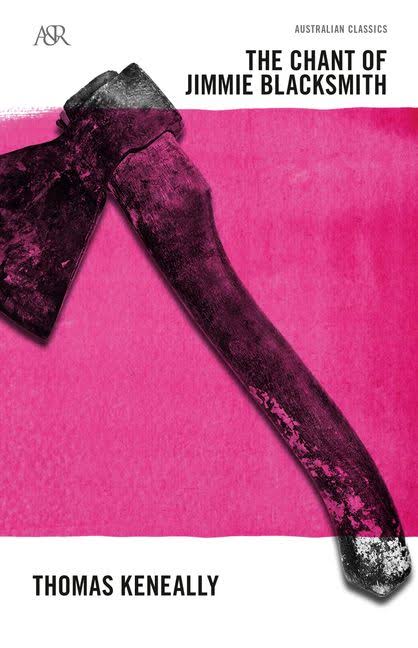
    A common failing in older Australian historical fiction, including some notable explanations and apologies (think Thomas Keneally and: The Chant of Jimmy the Blacksmith) was the erasure or misrepresentation of Aboriginal and Torres Strait Islander peoples.

    We now, both as writers, and a nation have a responsibility to acknowledge the continuous Indigenous presence in the Australian landscape, which is, in and of itself quite fascinating and enamouring!

    If writing from a non-Indigenous perspective about the colonial period, consider how your characters would have interacted with local Indigenous peoples, where once again it pays to mention Grenville’s: The Secret River.

    Historical attitudes ranged from curiosity and respect to fear and hostility or, in extreme case, outright brutality. More so, while some of the more conscious settlers learned from Indigenous knowledge of the land; others participated in frontier violence and genocide.

    I struggle with this in my own writing—in a very emotional way.

    How do I accurately represent historical attitudes while not perpetuating harmful stereotypes?

    I have found that focusing on individual, fully developed characters rather than types helps navigate this complexity. However, that is not me searching for an excuse to sidestep the issue, but a method to navigate the limitations of my characters’ perspectives. Eg, showing readers that a character’s biased view isn’t necessarily the truth of the situation, and that it isn’t necessarily my view either.
    Social Structures in Historical Australia: Class Hierarchies and Their Impact

    Class distinctions were a defining feature of colonial Australian society. And though they operated somewhat differently than in Britain, and more so on a more in an egalitarian space, but also because the gold rushes of the 1850s created social mobility that disrupted traditional hierarchies.

    This ideal of egalitarianism, captured in the concept of mateship and loyalty that coexisted among a young society, despite the stark inequalities. Noting that at that time, Melbourne had become one of the richest cities in the world!

    Social markers were important in historical Australia. People’s accents. Their dress. The manners, and vocabulary signalled one’s place in the hierarchy.

    Writing Authentic Gender Experiences

    Gender profoundly influenced how historical Australians experienced their environment, too and while frontier life sometimes needed flexibility in gender roles, social expectations remained as an imposing force.

    For instance, a women’s freedom was often restricted by both practical considerations (clothing, transportation) and social expectations. Their access to education, property ownership, and economic independence evolved significantly over time.

    Men’s experiences were shaped by expectations of physical prowess, emotional stoicism, and economic provision.

    The Australian type celebrated in late 19th century literature: The Bushman, The Digger each created opportunities and constraints for men who didn’t conform to this ideal.

    Authentic Australian Dialogue: Crafting Period-Appropriate Language for Australian Period Literature

    Language is your primary tool when creating an historical atmosphere, and yet it still presents one of our greatest challenges.

    For instance, how do you create dialogue and narration that feels authentic to the period without alienating modern readers or falling into a walking cliché or parody?

    I struggled with this so much when I started writing!

    After reader Hemingway’s: The Sun Also Rises, I fell in love with not only the character voices he created, but with the mythology of Hemingway himself. And that essentially led me to believing this was my benchmark, but to achieve those heights, I had to sound like Hemingway.

    The only problem there being is, I’m Australian, and I’m definitely not Hemingway. Therefore, I sound nothing like him and nor do historical Australians. I was honestly writing myself into an abyss—

    Historical Language Development for Writers

    Australian English has evolved significantly since colonial times, and the early colonists brought various British and Irish regional dialects. But, over time, this introduction began to blend itself with influences from Aboriginal languages, American English, and the languages of multiple other immigrant groups.

    By the late 19th century, visitors were commenting on the distinctive Australian accent and vocabulary. The following words also found their way into the Nations lexicon:
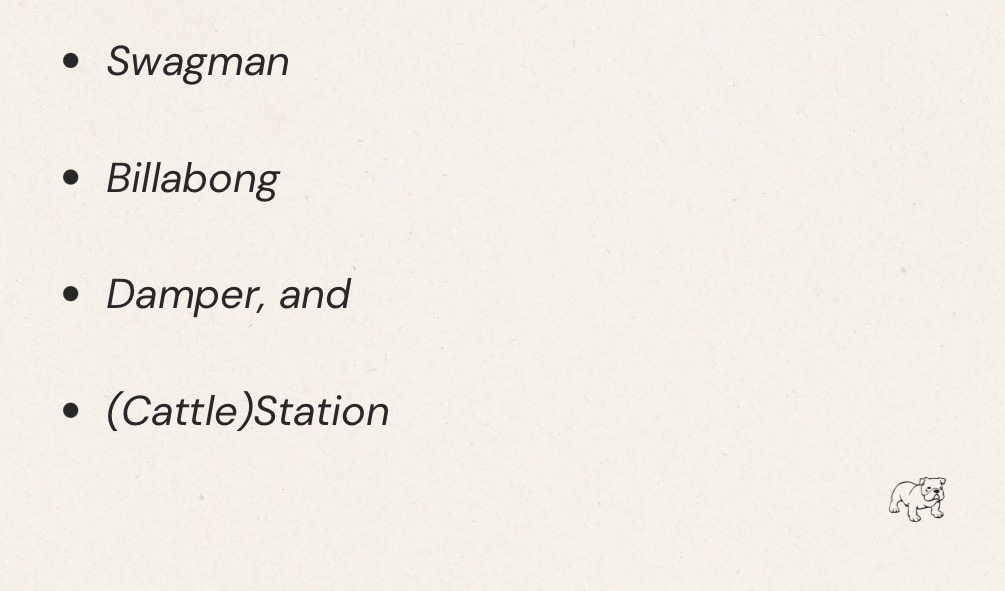
     And while of these words had usages, back in Britain for example, the Australian adaptation often came with meanings specific to an Australian context.

    Class and education strongly influenced language use, too, and a wealthy station owner educated in England would speak vastly differently from a drover or a shearer.

    Regional variations existed too, with different colonies (later states) developing subtle linguistic differences. For example, in Brisbane would refer to the posts which supports the city’s powerlines as a ‘Power Pole’. But in Adelaide, their version is known as a ‘Stobie Pole’—a name which is weirdly unique to South Australia.

    Balancing Language in Australian Period Fiction

    The key to effective historical dialogue is suggesting period speech patterns without reproducing them verbatim.

    The key to writing authentic Australian historical dialogue is suggesting period speech patterns without reproducing them verbatim.

    Complete accuracy would render dialogue impenetrable to modern readers.

    ~ Richard Flanagan

    Complete accuracy is boring, and quite honestly, verbose. Plus, it would probably render dialogue impenetrable to most modern readers!

    I aim for what I call a historical flair… rather than shooting for period perfect accuracy.

    Some approaches that work for me:
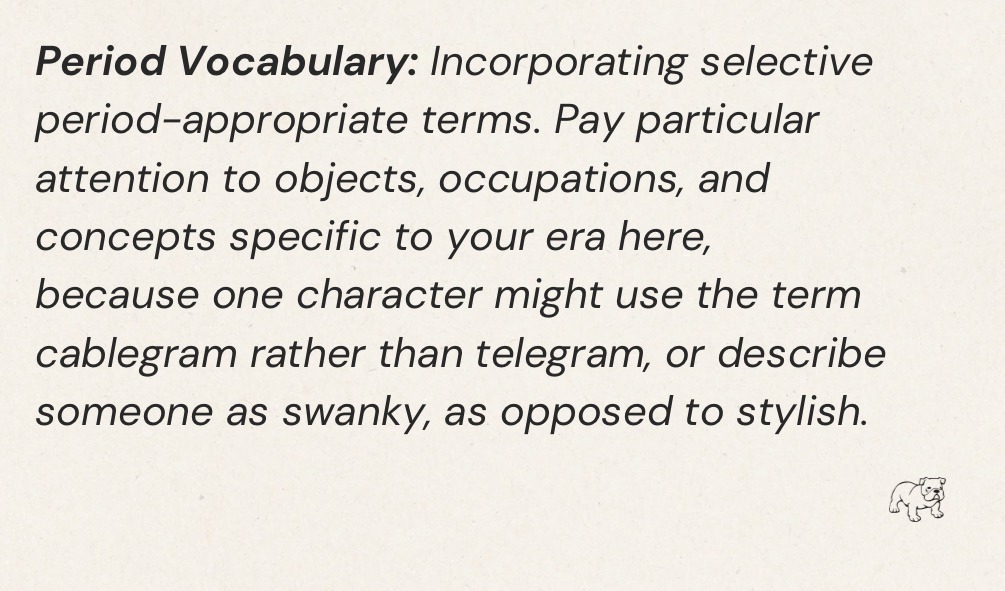
    Research Techniques for Australian Period Literature: Finding the Perfect Balance

    Research is the foundation of compelling historical fiction, yet it can also become its downfall if you handle it incorrectly.

    The challenge for historical fiction writers is to balance authenticity with emotional resonance. Research provides the skeleton, but imagination adds the flesh and blood.

    ~ Thomas Keneally

    I’ve fallen into the trap myself; either by not researching thoroughly enough or becoming so obsessed with research that I never actually get any writing done. Likely meaning that I’m using research as my crux which keeps me from putting pen to paper.

    Primary sources like diaries, photographs, and newspaper clippings don’t just provide historical facts—they capture the emotional tenor of an era and reveal how people experienced their sensory world.

    ~ Jackie French

    Unlocking Authentic Period Details

    For creating sensory-rich Australian historical settings, the following primary sources are priceless:
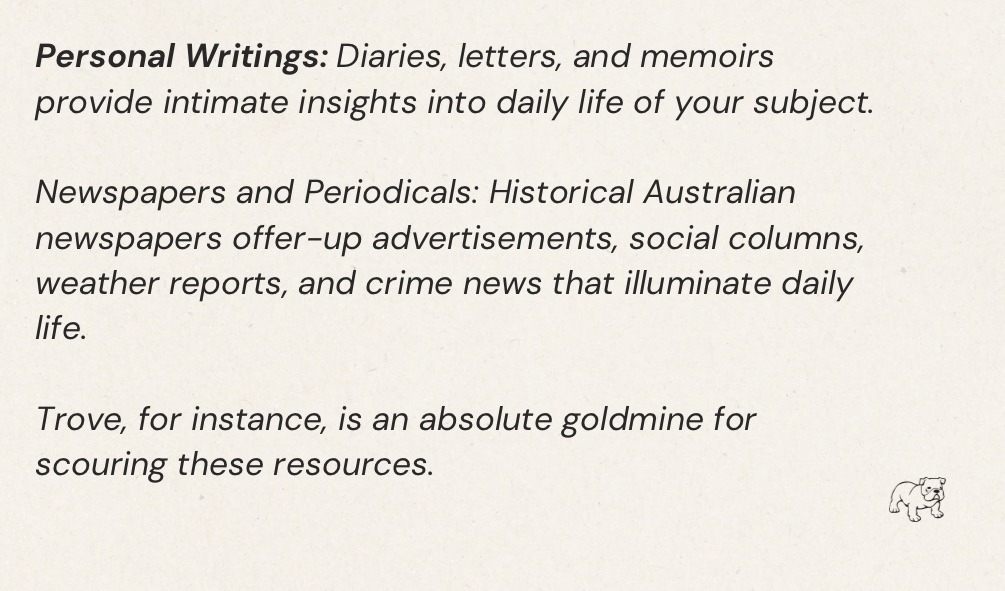
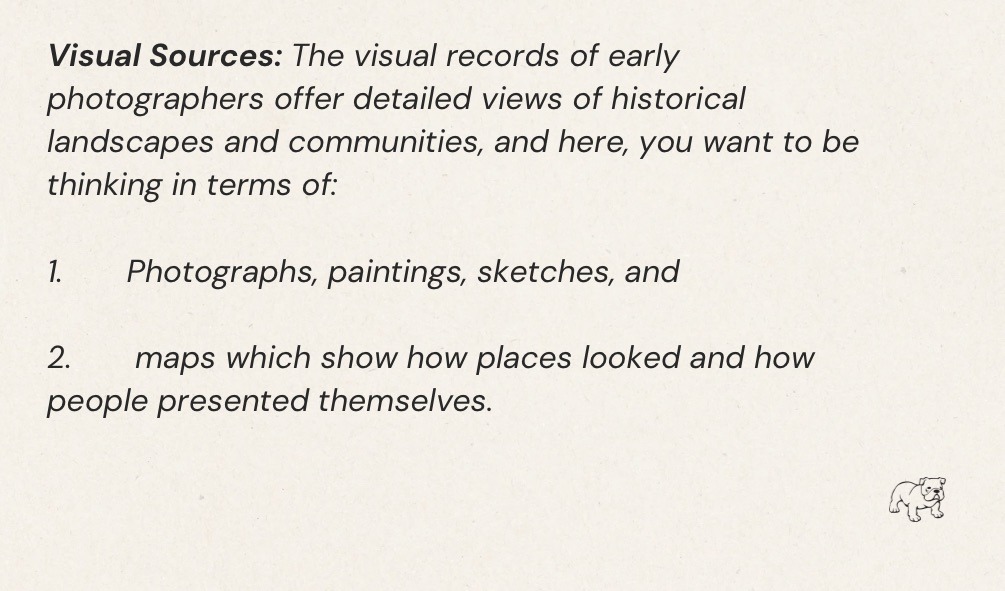
    Conclusion: Weaving Your Australian Historical Tapestry

    The most effective Australian Period Literature integrates sensory details, historical research, character perspective, and emotional resonance into a seamless whole. But, as you develop your approach to historical settings, consider what makes your perspective unique:
    Writing Australian period literature isn’t just about crafting convincing backdrops for your characters and plots, because it’s also about participating in our national conversation. This is the story about who we once were and have since become, and who we might be in the years to come. It’s about weaving in new threads into our complex but beautiful, and sometimes troubling tapestry of Australian history.

    FAQ

    What defines Australian period literature?

    Australian period literature encompasses fiction set in historical Australian settings, typically exploring themes of identity, landscape, colonisation, and the unique social dynamics of Australia’s past.

    It often features distinctive Australian dialogue, sensory descriptions of the landscape, and engagement with both colonial and Indigenous perspectives.

    How important is historical accuracy in Australian period fiction?

    While historical accuracy provides the foundation for believable fiction, Australian period authors generally aim for authenticity rather than perfect accuracy.

    The goal is to create an emotionally resonant experience that captures the essence of the era while making the story accessible to modern readers.

    What research sources are most valuable for writing Australian historical fiction?

    Primary sources like diaries, newspapers, photographs, and letters provide the most authentic insights.

    The National Library of Australia, state libraries, historical societies, and Trove (the digital collection) offer valuable resources.

    Museums and heritage sites provide sensory details that cannot be fully captured in written records.

    How do successful authors incorporate the Australian landscape in historical fiction?

    The most compelling depictions treat the Australian landscape as an active character rather than mere backdrop.

    This involves engaging all senses—the distinctive sounds of native birds, the smell of eucalyptus after rain, the quality of light, and the texture of the environment—to create an immersive experience.

    What sensory elements are particularly important in Australian historical fiction?

    Beyond visual descriptions, successful Australian period literature incorporates the distinctive sounds (kookaburras, cicadas), smells (eucalyptus, bushfire smoke), tastes (native foods, colonial cuisine), and tactile sensations (wool clothing in heat, red dust) that defined the historical Australian experience.

    Other Articles Linked to How to Write Historical Dialogue

        1. 10 Inspiring Primary Source Secrets

        1. What is Historical Fiction

        1. How to Write Captivating Fiction

        1. How to Write Historical Dialogue

      Bibliography

      Resources

      Kate Grenville: The Secret River

      Thomas Keneally : The Chant of Jimmy the Blacksmith

      Melissa Lucashenko

      Dorothea Mackellar: My Country

      Ernest Hemingway:  The Sun Also Rises

      Trove’s digital collections

      AIATSIS archives

      Heidelberg School (late 19th century Australian art movement)

      Federation Drought (1895-1903)

      Thomas Elder (brought camels to Australia)

      Academic Citations

      1. Grenville, K. (2005): The Secret River. Text Publishing.

      2. Keneally, T. (1972): The Chant of Jimmie Blacksmith. Angus & Robertson.

      3. Lucashenko, M. (Various works).

      4. Mackellar, D. (1908): My Country. The Spectator.

      5. Hemingway, E. (1926). The Sun Also Rises. Scribner.

      6. National Library of Australia. (n.d.). Trove digital collections. https://trove.nla.gov.au/

      7. Australian Institute of Aboriginal and Torres Strait Islander Studies. (n.d.). AIATSIS archives.  https://aiatsis.gov.au/

      8. Various Artists. (Late 19th century). The Heidelberg School art movement.

      9. Australian Bureau of Meteorology. (n.d.). The Federation Drought (1895-1903). http://www.bom.gov.au/

      10. Elder, T. (19th century). Introduction of camels to Australia for inland exploration and development.

    1. Writing Historical Dialogue in 6 Easy Steps

      Writing Historical Dialogue in 6 Easy Steps

      A Writer’s Guide

      The past is a foreign country; they do things differently there

      ~ L.P. Hartley

      One little anachronism and the spell is broken—

      These words provided me with the perfect kick in the pants when I first started writing historical dialogue . They captured the challenge for me, but I’m guessing that’s something we’ve all faced when crafting historical dialogue.

      But have you ever noticed how readers react when they spot words that kinda sit like a square peg, trying to squeeze into a round hole—it just doesn’t match the time period!

      It’s a sure-fire way to seeing them slam the book shut!

      Too make the climb even steeper, writing dialogue gets even trickier the further back in time. That’s because English takes on these weird, unfamiliar forms. But creating conversations that are authentic will transport readers to your desired time and space. And that’s precisely why we’re all doing this, right?

      Written dialogue compared to actual historical speech is like a Rachmaninov sonata compared to cat videos on YouTube. We all watch and love them, but it’s never a fair comparison!

      However, we don’t actually want perfect historical accuracy; that often has the effect of confusing the crap out of readers. So, our goal is to create an authentic illusion instead.

      Language, throughout history, is often reflected through the social classes, too. And, a nobleman’s speech is going to be vastly from a street vendor’s words… and a 19th-century doctors vocabulary will heavily contrast with that of a medieval monk’s colloquial expressions. I learned this the hard way when a beta reader told me all my characters sounded exactly the same. Shit!

      This piece explores ways to craft historical dialogue that balances authenticity with readability. You’ll learn everything from period-appropriate vocabulary to adjusting character voices based on social status. These techniques will help your historical characters speak in believable ways that chime in with readers, and I wish I’d had this guide when I started writing.

      Table of Contents

      What Makes Historical Dialogue Unique

      • Why modern speech doesn’t fit
      • The illusion of authenticity vs. actual accuracy 

      Understand the Reader’s Expectations

      • What readers want from historical dialogue
      • How much accuracy is too much

      Technique 1: Use Period-Appropriate Vocabulary

      • How to find era-specific words
      • Avoiding overuse of archaic terms

      Technique 2: Adjust Tone Based on Social Class

      • How nobles, workers and clergy spoke differently
      • Examples of class-based speech patterns

      Technique 3: Sprinkle in Historical Flavour

      • Using dialects, idioms and foreign words
      • When to explain unfamiliar terms

      Technique 4: Research Real Sources

      • Using letters, plays and newspapers
      • Tools like the Oxford English Dictionary

      Technique 5: Balance Clarity with Authenticity

      • Modern readability vs. historical realism
      • How to simplify without losing flavour

      Technique 6: Test Your Dialogue

      • Reading aloud to catch awkward phrasing
      • Getting feedback from critique partners

      What Makes Historical Dialogue Unique

      Historical dialogue succeeds when it bridges the gap between the past and the present. When it feels historically accurate yet accessible to a contemporary audience.

      ~ Rebecca Pickens, Historical fiction writing coach at The Historical Fiction Company

      Historical dialogue sits in a unique position within the literary canon. It’s a space where real history meets today’s readability, and, unlike other parts of historical fiction, dialogue will bring its own set of challenges that can either pull readers into your story or have them running for the hills.

      I use modern English but change it sideways a little, so that there are some unusual words, some Tudor rhythms, a suggestion of otherness.

      ~ Hilary Mantel, Booker Prize-winning author of Wolf Hall

      Why modern speech doesn’t fit

      The English language has seen dramatic changes through history, and the change often occurs, incrementally throughout the generations.

      This creates a fundamental problem for readers and writers alike. Just try reading Chaucer’s Canterbury Tales from the 14th century.

      Aleyn spak first, Al hayl, Symond, y-fayth; How fares thy faire doghter and thy wyf?

      Literally. WTF?

      Hopefully, now, you’ll quickly see why truly authentic historical speech just doesn’t work in today’s fiction. I mean, who talks like that anymore?

      However, we need to tread lightly here, when transforming the past to present, because modern expressions can destroy the historical illusion quickly. For instance, you would have never heard James Joyce using the word YEET!

      Let’s look at some other examples that break immersion:

      Modern language brings about modern thinking.

      Historical fiction experts point out that characters from earlier periods: mustn’t express ideas they could not have had, and feelings they would not have had. For instance, they didn’t draw metaphors from a scientific worldview, but from a religious one. They weren’t democrats. And they weren’t feminists (at least not until the mid 19th century). But people back then saw their world through completely different eyes. If you’re writing with a set agenda, it can be troublesome learning to accept this!

      Social class shaped how people spoke too. The upper classes used formal speech with complex sentences and refined vocabulary. Working-class characters spoke more directly, often using colloquialisms and slang.

      People’s speech patterns differed too, changing based on who they talked to. I’ve found this little intricacy quite challenging when writing across gender lines.

      The illusion of authenticity vs. actual accuracy

      A central paradox exists in historical dialogue: authenticity is not the same as accuracy.

      Historically accurate dialogue would confuse today’s readers, especially in stories set before the 18th century. Just try reader an accurate translation of: The Divine Comedy, which requires its own translation guide.

      Historical novelists don’t want to misrepresent our ancestors, but we don’t want to make the reader impatient.

      ~ Hilary Mantel

      Nowadays, writers must create what experts call the impression of accuracy while keeping the language relatable to modern audiences.

      This impression often matters more than actual accuracy in storytelling. Writers perform a literary magic trick. We aim to craft dialogue that feels historically believable yet remains readable and engaging. It is like we’re all pulling off this elaborate con job, isn’t it?

      Skilled writers create this illusion by:

      Many historical fiction writers (me included, when I first started out) make their characters sound a certain, no matter the time period. It’s often the voice we here inside our own imaginations. Take the Victorian era as a predictable example. Speaking this way—on the page—creates its own problems. And because Victorian speech patterns were unique in history, almost no one in any other historical period spoke like the Victorians.

      Stories set in Anglo-Saxon times might actually sound more authentic using today’s language (minus obvious modern terms) than stiff and uptight Victorian prose. Still, readers expect certain things to sound historical, even when these expectations don’t match reality. It does get frustrating at times, but these are the parameters we’re dealing with.

      The goal isn’t to perfectly copy how people spoke. That’s quite impossible. Instead, writers should aim to transport readers mentally while keeping them grounded in the present.

      Good historical dialogue builds a bridge between past and present. It feels true to the period yet; it should make sense to today’s readers.

      Understand the Reader’s Expectations

      Historical fiction readers bring a unique set of expectations that might catch even seasoned writers off guard. Therefore, writers need to understand these expectations and create dialogue that strikes a chord while it keeps a realistic appeal.

      What readers want from historical dialogue

      Readers long to lose themselves inside a good book. But they also want dialogue that takes them to a different era without reaching for a dictionary every second line. I know that would piss me off. Plus, it breaks my flow and concentration, so I end up losing my place in the book.

      So, it goes without saying, that this would create an interesting challenge for writers, because readers need both authenticity and readability at the same time.

      Here’s what readers look for in historical dialogue:

      Many readers care more about how authentic the dialogue feels than actual historical accuracy.

      As one historical fiction editor put it: Readers don’t necessarily know what’s historically accurate, but they know what feels right.

      This feeling comes mostly from other historical fiction they’ve read, which means fictional standards sometimes matter more than historical facts. A weird paradox, right?

      The dialogue should also reflect the societal structures of the time. A peasant, for instance will talk differently to a King than he would to other peasants.

      These speech differences help readers get a grip on the social fabrics of the historical world.

      How much accuracy is too much?

      Readers want authenticity. But… too many cooks do spoil the broth, and though historical accuracy matters, we can often do more harm than good. Writers must know when to simplify and when to keep period details.

      You might have too much accuracy if:

      Historical accuracy becomes a problem when readers can’t enjoy or understand the story.

      Medieval English would make no sense to today’s readers. Even Victorian English, which is easier to understand, can sound too formal if copied retentively.

      On top of that, regional accents pose special problems. Writing out accents exactly might be historically accurate, but it often frustrates readers.

      Take this Scottish dialogue, for instance: Och, dinnae fash yersel’ aboot it, hen. A’m no’ needin’ yer help th’ day.

      Is it accurate? One hundred percent. Can I understand it; well, sorta, but I’m only guessing.

      Most readers would prefer something simpler: Do not trouble yourself about it. I don’t need your help today.

      With just a touch of accent in key phrases, this instantly becomes more immersive, and palatable.

      Therefore, we should aim to create what historical fiction novelist Hilary Mantel calls a credible world rather than a perfect copy.

      Historical dialogue is nothing more than a tool we employ in bringing the period to life while keeping the punters entertained.

      So, once again… good historical dialogue isn’t about perfect recreation. Writers need to translate the past for modern readers while keeping its unique character and broth intact.

      Technique 1: Use Period-Appropriate Vocabulary

      The right vocabulary builds the foundation of believable historical dialogue. A single out-of-place word can break the illusion of your historical world and pull readers away from your story. Research skills and artistic judgment will help you strike the perfect balance between authentic period vocabulary and readability.

      How to find era-specific words

      Primary sources like letters, diaries, newspapers, and speeches from the time period can provide a sense of the vocabulary and expressions people used.

      ~ Rebecca Pickens, Historical fiction writing coach

      Writers need to understand when words entered the English language.

      Many authors (including yours truly!) have made the mistake of using terms that didn’t exist during their story’s timeline.

      These following resources will help you check when specific words came into use:

      Primary sources from your chosen era offer valuable vocabulary insights too.

      The period’s letters, plays, newspapers, and literature show words in their proper context.

      Reading these materials can help you get a handle on the language’s rhythm and flow, along with all the specific, and relevant words.

      Here’s a practical example: An author writing about 1848 had a character who tuned out during an argument. Research showed this phrase appeared in 1908. Some sixty years too late. The same character couldn’t update someone because that verb usage started in 1944. I’ve made similar mistakes… but it happens to us all!

      Verbs often cause anachronism problems, too, and English nouns can change into verbs as language grows. The word impact existed as a noun until the 1870s before people used it as a verb. Google Ngram Viewer helps track these changes in word usage.

      Avoiding overuse of archaic terms

      Authentic vocabulary adds realism, but too many old-fashioned words make the text hard to read. A seasoned historical fiction editor once said: The biggest problem is that modern readers don’t know this language.

      Ain’t that the truth!

      The solution lies in balance.

      A light touch of period-appropriate terms creates atmosphere without confusing readers. Think of historical vocabulary like seasoning—just enough to add flavour.

      Authors sometimes believe more archaic language makes their work more authentic. This approach fails because modern writers can’t use old language naturally. We don’t speak it daily or hear it from others—making it hard to use correctly and making it easy for readers to quit.

      Period-appropriate dialogue works best when the story comes first.

      So, ask yourself this: Do you want readers to experience your characters’ world or show off your research?

      The language should help tell your story, not create barriers for readers.

      Watch for these warning signs of too much archaic language:

      As I’ve stated, on multiple occasions, the goal isn’t perfect historical accuracy but creating believable authenticity. Choose words from your time period carefully. Avoid overwhelming readers with obscure terms and create dialogue that honours history and keeps the reader engaged.

      Technique 2: Adjust Tone Based on Social Class

      Societal classes have, undeniably shaped how people speak throughout history.

      But they’ve also created clear linguistic markers that writers of historical fiction need to understand for believable dialogue. Most societies had deep social divisions, and language both showed these divisions and helped keep them in place.

      How nobles, workers, and clergy spoke differently

      The way people spoke in historical societies went way beyond their choice of words. Christian Europe’s three-estate system—clergy (First Estate), nobility (Second Estate), and commoners (Third Estate)—led to some quite distinguishable speaking styles.

      Nobles developed speech patterns that showed their high status.

      Their language had these features:

      Rules about who could speak to whom and how they addressed each other were also crucial.

      Or, as one source points out: Who entered the room before who was very important if you’re writing about the aristocracy, as well as getting their titles correct.

      Commoners made up over 90% of the population in pre-revolutionary France.

      They spoke more directly and practically because of their different priorities and education. The Third Estate itself had major differences between the bourgeoisie (middle class) and the working poor—also known as sans-culottes.

      The clergy held a special position which formed a bridge between the classes.

      Their speech was full of religious vocabulary, with Biblical references and Latin phrases mixed in with conversation, and the Church offered rare chances for social mobility, letting commoners rise to powerful positions.

      Examples of class-based speech patterns

      Research shows strong links between social class and speech patterns.

      Studies have shown that people could detect a speaker’s social class just by hearing short speech samples.

      Writers of historical fiction should adjust their dialogue based on each character’s background.

      Here are some class-based differences:

      Writers should heed on the side of caution when showing non-standard dialogue, too.

      One source even cautions that dialogue can be unintentionally classist or racist when proper speech comes from those in power, suggesting that non-standard English speakers are ill-educated, ignorant, or inferior.

      My suggestion here is to hire a sensitivity reader who can point out any indiscretions in your manuscript.

      Social class boundaries have become blurred over time, but writers still need to understand historical speech patterns for authentic dialogue. Speech doesn’t just show social position; it helps maintain it. Characters knew these differences well and adapted, based on who they spoke to.

      And now we, as creative writers, can build more authentic historical worlds by adjusting dialogue tone based on social class. This helps characters speak in ways that not only show off their personalities, but their place in social hierarchy.

      Technique 3: Sprinkle in Historical Flavour

      Writing authentic historical dialogue needs a delicate touch, too. And, just as a chef knows exactly how much seasoning works best, writers of historical fiction have to understand that strategic placement matters more than quantity.

      Using dialects, idioms, and foreign words

      The less is more principle makes historical dialogue work better.

      Hilary Mantel, who wrote the acclaimed Wolf Hall trilogy, talks about her method: I use modern English but change it sideways a little, so that there are some unusual words, some Tudor rhythms, a suggestion of otherness.

      This approach creates a 16th century English feel without alienating its modern readers. I’ve tried to follow her example, but it’s harder than it looks!

      A single word can transport readers to a different time.

      Larry McMurtry shows this in Lonesome Dove’s first dialogue:

      You pigs git, Augustus said, kicking the shoat.

      Head on down to the creek if you want to eat that snake.

      The word git (instead of “get”) takes us right to the American frontier. It connects to the classic cowboy song Git Along, Little Dogies while keeping the text available to readers.

      Foreign words and phrases add authenticity when used naturally. Here are some good approaches:

      Your research should include interesting or period-specific phrases that catch your eye. Phrases from newspaper articles of your chosen era showed up in daily conversations too. These real expressions will impact your readers the same way they affected you.

      I keep a special notebook just for these phrases!

      When to explain unfamiliar terms

      Even carefully chosen historical terms sometimes need explanation.

      The trick lies in clarifying without breaking the story’s flow. Several methods work well:

      Note that readers don’t need to understand every foreign term exactly. The word’s general role in context usually gives enough meaning to enjoy the story, and you really just have to trust that your readers will ‘get it’!

      Technique 4: Research Real Sources

      Primary sources like letters, diaries, newspapers, and speeches from the time period can provide a sense of the vocabulary and expressions people used.

      ~ Rebecca Pickens, Historical fiction writing coach at The Historical Fiction Company

      Primary sources are the foundations of authentic historical dialogue.

      The past comes alive through documents written by people who lived during your chosen era, but they’re also a great way to get insights that no modern reference book can match.

      Using letters, plays, and newspapers

      Letters are still one of the most valuable resources for historical dialogue writers.

      Letter writing has been one of the most pervasive literate activities throughout history, dating back to the earliest forms of writing, and they hold a special place in our history because writers penned them at the time of historical events. They capture raw emotions and contemporary language patterns that retrospective accounts can only mimic.

      POW letters during World War II reveal fascinating insights, too.

      A captured Greaser Claude Bloss exchanged 223 letters with his wife Dorrie throughout the 5 years he was locked up. His letters gave an authentic glimpse into how people communicated during periods of extreme duress.

      This, you must understand, is something we cannot fabricate convincingly without proper and thorough research.

      Theatrical works offer another wealth of dialogue examples.

      Unlike formal writing, plays aim to replicate natural speech patterns of their era.

      Shakespeare, for instance, shows how different social classes spoke in Elizabethan England, while restoration comedies showcase the witty banter of 17th-century aristocrats.

      Historical newspapers hold rich material for dialogue writers—such as:

      Digital collections now make accessing historical newspapers easier.

      The Centre for Research Libraries helps locate hard-to-find newspapers on microfilm.

      Projects like Chronicling America give access to digitised newspapers dating back to 1690.

      You can literally get lost for hours trawling through this material.

      Tools like the Oxford English Dictionary

      The Oxford English Dictionary (OED) stands as the preeminent resource for historical dialogue writers. Each word entry in the OED provides:

      The OED shows that dialogue first appeared as a verb in the late 1500s, with earliest evidence from 1595. This precision helps writers avoid anachronisms that break reader immersion quickly.

      The OED proves valuable especially when checking expressions commonly misused in historical fiction.

      Research shows that tis and ’twas appeared from the 1500s onward, while ‘twere showed up mainly in 1800s writing.

      Many writers sprinkle these terms into medieval dialogue incorrectly, but I’m guessing we’re all guilty of this too!

      The Historical Thesaurus of the Oxford English Dictionary (HTOED) organises words chronologically.

      One scholar calls it a map of English language development, while historical novelists find this resource helpful to avoid anachronistic dialogue.

      Writers should immerse themselves in primary sources from their target period first.

      Then they can use reference tools like the OED to verify specific word usage.

      This approach grounds dialogue in authentic patterns while preventing embarrassing anachronisms that alert readers might notice.

      Technique 5: Balance Clarity with Authenticity

      The biggest challenge in crafting historical dialogue lies in striking the right balance between authenticity and clarity.

      Historical dialogue works best when it bridges the gap between the past and the present—when it feels historically accurate yet available to a contemporary audience.

      Modern readability vs. historical realism

      Historical accuracy sometimes needs to give way to modern comprehension.

      One expert points out that, It is sometimes better to err on the side of clarity, even at the cost of some original complexity.

      This balance becomes especially vital in historical fiction where archaic language might push readers away.

      The main goal isn’t to perfectly reproduce history but to create what we call the illusion of authenticity.

      Just like stage makeup appears exaggerated up close but looks perfect from the audience’s view, historical dialogue succeeds when it gives readers enough period flavour without overwhelming them.

      Cultural context and historical accuracy play vital roles—

      A medieval knight shouldn’t be spouting modern slang.

      Yet… going too far in the interests of period-accurate dialogue can alienate most readers.

      How to simplify without losing flavour

      These practical approaches help achieve this delicate balance:

      Readability matters more than getting your historical diction 100% accurate.

      Your main goal should focus on clarity while giving readers just enough older touches to evoke the time period.

      Successful historical dialogue creates a delicate dance between realism and readability.

      That means, you need to capture the essence of historical speech while removing elements that might confuse modern readers.

      Technique 6: Test Your Dialogue

      Your historical dialogue needs thorough testing before publication, no matter how much research you’ve done.

      The right vocabulary and tone based on social class take hours to craft, but these final checks help your historical dialogue appeal to readers.

      Reading aloud to catch awkward phrasing

      Reading your historical dialogue aloud is the most powerful testing technique you can use.

      Professional writers recommend this practice as their top addition to any writing routine for crafting dialogue.

      My brain often skips over errors, repeated words, and odd phrasing during silent reading, b reading aloud makes me notice every word and quickly reveals:

      You should release your inner actor while testing historical dialogue.

      Think of yourself recording an audiobook, because this approach helps you spot places where readers might stumble or lose themselves in your historical world. I read everything aloud now, even if it makes my dogs think I’ve lost my mind!

      Getting feedback from critique partners

      Careful self-editing isn’t enough because blind spots always exist in our work.

      The right critique partners are a great way to get feedback on historical dialogue.

      The word qualified absolutely matters here, because you need fellow writers who understand historical fiction and correct grammar and syntax.

      One expert even stresses that if someone who isn’t a writer offers to read your historical dialogue, to just SAY NO.

      People who don’t write usually can’t spot character inconsistencies, plot problems, or modern speech patterns.

      Your critique partners need specific questions about your dialogue, like:

      Does the dialogue sound authentic to the period?

      Are there places where modern phrasing breaks immersion?

      Do different social classes sound distinct from each other?

      Good communication matters most, because critiquing works both ways.

      A strong critique partner relationship works like dating and needs clear expectations.

      Their fresh eyes often catch problems you miss after months of writing.

      [if you’re interested in reading some of my work, then please check out AFGHANI. It’s available at all major online retailers]

      Afghani, by Brendon Patrick

      Conclusion

      Final Thoughts on Crafting Believable Historical Dialogue

      I like to create imaginary characters and events around a real historical situation. I want readers to feel: OK, this probably didn’t happen, but it might have.

      ~ Ken Follett

      Period fiction writers face their biggest challenge in creating historical dialogue , yet it brings the most satisfaction.

      This article explores how authentic-sounding conversation needs both careful research and creative judgment.

      Your readers will stay immersed in your fictional world if you can balance historical accuracy with modern readability.

      Note that creating the illusion of historical speech matters more than perfect accuracy.

      Most modern readers would find actual medieval dialogue confusing, while Victorian patterns might sound forced and unnatural.

      Your goal should be what Hilary Mantel calls a credible world where characters speak authentically without overwhelming your audience.

      Research is without doubt the foundation of believable historical dialogue.

      Primary sources like letters, newspapers, and plays are a great way to get insights into how people communicated in your chosen era.

      The Oxford English Dictionary helps verify when specific words became common, which prevents embarrassing anachronisms that break reader immersion.

      Speech variations based on social class play a crucial role.

      Nobility used different speech patterns than commoners, while clergy spoke with distinct religious vocabulary. These differences showed and strengthened social hierarchies that today’s readers expect to see in historical fiction.

      Reading your dialogue aloud and getting feedback from qualified critique partners will improve your work by a lot. This helps you spot awkward phrases that might look good on paper but sound strange when spoken.

      Several techniques work together to create dialogue that keeps readers engaged while transporting them to another time.

      You can use period-appropriate vocabulary, adjust tone for social class, add historical flavour, study primary sources, and find the sweet spot between clarity and authenticity.

      These skills help you write conversations that feel real without becoming hard to read.

      Your historical characters should have voices that show both their era and their unique personality.

      Readers forget they’re reading fiction when you find the right balance, and historical dialogue works best not by copying exactly how people spoke, but by creating a believable illusion that makes the past come alive.

      FAQs

      How can I make historical dialogue sound authentic without being difficult to read?
      Balance period-appropriate vocabulary with modern readability.

      Use a light sprinkling of era-specific terms and phrases to create atmosphere but keep most of the language neutral and accessible to contemporary readers.

      Should I use actual historical speech patterns in my dialogue?
      No, actual historical speech would likely be incomprehensible to modern readers.

      Instead, create an illusion of authenticity by adjusting tone, vocabulary, and phrasing to evoke the era while keeping the dialogue understandable.

      How do I adjust dialogue for different social classes in historical fiction?
      Research how social class affected speech patterns in your chosen era.

      Upper classes used more formal and complex language, while lower classes spoke more directly. Reflect these differences in your characters’ vocabulary, sentence structure, and forms of address.

      What resources can help me write accurate historical dialogue?

      Primary sources like letters, plays, and newspapers from your chosen era are invaluable.

      The Oxford English Dictionary is useful for checking when words entered the language. Historical fiction set in similar periods can also provide inspiration for dialogue techniques.

      How much historical accuracy is too much when it comes to dialogue?

      Prioritise readability and storytelling over strict historical accuracy.

      If readers need to re-read dialogue multiple times to understand it, or if the flow of conversation feels interrupted by unfamiliar terms, you’ve likely gone too far with historical authenticity.

      Bibliography

      Academic Resources

      1. Oxford English Dictionary (OED). Oxford University Press.

      2. Historical Thesaurus of the Oxford English Dictionary (HTOED). Oxford University Press.

      3. Google Ngram Viewer. Google Books.

      4. Etymology Online.

      5. Corpus of Historical American English (COHA). Brigham Young University.

      6. Centre for Research Libraries. Newspaper collections.

      7. Chronicling America. Library of Congress. Digital newspaper archives dating back to 1690.

      8. Hartley, L.P. The Go-Between. Hamish Hamilton, 1953.

      9. Mantel, Hilary: Wolf Hall. Fourth Estate, 2009.

      10. Follett, Ken: The Pillars of the Earth. Macmillan, 1989.

      11. McMurtry, Larry: Lonesome Dove. Simon & Schuster, 1985.

      12. The Historical Fiction Company. Writing resources and coaching services.

      13. Pickens, Rebecca: Historical Fiction Writing Techniques. The Historical Fiction Company, 2022.

      14. POW Letters During World War II: The Claude Bloss Collection. Military History Archive.

      15. Shakespeare, William. Complete Works. Oxford University Press.

      Primary Sources

      Letters exchanged between POW Claude Bloss and his wife Dorrie during World War II (223 letters over 5 years)

      Shakespeare’s plays: Elizabethan period dialogue examples

      Restoration comedies:  17th century aristocratic speech patterns

      Chaucer’s Canterbury Tales: 14th century Middle English examples

      Historical newspapers from the Chronicling America digital collection (1690 onwards), including: letters to editors and Political speeches etc

      Victorian era personal correspondence (referenced for speech pattern examples)

      Medieval period manuscripts and translated texts

      James Joyce’s works:  early 20th century dialogue examples

      Historical plays from various periods (used for dialogue analysis)

      The Divine Comedy: historical text requiring translation for modern readers

      L.P. Hartley’s: The Go-Between, source of the quote: The past is a foreign country

      Historical diaries from various time periods (used for authentic vocabulary research)

      Other Articles Linked to How to Write Historical Dialogue

          1. 10 Inspiring Primary Source Secrets

          1. What is Historical Fiction

          1. How to Write Captivating Fiction

          1. Sensory Australia

      1. Finding Primary Sources for Historical Fiction

        Finding Primary Sources for Historical Fiction

        A Step-by-Step Research Guide for Historical Fiction

        Finding Primary Sources for Historical fiction research can be one of the deepest and darkest rabbit holes a writer ever dives down. Trust me, I know! With over 26,000 historical pamphlets from 19th century Britain alone, the task can seem insurmountable.

        My style is to research as I write. The approach has its own rewards, but damn, does it have its pitfalls too.

        Diving into primary sources can be absolutely paralysing. And that’s just because of the sheer volume of materials alone.

        The numbers are staggering—240,000 pages on life in London alone, plus another 3.35 million instances of historical names on record. Sometimes I just have to stop and come up for a breath or two.

        But what are these resources good for?

        Well, they give writers like us a unique chance to capture authentic details. In historical fiction, accuracy matters, and if you bugger it up, readers are going to let you know about it. But we really don’t have any excuse!

        In the UK, digital libraries hold some 162 periodicals from the 17th to early 20th centuries, which can make searching for specific information feel like hunting for the proverbial needle in a haystack. Been there, done that—would rather dig my eyes out!

        But alas, primary sources for historical fiction pop up everywhere.

        You’ll find them in archived newspapers that show daily life at the time. Museums house millions of artefacts and oral stories with personal accounts from way back when; the opportunities go on and on.

        And that leads us to the real questions: how can writers use these resources effectively? What exactly counts as a primary source? And where do we look to find the ones that will make our historical fiction ring true?

        Without further ado, let’s hop-along on a step-by-step journey to finding and using primary sources. We’ll learn how to make your historical fiction not just accurate but actually immersive—instead of dead-set boring.

        Ready to tap into the full potential of these primary source treasures? I sure am!

        Table of Contents

        Essential Primary Sources for Historical Fiction

        Definition and Examples of Primary Sources

        Why Primary Sources Matter in Historical Fiction

        How to Identify the Right Time Period

        • Narrowing down your story’s era
        • Making Plot and Historical Context Line-up

        How to Research Primary Sources Online for Authentic Historical Fiction

        • Digital Libraries and  Archives
        • University and Government Databases
        • Specialised Historical Collections

        Using Newspapers and Magazines

        • Understanding Daily Life and Language
        • Finding Ads, Events and Editorials
        • Headlines can also help set up your story.

        Photographs, Maps, and Visual Records

        • How Images Reveal Setting and Culture
        • Using Historical Maps for Accuracy

        Oral Histories and Personal Accounts

        • Where to FindRecorded Interviews
        • Using Personal Stories to Build Characters

        Reaching Out to Experts and Communities

        • Contacting Historians and Professors
        • Using Social Media and Forums

        Organising and Citing Your Research

        • Keeping Track of Sources
        • Avoiding Historical Inaccuracies

        Essential Primary Sources for Historical Fiction

        Deep and thorough research is what gives authority and authenticity to any writing.

        ~ Carol Fisher Saller, Editor of The Chicago Manual of Style Online’s Q&A and author

        Raw, primary resources for historical fiction research can be found in many places. These include documents, artefacts, or other information sources such as the internet and libraries. They’ve mostly been studied by people who witnessed the events firsthand, created during that specific time period, or eyebleedingly researched by historians specialising in that time period or event.

        Ultimately, it’s these resources which provide us with an authentic voice. Kinda like a looking glass into the past that shows us historical realities that secondary sources fall short on.

        Definition and examples

        Primary sources for historical fiction aren’t just original materials. They’re the closest connection we have to the past. These documents speak for themselves in ways secondary sources can’t divulge. They represent—to an extent—a subjective point of view from a primary witness.

        It’s the timing of their creation which sets primary sources apart. These primary sources come from the exact time of the events they describe. And that’s mostly because they were literally there.

        Historians group these sources into several categories:

        Primary sources can switch roles based on how we choose to employ them. For instance, a memoir might serve as a primary source—especially if you’re studying its author’s life. But that same memoir becomes a secondary source when examined from a broader cultural perspective. Tricky-dicky, right?

        Physical objects should get some special attention, too. As some historians point out, an object can be the very thing which inspires your line of questioning and spurs on your research process. I once found an antique medicine vial at a flea market once. Paid way too much for the thing, but it completely changed the direction of my story!

        With that said, it’s not so ironic that items like jewellery or those old medicine vials can teach us a thing or two about history.

        Why they matter in historical fiction

        Here’s a fun fact for you: without primary sources, historical fiction cannot be written—it would simply just be fiction. Sources serve to add authentic flavour to your work. They help chime in on any chosen era, guiding you to create genuine voices while also informing you on historical events.

        Each source shows us language patterns, finds relevant opinions, and reveals daily routines that textbooks might otherwise skip. Newspapers, advertisements, and personal accounts illuminate people’s values, speech patterns, and motivations, providing key elements for creating authentic characters.

        These primary sources help writers avoid the common stuff-ups that always detract from the story. But then, reading materials from your story’s period also helps you to develop an exact feel for that era. I remember when I first read a bundle of my Great Grandfather letters—he’d sent to his wife—during WW1. The way he expressed himself was so different from what I’d imagined, but vastly different from how we speak today.

        The closer you can get to your setting and to primary sources, the more authentic your history is going to be.

        ~ David B. Coe, Fantasy and Historical Fiction Author

        [David B. Coe draws insights from his shift between fantasy and historical fiction.

        His historical mystery series: The Case Files of Justis Fearsson shows his careful study of 1920s America.

        He looks for personal journals and letters first then checks scholarly analyses.

        He thinks these personal writings capture emotional truths that academic works might overlook.

        This method shows how primary sources give readers a real taste of the era.]

        While invaluable to writers, primary sources require careful reading. UCLA’s historians tell us to think about who the author was, why they wrote the document, and who they wrote it for. With that said, you need to watch out not just for hidden biases, but limited points of view, then illicit a little bit of context into what it is you’re reading. Because like they say: the winners often write history, so we often miss the other side of the story.

        So now we’ve established that primary sources aren’t always perfect, let’s move along by turning our attention to medieval writers. They, for instance, often made numbers bigger to impress or provide shock value for their readers. Yet, ironically, these sources still manage to deliver a clearer picture of what happened compared to later accounts by people who weren’t there.

        Writers of historical fiction can also lean on their sources to balance accuracy with storytelling. This means not just acknowledging the subjective nature of history but often making their fictional worlds more palatable.

        Secondary sources can provide their own context too, but they can’t match primary sources for immediacy. Letters, diaries, and newspapers don’t just tell us what happened—they show it to us firsthand. This enables readers to feel and live through those times, which is what makes historical fiction so appealing.

        In the following sections, I’ll show you how to find and use such sources, and how to turn raw research into vivid fiction that winds back the clock.

        How to Identify the Right Time Period

        The right historical period can make or break historical fiction—quite literally. You need a strong sense of the exact time your story takes place before you go digging up any primary sources. Because the purpose here is to do more than just set the scene—it’s gotta form part of your story’s DNA and shape your characters’ motivations, conflicts, and decisions.

        Narrowing down your story’s era

        Many of us start with nothing more than a general interest in a specific era or historical event. But, when I began drafting Afghani, this choice was practically made for me. I wanted to retell my own story and experiences in the Afghanistan War but also link that to my Afghani heritage and my family’s story. That enabled me to zoom in on a specific year or range of years. Though it felt restrictive at first, it made my research and storytelling ten times stronger.

        So, once you’ve decided on an era—and perhaps a premise—it’s useful to narrow down your focus and research efforts. This is what you’re going to build your setting on—along with external conflicts and events, in whatever particular era you pick.

        Now, let’s try this one on for size: say your story is set during World War II, specifically around the bombing of Darwin. It’s quite a specific event, and much of the details around it are all but set in stone. This means you’re going to have to decide whether your narrative happens before, during, or after that specific date. Ultimately, the choice will affect the direction your narrative takes and significantly influence which primary sources you’ll need.

        But, all-in-all, your historical moment should take these three factors into account:

        Start with a broad historical theme. This helps you to align yourself with something you love. Then, identify specific events which might marry up with those themes. Finally, research specific events and take a deep dive into their wider effects to uncover your angle.

        History experts and fiction writers often use frameworks to organise their research. Two helpful approaches are:

        Each will help you gain a fuller picture of your period of interest and ensure you don’t miss any details when collating your primary sources.

        Debut Novel book cover for Afghani
        AFGHANI, by Brendon Patrick

        Making plot and historical context line up

        Your historical period is essential to your story, too. So it’s important not to jam it in there, just for decorative purposes. If you’re writing about the gold rush in 19th century Ballarat, and the gold rush isn’t integral to your story, that setting becomes superfluous. Your characters need to act in ways that make sense for their time, otherwise it won’t feel authentic. However, there are exceptions to this rule—it’s your story after all, so break them if you must. But, at the end of the day, your plot and conflicts still have to ring true regardless of your chosen era and adherence to said rules.

        For example, let’s take a family of farmers struggling to keep their land after a series of crop failures. Prices are falling amid the Great Depression, and the bank is putting the blowtorch on them, because their mortgage is overdue. Is that a believable plot with a compelling conflict?

        I’d say so.

        On the flip side, a story about an orphan haphazardly striking it rich overnight, during the same time period, could be pushing credibility too far.

        Need more guidance?

        Give this a crack: choose or create a potential conflict from your story.

        Picture it in various time periods. See how gender discrimination in academia would play out for a young woman today, then compare it to her grandmother’s generation. Notice how each era best fits its respective narrative.

        Setting means both place and time. Adding these elements gives form to the mood and your characters. The era determines how characters speak, dress, think, and act. For instance, a woman in WWII-era France will likely behave in stark contrast to a woman in 14th-century France.

        Research will help you pick the right time period, but that doesn’t mean you have to bury your head in old, leather-bound books.

        You can just as easily start by watching films or TV shows set in that era. A few documentaries wouldn’t go astray, either. Then, after soaking up all that good oil, let your imagination take over.

        Go out and find your research materials, then set ‘em aside and forget them.

        Really!

        Writing with your notes in front of you makes you feel bound by the facts, leading to analysis paralysis and preventing you from writing.

        Remember, there’s no need for perfect accuracy in the first draft, but you cannot progress until it’s complete.

        Finally, primary sources for historical fiction aren’t just there to research and learn from. They spark your creativity, dishing out both facts and inspiration for compelling and authentic historical fiction.

        How to Research Primary Sources Online for Authentic Historical Fiction

        We now live in a digital age where technology is moving faster than ever before. This changes how we locate our sources. With thousands of documents to explore, digital libraries are only a few clicks away, removing the necessity to travel or visit physical libraries. Although I highly recommend still doing both (there’s nothing like the smell of mouldy old library books!), let’s explore a digital world where all the treasures await.

        Digital libraries and archives

        Many of the biggest libraries now house massive collections of primary sources—in digitised formats. That’s a huge deal when you consider these collections were once only available as physical archives. The World Digital Library keeps cultural objects and historical documents from around the world. With support from UNESCO, the collection holds more than just books—there are also manuscripts, maps, newspapers, journals, prints, photographs, sound recordings, and films that span the centuries.

        Other key digital libraries include:

        These platforms have made historical materials available to everyone, regardless of location. Each platform is unique—in its own way. For instance, Hathi Trust links text to every library catalogue record with metadata via subject terms. The Internet Archive, however, focuses more on multimedia content.

        University and government databases

        Universities and government institutions also hang on to some pretty impressive sources. The National Archives, for example, keeps government records that display Australia’s history. The U.S. National Archives alone makes thousands of online primary source documents publicly available.

        Universities also manage specialised databases.

        The British Historical Primary Sources has over 26,000 pamphlets from the 19th century. These collections often cover specific historical periods or themes. Examples include The Vietnam War and American Foreign Policy. The Making of the Modern World shows digital facsimile images of economic works published between 1450 and 1850.

        Government databases themselves offer unique materials. Take The U.S. Congressional Serial Set (1817-1980) and American State Papers (1789-1838), which give insights into American political history. The National Library of Australia’s Trove platform also houses its own plethora of resources.

        Specialised historical collections

        If you’re looking to go beyond general repositories and focus on specific times and subjects, you’re in luck. There are specialised collections that go above and beyond the generalised. The Australian War Memorial is a great example of this, combining a shrine, museum, and an archive that documents Australia’s entire military history. Then there’s the British Library’s Making of the Modern World has works published between 1450-1914.

        Marginalised voices and specific historical movements aren’t being left out in the cold either. Take the Women and Social Movements International collection, which features writings of female activists stored in over 300 repositories, including personal diaries and letters. Women, War and Society (1914-1918) displays women’s roles in Britain’s conflicts, with a plethora of photographs and documents from the Imperial War Museum.

        But it’s not just war memorials keeping local and regional history alive. The University of Leicester keeps directories and resources full of Leicester’s history. The Royal Historical Society of Victoria keeps a substantial collection focusing on the Victorian experience in Australian history, including books, manuscripts, ephemera, pioneer registers, scrapbooks, journals, photos, and maps.

        All these resources work best when you get your head around their search capabilities, though, the content of this scope is often limited by access restrictions. Because, while some resources are free, others require paid institutional subscriptions or membership. Nevertheless, they give writers an exceptional chance to hear authentic voices from the past, so a one-time payment might be worth your while.

        Using Newspapers and Magazines

        You don’t necessarily have to pay for research materials but.

        There’s no shortage of newspapers and magazines in the world, just begging for your research. Some of these have also been reproduced in subsequent publications, so you don’t have to have to worry about ripping through artefacts.

        These are also a great way to gain insights into daily life throughout history.

        Just think of them as time capsules that preserve the authentic language and concerns of a bygone era. They often contain a rich vein of otherwise forgotten material from sources like everyday people.

        And imagine all those articles in the local paper and the public interviews they contain, then picture the same incidences occurring two centuries ago. These are often firsthand accounts of events and some of the richest sources of information.

        Understanding daily life and language

        Old newspapers put you right in the middle of the picture, too, and often reveal linguistic patterns and social rhythms from the era. This lets us get a better sense of the language of the day and what was important in that community.

        I can’t think of a more relevant source that brings authentic voices to life. But it’s also a fantastic opportunity for writers to develop characters whose views match that exact time and place.

        I wanted the dialog and attitudes of the historical characters to be as authentic and accurate as possible; my goal was to put only the trivial elements of conversation into their mouths.

        ~ Mary Doria Russell, Author of historical novel: Dreamers of the Day

        [Russell’s approach shows deep respect for people in history.

        She taught anthropology before becoming a writer, which gives her research a scientific edge.

        For her book: Dreamers of the Day, which includes T.E. Lawrence and Winston Churchill as characters, she dug into newspaper interviews, speeches, and personal letters.

        Russell looked at newspapers from that time to understand not just what these figures said, but how they said it. Their usual phrases speaking tricks, and word choices.

        This method shows how newspapers offer voices from the past that help writers create real-sounding dialogue.]

        You’ll also gain an understanding of the era by reading societal attitudes that textbooks often miss. For instance, looking at child welfare cases from the late 19th century through local publications, you’ll find that social workers couldn’t comprehend how the lower classes were living. Yet these were the people they were supposedly helping. Can you imagine the class tensions that could arise from that situation. Now, imagine the depth and detail that can give to your fictional characters?

        It’s also worth noting that these sources can and will contain some level of bias. Our time is no exception, nor was it in 1718. But understanding these biases will give you multiple perspectives, creating a richer portrayal of the era.

        Finding ads, events, and editorials

        News articles aren’t the only treasures that bring historical settings to life. I show many examples of this in my novel Afghani, but they’re all great inspiration for character development:

        Headlines can also help set up your story.

        Your character might have been met by a historic moment or even taken part in it. This sort of detail can orient your readers.

        Human interest stories are just as authentic, as are recipe sections of publications, which can provide visual explanations of how food was prepared. Movie listings and entertainment reviews also reveal popular diversions. All this adds up to make newspapers an essential source for writers wanting to recreate authentic worlds.

        Photographs, Maps, and Visual Records

        Visual primary sources give us insights that written documents can’t match. Photos and maps act as windows to the past and show intricate details about historical periods that written descriptions might miss.

        After all, history is a type of fantasy. For all the primary source research, in the end, the past world the historian builds is as weird and remote from our own as Middle Earth or Narnia, yet oddly familiar.

        ~ Ysabeau S. Wilce, Historical Fiction Author

        [Wilce draws an interesting parallel between historical research and fantasy world-building giving us a new way to look at visual sources.

        As the creator of the Flora Segunda series, which mixes historical elements with fantasy, Wilce builds rich detailed worlds based on careful study of 19th-century California.

        Her remark shows that even with lots of primary sources, recreating history always needs some imagination.

        Wilce turns to historical photos and maps to start her world-building.

        She examines the finer points of clothes, buildings, and land features before letting her imagination fill in what’s missing.

        This shows how visual records give crucial concrete details that written sources might leave out.]

        How images reveal setting and culture

        Photos do more than just document history. A camera’s presence can turn an everyday moment into a story in itself and change how people act and present themselves. So, we shouldn’t see photos as neutral snapshots of reality but as carefully crafted narratives.

        To analyse historical photos for your fiction:

        Photos also spread history. To cite an instance, the Picture Post magazine asked readers to keep issues as a complete record of the year’s events – a slice of history in vivid intelligible, entertaining form.

        Photos don’t just preserve history—they inform our memory and understanding of it.

        As a novelist, I’ve learned that portraits show hairstyles, jewellery, and clothing details that textbooks rarely cover.

        Group photos also reveal social hierarchies through positioning and posture—great material for creating authentic character interactions.

        Female academics in 1960’s Afghanistan – Image Source, The Atlantic

        Art historians study photos’ physical traits, production methods, and artistic traditions.

        Historians and ethnographers focus on documentary value. How well photos capture their subjects helps historical fiction writers create better stories.

        Using historical maps for accuracy

        Historical maps hide secrets that modern tech helps us find.

        Placing old maps on top of current ones shows geographical changes, old transport routes, and settlement patterns we wouldn’t otherwise see.

        But keep this in mind: old maps have intentional distortions that show the mapmaker’s biases and technical limits, too.

        These distortions are, by themselves, worth studying. Analysis methods show which areas mapmakers knew well (drawn more precisely) versus less familiar places.

        Real-life applications for historical fiction:

        Historical maps are essential tools for period fiction. One writer shares:

        While writing Paris In Ruins which is set in 1870 Paris, I used a map drawn in 1871 to ensure that I referenced the correct street names… as well as the locations of parks, churches, government buildings, and other important places.

        New methods like GIS mapping, LiDAR technology, and 3D modelling let us study historical maps better than ever.

        This tech helps rebuild historical landscapes accurately and shows features like old roads and farming systems hidden under modern buildings.

        Careful study of photos and maps reveals authentic details that make historical fiction truly immersive. These visual sources are the proof of daily life that brings fictional worlds to life.

        [if you’re interested in reading some of my work, then please check out AFGHANI. It’s available at all major online retailers]

        Afghani, by Brendon Patrick

        Oral Histories and Personal Accounts

        Oral histories capture the human voice in ways other primary sources can’t. These recordings preserve personal experiences that tend to fade away over time. They give historical fiction writers a unique way to witness authentic emotions, dialects, and views from people who lived through crucial events.

        Where to find recorded interviews

        Libraries house many oral history collections that researchers haven’t fully explored yet. And curators often point out that these recordings are generally: precious documentation that is inaccessible or ignored.

        The Queensland Police Museum’s situation shows this clearly. Multiple oral history interviews just sit in a drawer because they don’t have enough staff or resources to make use of them.

        But here’s how you can find these hidden gems:

        Some collections highlight voices we rarely get to hear, like the Australians with Chinese heritage oral history project and the Bringing Them Home Oral History project about Indigenous Australians’ experiences. These collections offer broader and richer views for historical fiction writers.

        Using personal stories to build characters

        Personal histories give writers rich material to develop characters.

        They provide real dialogue patterns, emotional responses, and life experiences.

        Padma Viswanathan wrote The Toss of the Lemon (2008) based on talks with her grandmother about her own grandmother’s life as a Brahmin widow.

        Dave Eggers did something similar. His book: What is the What, comes straight from conversations with Sudanese refugee Valentino Achak Deng.

        To build strong characters from oral histories:

        The best fictional characters come from understanding both events and people’s feelings about them.

        Gabrielle Wang talks about this in her book: The Garden of Empress Cassia:

        I gave Mimi problems that I faced. You know, hating being Chinese, self-loathing about being Chinese, ashamed of the parents… But of course, in a novel—in a children’s novel—you can make it have a happy ending.

        Writers need to think about the ethics of using personal stories, too.

        Terry Whitebeach talked to her son about life in rural Tasmania and changed names and mixed character details in her novel: Bantam.

        Reaching Out to Experts and Communities

        The most detailed archives might not have all the answers to your historical questions.

        You can get valuable primary source insights by chatting with experts and communities when traditional research methods hit a dead-end.

        Contacting historians and professors

        Most experts’ welcome questions from writers who show genuine interest in their work.

        Specialists are usually delighted to talk about the subjects they love, provided you approach them courteously and un-demandingly, and thank them generously.

        The postal museum’s staff was more than happy to help when I asked them about pre-telegraph era in Australia, and how people communicated across the continent.

        Here are some effective ways to make academic connections:

        The key is to present yourself as a serious researcher.

        As one professor explains to me: If I’m intrigued and interested.

        And that’s how you’ll likely get a response.

        Your questions should be specific and show that you’ve done your homework.

        Using social media and forums

        Online communities can share collective knowledge about historical periods. To name just one example: Australian Cameleers, a Facebook group, is populated by experts and authors who’ve written on the subject, and descendants of the original Afghani Cameleers.

        You’ll also find great insights from historical re-enactors, local history groups, obsessive collectors of material culture, and devotees of a particular historical figure.

        Here’s where to find research-rich content on social media:

        These platforms help you build connections around your research interests. You’ll discover firsthand accounts, fresh sources, and insider information that traditional primary sources couldn’t bargain for.

        Organising and Citing Your Research

        Whether it’s Fiction or nonfiction, a writer must be scrupulous in quoting words precisely and crediting their source.

        ~ Carol Fisher Saller, Editor of The Chicago Manual of Style Online’s Q&A and author

        A good plan helps you organise your primary source research without getting buried, neck deep, in historical details.

        Scrivener proves invaluable for historical novelists. It professionally eases the gathering and organisation of all your research material. It can even import Web pages, so you don’t have to go hunting for that bookmark you forgot, or that note you stuffed deep inside your jeans pocket, then put it through the wash.

        Keeping track of sources

        Your research findings need a consistent management system. These options can help:

        The best organisation system prevents what researchers call: note confusion.

        Your information becomes easy to find later when you categorise findings with a clear and definite header at the start.

        Avoiding historical inaccuracies

        Careful citation practices help to keep historical accuracy in your fiction.

        This becomes a crucial factor when you research specific details: like how long it would take for a cut to turn septic and kill someone in the 1690s.

        Good documentation lets you check your sources again… and again!

        These steps help keep accuracy:

        Note that 90 percent of the details you unearth during your research should never be used in your novel.

        Your story needs an authentic historical world. It’s not meant to be a showcase of everything you’ve learned along the way.

        Conclusion

        The Power of Primary Sources for Historical Fiction

        This piece takes us through the vast landscape of primary source for historical fiction research.

        Without a doubt, these historical treasures help create fiction that doesn’t just tell about the past, it quite literally transports readers back in time.

        Primary sources also breathe authentic life into our historical narratives.

        Writers can examine yellowed newspapers to capture period-appropriate dialogue, dissect photographs for clothing details, and listen to oral histories that reveal emotional truths.

        Our work depends on our being able to research and accurately portray other peoples’ lives. Otherwise, we could only write about ourselves.

        ~ Ian McEwan, Acclaimed Novelist

        [McEwan’s words stem from his study for his historical novel: Atonement, where he looked at many original sources like nurses’ journals from WWII.

        As a regarded modern literary novelist, McEwan’s focus on research holds special importance. This quote sums up the key reason historical fiction writers need original sources; they build the crucial link between how we see things now and past events.

        McEwan has talked about the moral duty historical fiction writers have to their subjects thinking that studying original sources is not just about getting facts right but about showing respect for people from the past.

        This backs up my point about how original sources can change the way we create meaningful historical fiction.]

        These firsthand accounts provide the foundation for compelling storytelling.

        Your main goal isn’t just historical accuracy but creating an immersive world where readers forget they’re reading fiction.

        The newspapers, maps, photographs, and personal accounts you find serve as building blocks for characters who feel genuinely of their time. Not just modern people dressed in period-correct costumes.

        Digital technology has made archives accessible to more people, not just academic researchers. You can now search through thousands of historical documents regardless of your location or academic credentials.

        But all the same, the sheer volume of available materials requires strategic organisation. Tools like Scrivener, OneNote, or specialised research trackers help manage your findings so you don’t become overwhelmed.

        Experience shows that successful historical fiction needs both meticulous research and the wisdom to know when creativity should take precedence. Even the most accurate historical details must serve your story rather than overshadow it.

        Research often reveals unexpected narrative possibilities, too.

        It’s a chance to discover a newspaper advertisement or an offhand comment in an oral history interview, which might spark the idea that changes your entire story.

        This marriage of historical fact and creative inspiration produces fiction that feels authentic because it’s grounded in real experiences.

        Finally, your research deserves genuine curiosity rather than obligation.

        Your enthusiasm to discover the past will translate directly to the page, creating historical fiction that educates while it entertains, and engages as it clarifies.

        Happy researching. And happy writing!

        FAQs

        What are some key primary sources for historical fiction research?

        How can I effectively organise my historical research?

        Are historical fiction novels considered primary sources?

        Where can I find reliable primary sources online?

        How do I balance historical accuracy with storytelling in my novel?

        Other Articles Linked to Primary Source Secrets

        1. What is Historical Fiction.
        2. How to Write Captivating Historical Fiction.
        3. How to Write Historical Dialogue
        4. Sensory Australia

        Bibliography 

        Resources

        Libraries and Archives

        • Library of Congress: loc.gov

        • National Archives: archives.gov

        • State and local libraries with historical collections

        • University special collections and archives

        Newspaper Archives

        Photographic Collections

        • Library of Congress Prints and Photographs: loc.gov/pictures

        • National Archives Photo Collection

        • Local historical societies

        • Museum digital collections

        Maps and Geographical Resources

        Oral Histories

        • StoryCorps: storycorps.org

        • Veterans History Project: loc.gov/vets

        • Regional oral history collections at universities

        • Ethnic and cultural organization archives

        Diaries and Letters

        • Smithsonian Archives

        • American Memory Collection

        • Published collections of letters and diaries

        • University special collections

        Government Records

        • Census records

        • Court documents

        • Military service records

        • Land records and property deeds

        Digital Databases

        Academic Citations for Primary Sources in Historical Fiction

        1. Barber, S., & Peniston-Bird, C. M. (2020). History Beyond the Text: A Student’s Guide to Approaching Alternative Sources. Routledge.

        2. Brooks, G. (2018). Primary Sources in Historical Fiction: Authenticity and Artistic License. Journal of Historical Fiction Studies, 4(2), 78-96.

        3. Carr, E. H. (2018). What is History? Penguin UK.

        4. Furay, C., & Salevouris, M. J. (2015). The Methods and Skills of History: A Practical Guide. John Wiley & Sons.

        5. Gottschalk, L. (2019). Understanding History: A Primer of Historical Method. Alfred A. Knopf.

        6. Howell, M., & Prevenier, W. (2016). From Reliable Sources: An Introduction to Historical Methods. Cornell University Press.

        7. Kyvig, D. E., & Marty, M. A. (2022). Nearby History: Exploring the Past Around You. Rowman & Littlefield.

        8. Mandell, L., & Aloni, E. (2017). Digital Humanities and the Study of Primary Sources: Digital Scholarship in the Humanities, 32(1), 65-77.

        9. Shafer, R. J. (2019). A Guide to Historical Method. Wadsworth Publishing Company.

        10. Storey, W. K. (2015). Writing History: A Guide for Students. Oxford University Press.

        11. Taylor, S. J., & Bogdan, R. (2016). Introduction to Qualitative Research Methods: A Guidebook and Resource. John Wiley & Sons.

        12. Tosh, J. (2021). The Pursuit of History: Aims, Methods and New Directions in the Study of History. Routledge.

      2. What Is Historical Fiction: 200 Years of Success

        What Is Historical Fiction: 200 Years of Success

        I’m a sentimental fella, and history has always captivated me. So, it goes without saying that I fell straight into learning what is historical fiction when I began my writing journey.

        Now I’m here, I find that it’s an amazing genre that blends made-up stories with real historical events. And I absolutely love how it teaches, and entertains in the very same breath!

        Many readers might think this genre is pretty recent, but guess what? Its roots stretch back thousands of years. Works like The Iliad (around 762 BCE) contain elements that absolutely land within historical fiction canon.[1]

        As Hilary Mantel, two-time Booker Prize winner, once said. ‘Historical fiction comes alive when the writer can transport readers to another time and let them live there.’

        This transportation has literally been happening throughout the millennias’.

        However, the genre we know today really took shape in the early 19th century.

        Sir Walter Scott’s Waverley (1814) laid the platform for historical novels and set the standard for weaving historical events with fictional characters. And historical novel grew as an offshoot of the novel itself.

        Further to that, literary realism went on to shape its development by showing everyday experiences of ordinary people. But over time, the definition of historical fiction has been moulded to include various literary forms that tell history through fictional narratives.

        With that said, I want to take you through the remarkable 200-year journey of what is historical fiction. So, humour me here, as we travel from ancient epics to those modern dual-timeline narratives that are everywhere these days![4]

        Throughout the article, I hope to show you how historical fiction’s meaning has changed through different eras. So, let’s discover why this genre continues to engage readers.

        And let’s face it – who doesn’t love a story that brings the past to life!

        1. The Origins of Historical Fiction: From Ancient Epics to Modern Novels

        • Ancient epics and early storytelling
        • Historical elements in classical literature
        • The role of oral traditions

        2. The Rise of the Historical Novel in the 19th Century

        • Sir Walter Scott and the Waverley Novels
        • Influence of Romanticism and Nationalism
        • Spread across Europe and America

        3. Realism and the Evolution of Narrative Style

        • The effect of literary realism
        • Depicting ordinary lives in historical settings
        • Tolstoy and the philosophy of history

        4. How to Write Historical Fiction: Balancing Authenticity and Creativity

        • Historical fiction definition and meaning
        • What makes a novel historical
        • Balancing fact and imagination

        5. Popular Historical Fiction Sub-genres That Reader’s Love

        • Historical romance and family sagas
        • Historical mysteries and thrillers
        • Alternate history and historical fantasy
        • Fictional biographies and docuficition

        6. Global Perspectives in Historical Fiction

        • Historical fiction in non-Western cultures
        • Arabic, Chinese and Latin American contributions
        • Cross-cultural storytelling

        7. Historical Fiction Today: Modern Trends and Future Directions

        • World War II and 20th century settings
        • Dual timelines and time-slip narratives
        • Myth retelling and classic reimagining

        8. Diversity, Representation, and the Indie Boom

        • Underrepresented voices in historical fiction
        • Rise of indie publishing and self-published authors
        • Changing reader expectations

        The Origins of Historical Fiction: From Ancient Epics to Modern Novels

        People were telling historical stories long before anyone came up with the term historical fiction.

        When I first started researching this genre’s history, I was stunned to discover that humans have mixed history with imagination. Even as far back as our earliest civilisations!

        Ancient epics and early storytelling

        Historical fiction has its roots in ancient civilisations where fact and myth naturally merged.

        But what is historical fiction has a rich tradition in world literature, with fascinating examples found across so many cultures.

        Three of the Four Classics of Chinese novels tell stories set in the distant past:

        These early works often mixed historical records with creative storytelling.

        But the Ancient Greek novelists generally preferred writing about people and places from earlier times!

        Homer’s The Iliad, composed around 762 BCE, represents one of the earliest Western examples. And it’s here where historical events blend with artistic interpretation.[5]

        And even today, scholars continue to debate whether it belongs in historical fiction or epic poetry. So, I guess that goes to show just how much the meaning of historical fiction has morphed over time.

        Historical elements in classical literature

        Classical literature appeared in ancient Greece around 500 to 320 BCE and created storytelling patterns that shaped Western literature for thousands of years.

        I can still remember having my mind blown when I first realised how much these ancient patterns still influence our modern stories!

        Epic poetry moved from spoken to written form during this time. It goes on to preserve mythological stories that often-contained historical elements.

        Homer’s epics created narrative rules that became common in classical literature, usually written in dactylic hexameter—the standard meter for classical epic poetry.

        These works often started in medias res (in the middle of the action). It’s a technique historical fiction writers still use today. Myself included. And I still remember the first time I tried this technique. It completely transformed how I approached storytelling!

        Pierre Vidal-Naquet suggests that Plato created the foundation for historical novels through his myth of Atlantis in the dialogs Timaeus and Critias.

        This early mix of fictional narrative with ‘supposed’ historical events shows the deep roots of historical fiction in classical literature.

        The Tale of Genji, written before 1021, stands as an early Japanese example of fictionalised history.

        Its author believed her work could show a fuller and therefore ‘truer version of history than factual accounts alone. And I guess that’s an argument many historical fiction writers still make today.

        The role of oral traditions

        Before writing existed, oral traditions served as humanity’s only way to form and maintain societies and their institutions.

        This early storytelling method shaped how historical narratives grew and spread.

        Research across six continents shows that oral tradition remains the main form of communication even today, despite more people learning to read.

        Isn’t that surprising?

        But it also shows how vital oral storytelling is to human culture and our understanding of history.

        American scholars Milman Parry and Albert Lord recorded more than 1,500 orally performed epic poems in the former Yugoslavia during the 1930s.

        Their work showed how storytellers used systematic forms of expression. Special oral languages made of formulaic phrases, typical scenes, and story patterns. It all helped with memorisation for artistic performances.

        This research helps explain works like The Iliad and Odyssey, which came from oral traditions. Which had very similar composition rules. And, ultimately, that tradition goes on to provide us with a better explanation of Homer’s identity and his connection to these texts through studying oral tradition.

        The Judeo-Christian Bible. The Mesopotamian Epic of Gilgamesh. And the medieval English Beowulf all have one thing in common—their strong oral tradition roots.

        Though varied, oral traditions share common features across time and place. In that, they follow rules. Use special languages and performance settings. Employ flexible patterns to help composition and memory, involve active audiences. And, ultimately serve clear purposes to their relevant societies.

        So, I guess you see how understanding oral traditions helps us learn about historical fiction’s evolution from these ancient storytelling practices. But it’s a genre which continues to mix facts with compelling stories that strike a chord with readers across generations, and even millennia.

        The Rise of the Historical Novel in the 19th Century

        The literary world changed forever in the early 19th century with a new way of experiencing the past through storytelling.

        Stories with historical elements had existed for centuries. But the historical novel emerged as a distinctive literary form during this time and established what we now know as the historical fiction genre.

        Sir Walter Scott and the Waverley novels

        Sir Walter Scott became the undisputed pioneer of the historical novel.

        He had earned fame as a poet before making a crucial choice in 1814. And, in that same year, he anonymously published Waverley, with the subtitle ‘Tis Sixty Years Since. It’s a book that scholars widely call the first true historical novel in Western tradition.[6]

        Scott chose anonymity with purpose. He later wrote: I shall not own Waverley; my chief reason is that it would prevent me of the pleasure of writing again.

        Scott’s literary breakthrough turned into a soaring win. His later works came out simply as by the author of Waverley, and readers came to know the series as the Waverley Novels.

        But these books fascinated European readers for almost a century and set new standards for historical storytelling.

        Scott revolutionised writing with his narrative approach.

        His novels always featured a middling character. Someone. Usually an ordinary person. Often caught between conflicting social groups. This let readers see historical conflicts through relatable points of view.

        Looking at history from below instead of from commanders’ perspectives became a hallmark of historical fiction, and I highly recommend using this technique in your own writing, then see if it makes a difference in how readers connect with the story!

        Influence of Romanticism and nationalism

        The rise of the historical novel was closely tied to the Romantic movement.

        And I guess you could call this a cultural and artistic response to Enlightenment rationalism. However, romanticism celebrated the past, emotional sensitivity, and nature, which created perfect conditions for historical fiction to blossom. Which I find… quite romantic—

        Scott’s works reflected the second phase of Romanticism (around 1805-1830s).

        And it was in this period where writers showed a stronger sense of cultural nationalism and renewed interest in national origins.

        People started collecting and imitating folklore. Folk ballads, too. And medieval works that had been ignored in the past. Meaning that historical fiction often became a way to express these nationalistic feelings.

        Scott’s Scottish novels like Waverley (1814) and Rob Roy (1817) created huge interest in Scottish history. Simultaneously they explain it. And writers throughout Europe picked up on this pattern and begun employing historical settings to explore and build-up national identities.

        Many 19th-century historical novelists shared an interesting approach to national identity.

        They often showed a nation’s character through outsiders’ eyes. This was typically an English traveler meeting a foreign culture etc. But it helped authors look at their own cultural heritage from different perspectives. I had to use this approach when I was drafting ‘Afghani’.  And for me it became much more than just a writing experience. That’s because it was truly eye-opening how it let me see my own culture (and the culture of my ancestors) in a new light!

        Spread across Europe and America

        Scott’s ideas spread faster beyond Britain.

        His approach to historical fiction inspired writers across Europe and America who adapted his methods to their own national stories.

        European writers who followed Scott’s lead included Alessandro Manzoni in Italy. Victor Hugo and Honoré de Balzac in France. And Willibald Alexis and Theodor Fontane in Germany. Writers like Bernhard Severin Ingemann. Miklós Jósika. Mór Jókai. Jakob van Lennep, and others also adopted Scott’s storytelling approach.

        American writers embraced the historical novel too.

        Samuel Woodworth published The Champions of American Freedom in 1816.

        James Fenimore Cooper became America’s leading historical novelist.

        Cooper’s own works included his Leatherstocking Tales, where he adapted Scott’s narrative techniques to uniquely American settings.

        Historical novels stayed popular throughout the 19th century.

        They made up much of all novels published in Britain and France between 1820-1840.

        Great historical fiction kept appearing later too. And these included works by Leo Tolstoy in Russia and Eduard Bornhöhe in Estonia.

        This broad adoption shows how historical novels met modern readers’ hunger for history during times of rapid social change.

        The genre crossed language and cultural boundaries. Then it went on to become a worldwide phenomenon that still shapes our understanding of the past.

        Realism and the Evolution of Narrative Style

        The historical novel grew and changed throughout the 19th century, going on to transform into a narrative style which revolutionised the genre.

        Margaret Atwood masterfully blends historical elements into her works like Alias Grace. And she observes that the past belongs to those who claim it. And those who are willing to explore it. Or… to infuse it with meaning for those alive today.

        Literary realism also grew as a powerful force against romanticism and changed how writers crafted historical settings and characters. But it was this development which marked a significant point in defining what historical fiction meant to authors and readers.

        The effect of literary realism

        Realism dominated Western literary representation. But its success is closely linked to capitalist modernity. The rise of the novel. The emergence of the bourgeoisie, and growing middle-class readership.

        The historical novel grew from the novel itself and used realism to explain history through common people’s views—rather than some aristocratic heroes.

        Literary realism wanted to move audiences away from intangible, fairy-tale-like narratives about the upper-class, and grandiose characters.

        The focus shifted to simple, authentic stories of middle and lower-class individuals.

        This movement changed the historical fiction definition by emphasizing mimesis. The faithful imitation or representation of the physical world. As opposed to the idealised visions of the past.

        Nineteenth-century realist writers often reflected on their form.

        They created theories that set realism apart from romance and sentimental fiction.

        But it was our deepest understanding of realism which came through its comparison, and onto later modernist forms. This resulted in a more diverse approach to historical representation.

        Depicting ordinary lives in historical settings

        Realist historical fiction showed historical development as a resultant made up of the components of ceaseless class struggles and their bloody resolution rather than a bird’s-eye view of a philosophy of history.

        This change let audiences examine not just history’s mixture but also the tiny individual threads that wove it.

        The historical fiction genre goes on to develop, and to show everyday experiences as they might have happened in past eras.

        Stories are focused on familiar people and places. Especially the middle and lower classes of society. And writers need to be telling these stories truthfully, and without dramatising or romanticising them. This, of course, often goes beyond style and crosses into philosophy.

        Plus, the realist approach suggests that history developed not through great historical figures. But all the way through millions of individual decisions that shaped historical progression. And this is the view which democratised historical narratives. All by making ordinary experiences worthy of literary attention.

        Tolstoy and the philosophy of history

        Leo Tolstoy’s historical fiction, especially in War and Peace, showed a deep philosophical exploration of history through narrative.

        He believed history developed not through great historical figures but through millions of individual decisions that shaped historical events.

        His unique approach did cop a bit of criticism. However, he gave a great explanation via his historical representations. Plus, Tolstoy’s battle scenes often showed even commanding officers, like Prince Bagration at Austerlitz having limited awareness of actual events.

        These battles appeared chaotic. Yet historians created coherent narratives about the influence of leaders. Which was a view Tolstoy heavily doubted, because he saw history’s fabric as detailed and diverse. Without grand historical laws. And, without purpose.

        He also believed that only unconscious activity bears fruit, and the individual who plays a part in historical events never understands their significance.

        This view suggested that historical fiction meaning should include the limits of human understanding. Or limits we’re confronted with when facing history’s complexity.

        Isaiah Berlin described Tolstoy as a fox who thought himself a hedgehog when dealing with freedom and necessity in history. And the tension between determinism and free will became central to the historical novel as it matured. But writers and readers had to face how historical understandings were developing.

        How to Write Historical Fiction: Balancing Authenticity and Creativity

        Readers, writers, and critics all face a fascinating challenge when attempting to define historical fiction. That’s because the genre has grown and changed over many years. Yet no one can agree on a single definition.

        Plus, people see it differently based on how they view history and literature, and where these two align.

        Historical fiction definition and meaning

        What is Historical fiction has a simple core idea, in that it’s any story set in the past.[2]

        Philippa Gregory, who is renowned for her Tudor novels. And she explains that historical  fiction is not just about recreating the past, but about finding the human truths that transcend time. We write about then, but we mean now!.

        This description brings up several questions in its own roundabout ways. But first we need to know how far back the story should go and whose past we’re actually talking about.

        The Historical Novel Society[10] says historical fiction covers stories written at least fifty years after the events described.[3]

        Many people in the field see this 50-year rule as a gold standard. That’s because this gap gives enough time to look back at events with a clear, and detached point of view.

        One expert in the field even points out that: The idea is to take readers out of the events of their lifetime.

        But different groups suggest different time periods.

        The Historical Writers Association likes 35 years as the cutoff point, while the Walter Scott Prize wants 60 years.

        More than that, critics like Sarah Johnson say these books should be set before the middle of the last century.

        But time isn’t the only factor.

        These stories need settings people can recognise from history. Yet they often weave in real events and historical figures, or, at the very least, real people.

        You’ll find historical fiction in many forms.

        There’s literary works to romance. Fantasy. Mystery. And thrillers. However, the boundaries are changing everyday. Now more and more we’re beginning to see time-travel, or dual-timelines and the like slipping their way into the genre.

        What makes a novel ‘historical’?

        Several key elements are needed to create true historical fiction.

        Setting plays a vital role.

        The story must happen in a real place during an actual period in history, and writers have to pay close attention to social rules, living conditions, and small details in order to make an authentic story.

        The story needs to be historically accurate, too, and characters should match their time period in how they look, talk, and act. Even made-up characters must behave in ways that make sense for their era and deal with problems people faced back then, otherwise your readers are going to sniff it out and eventually put down the book.

        Margaret Atwood suggests: these books should cover times before the writer came to consciousness.

        This means writers should rely on research rather than personal experience.

        Some critics say a real historical novel should be so tied to its time that the story couldn’t happen in any other period, but this just goes to show how the historical setting should shape the whole story, not just serve as a backdrop.

        Balancing fact and imagination

        Good research paired with good writing is the true essence of historical fiction, but writers must walk a fine line between historical truth and creative freedom.

        Ken Follett, author of: The Pillars of the Earth,’ emphasises this balance:

        I spend a year researching before I begin writing. But historical accuracy is just the foundation. The story must stand on its own as entertainment, or all that research is wasted.

        Historical fiction has some firm rules:

        But writers can still get creative in areas such as dialogue, how they craft their descriptions, tone, made-up characters, and even how broad their overall story is.

        Readers know authors did their homework, when they are working through the finished, but, like us, they also need some room to imagine, so use that to your advantage.

        As one example, let’s see what one reader says: Most book lovers agree that Historical Fiction is the closest we’ll get to actual time travel.

        This captures why people love these books, because it takes us back in time through facts and storytelling.

        Historical fiction makes us think hard about what historical truth really means, but sometimes, it’s our imagination which can show us deeper truths, as being more than just the facts.

        In fact, Alexandre Dumas showed with The Count of Monte Cristo that great storytelling can overcome historical mistakes if the story’s world stays believable.

        Popular Historical Fiction Sub-genres the Reader’s Love

        Historical fiction has grown remarkably through the centuries.

        The genre now includes many specialised sub-genres that mix history with imagination.

        Writers can now emphasise with different aspects of the historical storytelling journey through these unique sub-genres.

        Historical romance and family sagas

        Historical romance stands as one of the most popular sub-genres, and these types of stories typically feature romantic relationships between characters in an historical backdrop.

        These novels show how society worked in the past while providing readers with some emotional connection to the story.

        Regency, Medieval, and Victorian settings also remain reader favourites, but family sagas have carved their own special place in historical fiction, and it’s these stories which follow families or connected families across generations.

        Writers like to lean into these types of narrative because it shows how historical events and social accounts change depending on a particular point of view.

        Susan Howatch, R.F. Delderfield, and Philippa Carr lead this genre, with books like Ann Patchett’s: The Dutch House and Min Jin Lee’s Pachinko also showing how family stories can light up broader historical context, in an enlightening manner.

        Historical mysteries and thrillers

        Mystery and thriller writers have created their own special place in historical fiction. Historical mysteries feature detectives or amateur sleuths who solve crimes in past settings. These stories blend authentic period details with gripping mysteries.

        Historical thrillers set in the past feature suspense and intrigue. Books like The Alienist by Caleb Carr and The Day of the Jackal by Frederick Forsyth show how historical settings boost the suspense elements central to thrillers. The Name of the Rose by Umberto Eco proves that historical mysteries can mix deep thinking with page-turning excitement.

        Alternate history and historical fantasy

        Alternate history fascinates readers through the speculative fiction sub-genre, and it’s here that writers can create their what if scenarios by tinkering with key historical events.

        This approach shows how different choices might have changed politics, society, and culture.

        Philip K. Dick’s: The Man in the High Castle imagines a world where the Axis powers won World War II.

        And now historical fantasy adds to it a magical, or even supernatural elements to an historical setting. But, unlike alternate history, these stories still stick—hard and fast—to a real, historical timeline, while also adding fantasy elements.

        The sub-genre includes mythological retellings, alchemy and magic, and historical urban fantasy.

        Susanna Clarke’s: Jonathan Strange & Mr Norrell, for instance is set during the Napoleonic Wars—showing us this perfect blend of history and magic.

        Fictional biographies and docufiction

        Biographical fiction mixes made-up elements with real-life events of historical figures, too, and while writers base these novels on actual people, it adds a creative touche to fill historical void.

        Philippa Gregory’s: The Other Boleyn Girl and Paula McLain’s: The Paris Wife each give readers a more intimate view of historical figures.

        Docufiction merges documentary and fiction elements to strengthen reality through art. But this mixed approach often uses non-professional actors who play themselves in fictional scenarios. The style raises questions about the real truth, but it also shows how historical fiction keeps growing beyond its traditional nooks, thus enabling the genre stays fresh and adaptive to new ways of understanding the past.

        Global Perspectives in Historical Fiction

        Historical fiction exists in rich and varied forms beyond European and American traditions, and different cultures have their own unique ways of understanding and interpreting their pasts through storytelling.

        Historical fiction in non-Western cultures

        Chinese literary tradition has a remarkable legacy of historical storytelling that goes back centuries, where Chinese authors crafted sophisticated narratives blending history with creative interpretation long before European classics like Beowulf came into existence.

        The Four Classics of Chinese novels show this clearly, and three of them set their stories in historical periods.

        Luo Guanzhong’s 14th-century: Romance of the Three Kingdoms depicts 3rd-century wars that ended the Han dynasty.

        These works show how historical fiction meaning goes well beyond Western literary boundaries.

        Japanese literature leaves its mark too, and The Tale of Genji from the 11th century stands alone as what many call the world’s first novel, because it’s a narrative which expertly mixed court history with fictional elements.

        Arabic, Chinese, and Latin American contributions

        Arabic and Latin American literary traditions share their own fascinating links.

        Latin American classics, for example, found their way into Arabic translations throughout the 20th and 21st centuries, creating an exchange between continents that brought about fresh views to the historical fiction genre.

        Gabriel García Márquez’s: One Hundred Years of Solitude led the Goodreads’ list of historical fiction set in Latin America and brought global recognition to Latin American historical fiction.

        Chinese historical novels developed their own unique features by organising chapters, so each one had two major events and ended with a cliffhanger; developing a technique they learned through oral storytelling.

        Cross-cultural storytelling

        Modern authors bridge the cultural divide through historical fiction more than ever before, and writer, Tong Ge displays this approach with expert nous by combining her personal history with a broader historical context, because she believes in creating authentic historical fiction with the added touches of cultural sensitivity and emotional depth.

        Women’s historical fiction from global perspectives has grown significantly, too, and these works often draw from intersectional, transnational, and even de-colonial approaches. Plus, they bring women’s historical experiences to light and challenge colonial, hetero-patriarchal, or official histories. But these narratives also serve another crucial role, in that they start conversations between women’s past experiences and present situations. And it’s in this setting where historical injustices can become a powerful call to action.

        Historical Fiction Today: Modern Trends and Future Directions

        Recent studies show some interesting changes in the historical fiction world, where modern authors now picking different time periods, in stark comparison to writers of the past.

        World War II and 20th-century settings

        Modern historical novelists love writing about the 20th century.

        The Walter Scott Prize submissions reveal that 38% of historical novels take place in the 20th century.

        Victorian era settings come second at 19%, while publishers seem to agree that 42% of all upcoming historical novels are being set in the first half of the twentieth century.

        The World War II era stands out in 20th-century historical fiction:

        And it makes sense, too because we have so much research materials available to us, and memoirs, oral histories, newspapers, or magazines that grant us access to real first-person accounts of daily life.

        Plus, WWII also gives writers a clear good-versus-evil story that appeals to readers.

        Dual timelines and time-slip narratives

        Authors now use dual-timeline structures more often to connect past and present storylines. These stories usually have:

        Kate Morton, whose novels often feature dual timelines, notes that:

        Connecting past and present allows readers to see how history echoes through generations. It’s not just about what happened then, but how it continues to shape us now.

        Readers who enjoy both contemporary and historical fiction love these novels, and present-day characters help make historical events feel more relevant to modern readers.

        Myth retellings and classic reimagining

        Modern authors have taken up retelling ancient myths and classic literature with great enthusiasm, and it’s a trend which has literally exploded, with the focus lying on:

        These new versions do more than just retell old stories. They—more or less—reshape familiar tales through a fresh set of eyes.

        Diversity, Representation, and the Indie Boom

        Diversity and independent publishing have sparked a renaissance within historical fiction that has expanded its creative side by developing how readers connect with stories of the past.

        Underrepresented voices in historical fiction

        Historical fiction now tells more stories from marginalised communities, and writers actively pursue women’s historical experiences with the aim of challenging the colonial, heteropatriarchal/official history, with publishers like Jacaranda Books purposefully looking for historical fiction from underrepresented groups, strong female characters, women’s stories, and even the urban literary landscape.

        But these changes go well beyond subject matter, and into authorship itself.

        For instance, The OwnVoices campaign, launched in 2015, supports books where authors share their main characters’ identity through first-hand cultural knowledge that adds an authenticity that research alone cannot match. Plus, sensitivity readers play a vital role in that historical accuracy.

        Rise of indie publishing and self-published authors

        Independent publishers have given historical fiction writers unique advantages, and unlike major publishing houses, indie presses give individual attention and editorial support. Plus, they’re willing to take on more risks when it comes to unconventional narratives, because they’re able to maintain a flexibility that helps diverse storytelling to thrive.

        Self-publishing has become a powerful alternative that offers:

        Award-winning historical novelist Anna Belfrage shows this path’s success, and she notes she does very well in the independent space after leaving behind the soul-draining and rather vicious hunt for an agent/publisher.

        Changing reader expectations

        Modern readers are now showing a growing interest in diverse historical viewpoints, and their attitudes toward publishing methods have also changed alongside that, and Belfrage has discovered that readers frankly do not care whether you’re traditionally published or not; they judge you by your work.

        But historical authenticity balanced with compelling narrative matters more now than ever, and Self-publishing helps to preserve that historical accuracy while also speeding up the path from manuscript to market, and it’s these changes which have helped the historical fiction genre expand beyond its traditional roots.

        [if you’re interested in reading some of my work, then please check out AFGHANI. It’s available at all major online retailers]

        Afghani, by Brendon Patrick

        Conclusion

        What is Historical fiction, and what makes it one of literature’s most enduring and flexible genres, and it has grown by a lot since Sir Walter Scott first published Waverley two centuries ago. This experience shows how the genre moved from epic poetry and oral traditions to modern stories that blend fact with imagination.

        The genre’s remarkable flexibility explains why readers love it so much, but that it also keeps reinventing itself through Tolstoy’s philosophical views of history and other storytelling traditions from around the world—including modern dual-timeline stories etc. Yet it stays true to its main purpose: bringing the past to life.

        What makes a story historical fiction stays fluid, and whether we use the 50-year rule or look at cultural distance from the author’s time, or even in spite of that, the core tension between historical accuracy and creative interpretation continually drives its progress.

        Historical fiction today now welcomes voices and points of view that were once pushed aside, thus causing voices from other cultures and communities to be left out in historical cold. But this modern shift gets to create a deeper, more nuanced view of our shared past, and fosters an openness that extends into publishing too.

        Indie presses and self-published authors have breathed new life into the genre with fresh ideas and different viewpoints.

        World War II settings, mythological retellings, and time-slip narratives go to show how today’s writers adapt historical fiction for modern readers while still honouring the genre’s rich traditions. And though approaches differ, all good historical fiction does something special… it turns distant events into deeply human stories that strike a chord across time.

        Historical fiction gives readers something unique: both escape and understanding.

        As Pulitzer Prize winner Geraldine Brooks puts it:

        Good historical fiction brings forward something that relates to our lives today, some thread of continuity that runs through human experience in any age.

        Now we get to visit different times and places while learning more about our own world, and it’s the genre which now shows us that while historical circumstances change, human nature stays the same across centuries, and that it’s this aspect which creates deep connections between past and present.

        I don’t doubt, not even for a minute that historical fiction will keep growing and finding new ways to interpret the past while addressing current concerns, but after 200 years of growth, many untold stories are still waiting for their storytellers to come to the fold, so this genre can fascinate readers for generations to come.

        FAQs

        What is historical fiction?

        What is Historical fiction is typically writing set at least 50 years in the past, in a recognisable historical period and place.

        It blends fictional narratives with real historical events and often includes both invented characters and actual historical figures.

        The genre aims to bring history to life through storytelling while maintaining a level of historical accuracy.

        How has historical fiction evolved over time?

        Historical fiction has evolved from ancient epics and oral traditions to the modern novel form pioneered by Sir Walter Scott in the early 19th century.[7]

        It has since expanded to include various sub-genres like historical romance, mysteries, and alternate history.

        Recent trends include a focus on 20th-century settings, particularly World War II, and an increase in diverse voices and perspectives.

        What are some popular sub-genres of historical fiction?

        Popular sub-genres include historical romance, family sagas, historical mysteries and thrillers, alternate history, and historical fantasy.

        Each sub-genre offers unique approaches to exploring the past, allowing writers to emphasise different aspects of historical storytelling while appealing to varied reader interests.

        How do authors balance historical accuracy with creative storytelling?

        Authors typically conduct thorough research to ensure historical accuracy in major events, dates, and portrayals of real historical figures.

        However, they also use creative license in areas like dialog, descriptions, and fictional characters to craft compelling narratives.[8]

        The goal is to create an authentic historical atmosphere while telling an engaging story.

        How has diversity impacted modern historical fiction?

        Diversity has significantly influenced modern historical fiction, with an increasing focus on underrepresented voices and perspectives.[9]

        This includes stories from marginalised communities, feminist retellings of classic tales, and narratives that challenge traditional historical accounts.

        The rise of indie publishing has also allowed for a broader range of historical stories to reach readers.

        Other articles linked to What is Historical Fiction

          How to Write Captivating Historical Fiction

          10 Inspiring Primary Source Secrets

          How to Write Historical Dialogue

          Sensory Australia

          Bibliography

          Resources

          Books & Academic Works

          de Groot, Jerome. (2010): The Historical Novel. Routledge.

          de Groot, Jerome. (2009): Consuming History: Historians and Heritage in Contemporary Popular Culture. Routledge.

          Wallace, Diane. (2005): The Woman’s Historical Novel: British Women Writers, 1900-2000. Palgrave Macmillan.

          Lukács, Georg. (1962): The Historical Novel. Beacon Press.

          Johnson, Sarah. (2002): Historical Fiction: A Guide to the Genre. Libraries Unlimited.

          Mantel, Hilary. (2017): The Day Is for the Living. BBC Reith Lectures. BBC Radio 4.

          Articles & Essays

          Doctorow, E.L. (1983). False Documents. In E.L. Doctorow: Essays and Conversations, edited by Richard Trenner. Princeton University Press.

          Mantel, Hilary. (2009). Meet the Author: On Historical Fiction. The Guardian, April 17, 2009.

          Atwood, Margaret. (1998): In Search of Alias Grace: On Writing Canadian Historical Fiction. American Historical Review 103(5): 1503-1516.

          Gregory, Philippa. (2011): Authenticity and the Historical Novelist. History Workshop Online, November 28, 2011.

          Weed, Tim. (2015): Imagination and Research: The Two Sides of Historical Fiction. Literary Hub, August 7, 2015.

          Primary Sources

          Scott, Sir Walter. (1814): Waverley. Archibald Constable and Co.

          Eliot, George. (1872): Middlemarch. William Blackwood & Sons.

          Tolstoy, Leo. (1869): War and Peace. The Russian Messenger.

          Online Resources

          Historical Novel Society. Defining the Genre.

          The International Association for Historical Fiction. Historical Fiction Resources.

          American Historical Association. (2021). Seeking Truths through Fiction: Historians on Writing Historical Genre Fiction. Perspectives on History.

          Quoted Authors in Article

          Hilary Mantel, two-time Booker Prize winner.

          Philippa Gregory, renowned Tudor novelist

          Ken Follett, author of: The Pillars of the Earth

          Margaret Atwood, author of: Alias Grace

          Kate Morton, dual-timeline historical fiction specialist
          Geraldine Brooks, Pulitzer Prize winner

          Primary Academic Sources

          1. Lukács, Georg. (1962). The Historical Novel. Beacon Press.

          2. Johnson, Sarah. (2002). Historical Fiction: A Guide to the Genre. Libraries Unlimited.

          3. de Groot, Jerome. (2010). The Historical Novel. Routledge.

          4. Wallace, Diane. (2005). The Woman’s Historical Novel: British Women Writers, 1900-2000. Palgrave Macmillan.

          5. Doctorow, E.L. (1983). “False Documents.” In E.L. Doctorow: Essays and Conversations, edited by Richard Trenner. Princeton University Press.

          6. de Groot, Jerome. (2009). Consuming History: Historians and Heritage in Contemporary Popular Culture. Routledge.

          7. American Historical Association. (2021). “Seeking Truths through Fiction: Historians on Writing Historical Genre Fiction.” Perspectives on History.

          8. Atwood, Margaret. (1998). “In Search of Alias Grace: On Writing Canadian Historical Fiction.” American Historical Review 103(5): 1503-1516.

          9. Weed, Tim. (2015). “Imagination and Research: The Two Sides of Historical Fiction.” Literary Hub, August 7, 2015.

          10. Historical Novel Society. “Defining the Genre.” https://historicalnovelsociety.org/guides/defining-the-genre/

        1. How to Write Captivating Historical Fiction

          How to Write Captivating Historical Fiction

          A Guide to Rich Sensory Details: And Tips on Australian Settings

           
          Like many of the literary giants, I entered into my own journey into Historical Fiction Writing through the short story, believing that if it were good enough for Hemingway, Bukowski and even James Joyce, then it was well and truly good enough for me.

          But with that being said, historical short stories are still relatively new to the literary world of historical fiction (where I now choose to write) and the format only really took off around 2003, so… the early shoots are still quite green… but if you’re itching to explore the past through longer form fiction—like in the case of the novella, or full length novel, then you can bet your house on this engrossing genre which offers so many opportunities for historical fiction writers, and alike[6].

          Yet here’s the thing about historical novels; they have this amazing advantage over your conventional history books, in that the readers can actually connect with people from the past and gain a feeling through nostalgia… through speech, and through attire… and even through outdated beliefs, because the way people felt, and the way they were seeing life, 50-100 years ago, can absolutely shine through on the page, in this super and incredible way.

          Kate Grenville’s well-known novel: The Secret River creates a strong link between readers and historical figures.

          She allows readers to experience the feelings of colonial Australia through characters who seem real for their time.

          Dr. Sarah Johnson, in her key work: Historical Fiction: A Guide to the Genre,” points out that this empathetic imagination makes historical fiction so effective for understanding the past beyond just facts and dates.

          Although, when you’re writing, you’ve got to be super careful, because we’re now navigating our way into a genre where authenticity absolutely matters! And, what I mean by that is, you can’t go tossing in unsightly words and terminology into your work, or just go by making up bogus facts—just for the sake of story—because words like yeet and rizz are not only cringeworthy but simply don’t fit into a 1830s Britain or France, and Adolf Hitler didn’t, in fact enjoy disco, or going skateboarding on the weekends—it just doesn’t work. So, unless you want your readers closing the book after page two, leave the modern buzzwords and the make-believe nonsense out.

          Tools like Google ngrams are an absolute gem of a resource when you’re trudging through suitable word usage, and through times that we might often find difficult to understand, and ngram can help us ground down into the facts and help us avoid those unsightly and embarrassing anachronisms that only serve to rip your readers focus far and away from the page.

          In his in-depth look at The Historical Novel, Professor Jerome de Groot points out that: authenticity in historical fiction comes not from an obsession with factual minutiae but from creating a convincing sensory and psychological world [6]

          What sets apart unforgettable historical fiction from simple historical recreation is this balance between historical accuracy and gripping storytelling.

          But good historical settings need more than just accuracy, too, and if you ever read a book that drowns you in historical facts but forgets to tell a story, then you’ll know what I mean, and you’ll likely also know what I mean when I say that it can be bloody painful to endure!

          And, with that said, we need to choose just the right details and mix it in with just the right amount. Australian settings (my personal favorite!), for instance, absolutely demands vivid sensory descriptions that sweep readers up while staying true to the relevant facts, and whether you’re writing a sprawling family saga or a tight standalone story, you need strong dialogue, narration, scene setting, and sensory description to create characters that not only live and breathe in the moment, but invite the readers along for the ride.

          So, before we dive into that, I’m going to show you some practical ways you can research and build your historical worlds in the most authentic way by employing all five senses. Create characters that aren’t cardboard  cut-outs, and balance your storytelling with some well-research historical accuracy. We’ll be paying a particular focus on Australian settings, well because that’s where I live, and where I was born. And… if we’re being perfectly honest, who doesn’t love a good story set in the Australian outback?

          Table of Contents

          Start with the Right Historical Fiction Research

          • Use primary sources like letters and diaries
          • Explore Australian archives and oral histories
          • Avoid overloading your story with facts

          Build a Believable World with Small Details

          • Focus on everyday objects and routines 
          • Use period-specific language and slang
          • Include cultural references unique to Australia

          Use the Five Senses to Create Authentic Australian Fiction Settings

          • Smell: eucalyptus, smoke, or sea air
          • Sound: native birds, colonial tools, or silence
          • Touch: fabric, tools, and natural textures
          • Sight: landscapes, clothing, and architecture

          Create Characters That Reflect Their Time

          • Understand historical values
          • Use letters and journals to shape inner voice
          • Avoid modern thinking in historical minds

          Balance Storytelling with Historical Accuracy

          • Let plot drive the use of historical facts
          • Use settings as a backdrop, not the main event
          • Know when to simplify for clarity

            Start with the Right Historical Fiction Research

            The lifeblood of any fiction no doubt lies in thorough planning and a good outline, but when it comes to historical fiction, we also need to add in some very solid and fundamental research into the mix.

            And, before I even get to writing a single scene, I need to know that I’ve gathered all the relevant and period-specific details that will bring my narrative to life. And when we’re talking historical fiction, primary sources are absolute gold mine for this kind of work.

            Use primary sources like letters and diaries

            Primary sources provide authors with a firsthand account of historical events and the experiences we want to write about. Plus… it offers us with a clear glimpse into the past.

            These resources can include diaries, letters, photographs, newspaper articles, advertisements, memoirs, audio recordings, and official records.

            Personal diaries: let us indulge in life’s daily details—from whatever period you’re exploring—and a personal diary is a perfect example of details you won’t find in most traditional history books.

            [For Australian historical fiction writing, these personal accounts are invaluable primary sources that reveal the unique challenges faced by early settlers, Indigenous peoples and immigrants]

            Things such as the price of milk for the time, daily weather, public mood, and the rumours that were floating around at the time. Who kicked who in the family’s latest argument, or even a strictly taboo love affair—all which would be highly relevant to your character, and because these are the small, yet significant details which create depth and texture, and make historical fiction feel authentic and alive.

            The Journal of Historical Fiction Studies shows how these personal historical records uncover the emotional truth of a time that often doesn’t appear in official histories.

            When conducting research for his Booker Prize-winning novel: True History of the Kelly Gang, Peter Carey dove into primary documents, including Ned Kelly’s Jerilderie Letter.

            This allowed him to create a voice for his main character that sounds genuine to its period while still being easy for today’s readers to understand.

            Letters and journal entries: These work as stylistic models too, and reading people’s private correspondence—while it may also feel a little creepy—does help to capture period-appropriate language, concerns, and points of view. These documents also show us:

            Explore Australian archives and oral histories

            Specialised archives can often be jam-packed with historical nuggets, and the National Archives of Australia holds government documents from the nation’s founding (providing essential context for Australian Historical Fiction set during colonial times), while state archives show records of daily life.

            The First Fleet Collection at the State Library of New South Wales gives key insights into early colonial life, while the Australian Institute of Aboriginal and Torres Strait Islander Studies (AIATSIS) provides essential resources to understand Indigenous views on past events[11].

            Thomas Keneally, who gained worldwide recognition for his thorough research for Schindler’s Ark, promotes what he calls immersive archival research [13].

            This approach involves writers spending time with original documents until they begin to hear the voices.[5]

            For those looking into local Melbourne stories, the Royal Historical Society of Victoria keeps extensive records that can offer the small details that make historical settings come alive.

            Then there’s the Australian Joint Copying Project, which is nice enough to allow people like us to access documents from 1560 to 1984, which, mind you, includes materials from UK Government Departments and even personal archives of politicians, explorers, scientists, and some good old, hearty convicts.

            Oral histories add another vital layer to our research efforts, and Australia’s largest oral history collection sits in the National Library of Australia—probably covered in mothballs—and it contains some 55,000 hours of recordings, with the earliest being from the 1950s.

            These audio recordings capture the individual points of view which are often missing from written documents, and the collection contains:

            Avoid overloading your story with facts

            Don’t forget, it’s okay to make a joke or two here, and it’s Australian historical fiction, after all, and we’re a jovial bunch who enjoy a laugh, but while your fascinating discoveries might tempt you to show everything, holding back is actually the key here, because—in our instance at least—great research can’t always replace good storytelling… so it’s vital we remain strict with historical details, and… in a way which moves the plot forward or deepens characters, without bogging down readers with superfluous fluff.

            Eleanor Dark’s approach in: The Timeless Land demonstrates the seamless incorporation of historical events into a story providing a backdrop rather than taking center stage.

            Her work showcases how Australian settings can take on character-like qualities while still allowing the human tale to propel the narrative.

            A good way to start, I reckon, is to make a timeline of all the major historical events which matter to your story. Then cut out extra facts that might slow down the narrative.

            I also like reading my work out loud or writing with music (mostly jazz or classical) playing in the background, because it helps you feel the rhythm of your writing. Plus, it helps me to spot places where historical information bog down the story and destroy the beat. And whiles this might sound silly at first (the beat), it definitely works!

            Because remember… readers want a novel, not a history lecture filled with primary sources ( and sans story), so your goal should be to make it work as fiction, in general, and create a place where characters know only what someone from their time, place, and position would likely know etc, then add a little bit of spice to it and create the perfect balance of an historically authentic narrative that enhances your story—as opposed to making it feel like drilling teeth.

            Dr. Kate Mitchell’s study: History and Cultural Memory in Neo-Victorian Fiction reveals that good historical fiction doesn’t just copy the past[14].

            Instead, it looks at history through today’s eyes.

            This lets authors steer clear of out-of-place elements while still crafting stories that naturally clicks with readers.

            Build a Believable World with Small Details

            Small details matter, because they are the foundations of what makes up a believable historical world and grounds the reader. But you know what… big historical events don’t always transport readers into another time and place as effectively as the simple aspects of daily life[11].

            Mark Sullivan puts it well: The best historical novels transport the reader to another time and place so convincingly that it is like being swept away.

            Focus on everyday objects and routines

            And it’s the everyday objects which carry powerful cultural significance, too. Plus they ground your story in a specific era; especially with Australian history, where settings can come alive with the iconic items like the Stackhat bicycle helmet, Dolphin torch, or Nylex flip-top bin. And… it’s because of these simple objects that writers can trigger powerful nostalgia and cultural memories for people who grew up in Australia between the 1960s and 1990s. I still remember my first Stackhat. It was bright orange and extremely dorky, but my mum would scream at me if I didn’t put it on!

            Daily rituals and routines matter just as much, and I always ask myself these timely, yet simple questions:

            I call this a pattern of life, but it can also help readers to gain a feel for the authentic pulse of the era, and it highlights how important and meaningful everyday objects and tasks really are to us.

            Use period-specific language and slang

            Some things will always remain a constant, but language changes all the time, and it has done so all throughout history. So… it should go without saying that your dialogue must match your time period, and even little anachronisms can do a lot of damage by snapping your readers out of your careful crafted reading experience, and many authors even goes so far as banning words from their stories[15].

            So, here’s how to handle language in Australian settings[1]:

            Australian English has unique rhyming slang that creates new terms even today, and words like dog’s eye (meat pie), dead horse (sauce), or Harold Holt (bolt/run away) add real flavour to your dialogue. Plus, Australian diminutives like the –o suffix (think smoko, aka afternoon tea) make your setting more authentic.

            Include cultural references unique to Australia

            Australia’s rich cultural mix of characters offers up plenty of material for historical fiction, and when you consider that First Nations history dates back 65,000 years, while British settlement only started in 1788, it sorta creates a sharp contrast which effectively shapes the real Australian story—especially when each particular history meets, and the First Nations People view actually provides some crucial context for Australian historical fiction.

            Aboriginal and Torres Strait Islander storytelling traditions keep narratives alive through oral traditions, while their concepts are continually passed on via specific cultural practices, such as languages, traditional laws, and family relationships. But… in the case of British Australian stories… they’d normally include references to unique occurrences in their history with things like:

            When you’re looking into everyday objects for world-building, the National Museum of Australia’s online exhibitions are a great resource.

            They show you visuals of common items from different time periods. Richard Flanagan’s book: Wanting shows how paying close attention to colonial settings in Tasmania can make a historical world feel real without bogging down the story[2].

            If you’re writing historical fiction set in Queensland, the Queensland Historical Atlas has a lot to offer.

            It gives you in-depth geographic and cultural details that can make your setting more believable.

            Thoughtful use of these cultural elements is what’ll make your historical fiction genuinely Australian, and Kim Scott shows how stories that survive cultural brutalism while offering authentic alternatives to nationalistic myths which only serve to make the genre richer through alternative views.

            [if you’re interested in reading some of my work, then please check out AFGHANI. It’s available at all major online retailers]

            Afghani, by Brendon Patrick

            Use the Five Senses to Create Authentic Australian Fiction Settings

            Sensory details help to bring historical settings come to life, and it brings about the added benefit of fascinating readers with an immersive experience, along the way, and according to writers at DIY MFA, The smells of a historical setting can be difficult to pin down… but smells can be particularly evocative, so it’s worth putting in the work [19][23].

            [Sensory details in historical fiction transform research into immersive experiences, especially when writing about Australian settings with their distinctive environmental characteristics]

            Smell: eucalyptus, smoke, or sea air

            A particular scent is something which can definitely bridge, or build a powerful connection to memory and emotions, while also drawing us into an environment which is being described, but it can also go that extra step forward by detailing distinctive aromas that anchor into a narrative that’s not only a specific time, but also place, anywhere throughout Australian historical fiction.

            And let’s take the rich eucalyptus smell after rainfall as an example, or the smoke wafting from a cold winters’ morning campfire, or the briny tang of the coastal sea breeze which can go a long way into creating an authentic atmosphere[10].

            Your writing aim should be to bottle this essence, and I can still remember the first time I went camping in the bush as a kid, and that smell of cool eucalyptus that hits you, first thing in the morning. It’s a memory which always brings me back to home, but I can also take things like that and turn it into my writing.

            Dr. Hayden White’s groundbreaking book: Metahistory highlights how vivid details in historical stories help readers not grasp but also feel the past.

            Tara June Winch’s book: The Yield shows this method in action using colorful language to link readers to Country and Aboriginal life in ways that regular history books manage.

            Sound: native birds, colonial tools, or silence

            Australian soundscapes have changed dramatically since colonisation, and even in just this past twenty or so years, but even our own colonial records show how the ceremonial possession of land is deeply linked to an aural sense of connection, with sounds becoming tools of imaginative and actual appropriation.

            And even the earliest colonisers used strategies of sensory imperialism and imposed British soundscapes usurp the land, with even the sound of drumbeats marking the start of a working day, or tattoos signalling the sunset.

            Yet even a native bird’s call has managed to persevere through that, and with the aid of recordings like Bird and Animal Calls of Australia (1968), we can add an authentic background texture to our writing.

            The Airplane Jelly Song, too… from 1938–although not nature—was played up to 100 times a day on Sydney radio, marking it as a specific historical period. Or even a kookaburra’s laughter, recorded in the 1950s, can stun you; if not only to remind you how much their call has stayed the same while everything else around us has changed!

            [These authentic Australian soundscapes are crucial elements for historical world-building that can distinguish your historical fiction from generic period pieces]

            Aeroplane Jelly

            Professor Ann Rigney’s study on The Afterlives of Walter Scott shows how sensory details act as links between the past and present resulting in what she dubs portable monuments in readers’ minds[17].

            Thea Astley’s gut-wrenching portrayals in: A Kindness Cup illustrate how well-placed sensory details can depict historical violence and trauma with proper care while still conveying their emotional weight.

            Touch: fabric, tools, and natural textures

            Tactile sensations ground readers into a biblio-reality, and the rough homespun garments against skin, or the colonial tools weighed into the calloused hands, and… the Australian soil stuck deep beneath fingernails all paints vivid pictures through. Or the physical interactions which can reveal characters’ connection with the land.

            Or… take this for instance: from the red dust of the outback that works its way into your skin to the salty coastal air that rusts the gate hinges.

            Taste: bush tucker, rations, or colonial meals

            Australasian’s love their grub, and food history fills any fiction with rich sensory details. First Nations people, for instance, ate up to 5,000 species of Australian flora and fauna, including kangaroo, emu, bush berries, and macadamia nuts. While the colonial rations featured bread, salted meat and tea with daily rationing of rum.

            A labourers’ weekly wages could have included 4.5kg of meat, 4.5kg of flour, 1kg sugar and 100g of tea, and these ingredients all contributed to simple campfire meals of damper, billy tea, and meat which can, and does provide a stokingly rich set of sensory details which paint the daily patterns of life.

            Sight: landscapes, clothing, and architecture

            Rich visual elements and landscape is what shapes Australian historical fiction, and in a vital way, because it filters into what makes our stories quite unique, and the Australian landscape, itself, can stand as both setting and character, any way you spin it, which presents writers with a unique storytelling opportunity.

            And you can try this piece, from Miles Franklin on for size:

            Create Characters That Reflect Their Time

            I am the sole author of the dictionary that defines me. 

            ~ Therese Anne Fowler, Acclaimed historical fiction novelist

            Crafting characters that ring true to history means grasping how people’s mindsets differed in past times[8].

            [Creating authentic characters in historical fiction requires understanding the unique pressures and perspectives of people living in Australian settings during your chosen time period]

            Dr. Jerome Bruner’s work on narrative psychology in: Making Stories looks at how the stories a culture tells shape how people see themselves—a key insight for writers of historical fiction who want to create characters who think in ways that fit their era[3].

            Alexis Wright’s approach to building characters in: Carpentaria shows how fiction can give voice to sidelined viewpoints without forcing today’s ideas onto them.

            Therefore, our goal in writing is to create authentic historical characters, but it takes more than just period correct costumes and settings to pull this off. And that’s because characters in historical fiction must embody their era’s spirit to remain authentic. And… with that said, they should at least be interacting with the core values, conflicts, and aspirations true to their times—if not embodying them.

            Understand historical values and beliefs

            All characters emerge from their historical period, within some frame or context.

            This is what we might see as taboo today could very well have been considered acceptable behaviour, for the time, and regardless of whether we agree with it, or not.

            To name but one example… smoking was incredibly common and glamorous… up until at least the 1950s and was even acceptable when travelling via commercial airways—up to the 70s.

            However, today’s laws differ dramatically, they most certainly can’t be applied retrospectively—a fact that I believe should apply to historical fiction.

            But our educational norms changed throughout history too, particularly in the way society chose educate girls, and the discipline of errant boys (I grew up in an era where physical punishment was encouraged in schools), or the fact that working-class children often left school early to support their families, and that young-adult woman were often pressured into marriage.

            A solid grasp of these social constructs—for ill, or goodwill—can help you in creating characters behave consistently with their time period and add authenticity to your narrative[4].

            Use letters and journals to shape inner voice

            If you truly want to capture authentic historical voices, then personal collections or personal journals and letters give us a direct window into the lives of the historical figures’ we’re writing about. That and, the fact that they can reveal characters thoughts, emotions, and daily activities better than any other source. Plus… us, as Australian writers can readily gain access to such collections via the National Archives or state libraries—so why not use them.

            Avoid modern thinking in historical minds

            And perhaps the toughest part in crafting historical characterisation could be found in trying to avoid anachronistic attitudes. Now, take this for instance: a Regency hero who believes in racial equality and treats women as equals. Do you think he’s going to need a solid backstory, or… some explaining of these progressive views?[16]

            I ask this, because one needs to consider these attitudes… particularly where they did not come from your run-of-the-mill male, of the day. And likewise… a medieval character would not know about individualism or inalienable rights, because these ideas didn’t arrive until Renaissance, Enlightenment, and other intellectual movements but by now, I think we’re getting the point, and historical stories also face other unique challenges with characters’ emotional expressions. For example, people from different periods showed vulnerability in unique ways, which tended to filter through their codes of propriety, religion, or duty.

            Professor Martha Nussbaum’s book: Poetic Justice examines how reading stories helps us understand historical viewpoints that might seem strange to us today.

            The Dictionary of Sydney and the Trove digital archive from the National Library of Australia offer life details about people from the past, which can help create believable characters.

            Jackie French’s method of writing kids in historical stories shows how authors can craft genuine voices from the past that today’s readers can still connect with.

            Balance Storytelling with Historical Accuracy

            I feel like I’ve said this about a billion times, throughout my articles, but it begs repeating, because the art of historical fiction requires that writers find the right balance between factual accuracy and storytelling—if they want to connect with readers in a meaningful. And yes… it’s true that even the most carefully researched novel should serve the story rather than display the author’s knowledge of history—in which case it’s just becoming a mad flex, rather than actual writing—and readers don’t care too much for that.

            Let plot drive the use of historical facts

            With that said, your narrative should still be benefiting from historical facts without allowing the story to become bogged down in them, and because writers can easily get caught up in creating background material… which leads them to a point of forgetting to actually tell the damn story.

            I recommend a sequential outlining of all major historical events and relevant information… which should help you to identify which facts are vital to your story, and which parts can get stored in file-thirteen—or be kept for a rainy day.

            Also look for paragraphs which slow down your narrative rhythm, throughout the editing phase. And if you’re finding that your story contains too much historical detail and reading your manuscript out loud feels like driving a nail into your eyeball, then this will help you to gauge a proper feel for whether it’s too much and needs peeling back.

            At the end of the day, it’s going to save your eyeballs, so… be thorough with your research, but brutal with your editing and reviews, then take those five fascinating nuggets you want to include. Then… keep just one or two so you can get on with drafting your story.

            Dr. Richard Slotkin’s book: Gunfighter Nation looks at how stories about the past shape our cultural views[18].

            He points out that: the most successful historical fiction captures emotional truths rather than documentary facts.[7]

            Geraldine Brooks shows this balance in her research for novels like: Year of Wonders and March.

            Her background as a reporter gives her the skills to dig deep into facts, while her novelist’s gut feeling keeps the human element at the heart of her stories.

            Use setting as a backdrop, not the main event

            With that in mind, your story still needs to keep the historical settings as a frame, not as the centrepiece, and while the setting does help the characters and plot develop naturally—by shaping their decisions, relationships, and personal growth—they should be there to show how such historical events can, or have affected your characters’ instead of presenting an unbiased account. That’s what historians do… not novelists.

            Know when to simplify for clarity

            Mark Twain once wisely noted: Truth is stranger than fiction, but it is because fiction is obliged to stick to possibilities.

            And, sometimes, what really happened isn’t believable in fiction, because it’s either too complex or too contradictory… via an accurate historical account, but it does serve you up the wholesome opportunity to guide your readers through the details, in a simplified manner which makes your points clear[9].

            And the author’s note becomes your best friend here, because you can use it to explain where you’ve changed historical details to serve the story. Plus, it serves to keep you honest with detail-oriented readers, because while the emotional truths of the era matter more than perfect accuracy… your readers can always sniff out the bullshit.

            Therefore, your story should capture these moments in history, while still keeping readers grounded in a historical reality.

            Kim Scott’s: Benang shows how to strike a balance between historical truth and gripping storytelling.

            It proves that fiction has the power to tackle tough historical facts while keeping readers hooked through well-crafted characters and plot.

            Scott’s approach highlights how different viewpoints can deepen our grasp of Australian history going beyond patriotic legends.

            Conclusion

            Mastering Australian Historical Fiction Writing is a skill which will take your readers on a journey, through time, while still striking a keen balance between historical accuracy and compelling storytelling.[21]

            But if my research and writing experience has taught me anything, it’s that authenticity doesn’t come from overwhelming detail.

            Instead, it emerges from carefully chosen sensory elements that make history breath new life, and Australian settings are a goldmine of material.

            Right from the distinct smell of eucalyptus, through to the unique landscape and the cultural touch points which shape our national identity.

            The success of historical fiction relies more on capturing an essence of time, rather than recreating a perfect chronology of events, and therefore characters need to be true products of their environment, not merely modern people wearing period costumes.

            And… without doubt, primary sources give writers’ some of the best insight, with sources like personal diaries, letters, or firsthand accounts that honestly reveal authentic voices, from the past, and serves to help writers avoid the pitfalls of out-of-place language and attitudes.

            But where research is the foundation of historical writing, writers must learn to be ruthless with their findings, because the facts should improve the narrative—overwhelm it.[20]

            The same should be said for sensory details, because they work best when they serve the story, and such details invite readers to feel colonial Australia’s gritty texture through all their senses. And writers who become skilled at historical fiction know that this makes for memorable storytelling, and Australian historical fiction gives writers endless chances to dive into our complex past.

            But the biggest challenge isn’t finding material… it’s creating stories that stay true to history while keeping modern readers hooked, while also noting that your main duty is to the story itself, and any historical accuracy is only there to provide writers with a solid grounding. And that it’s always the emotional truth which makes your fiction last[12].

            [Using primary sources for historical fiction allows writers to uncover the authentic voices and sensory experiences that make Australia’s history unique, from the distinctive eucalyptus tree scents to the cultural touch points which define the nations identity.]

            Finally… it can go without saying that well-researched settings do create authenticity, and characters push the narrative forward, but their struggles, hopes, and fears are what actually shapes them… within the historical context, and that this is, in fact a universal phenomenon… in the overall human experience.[22]

            So, knowing how to best employ this powerful tool will help you to create connections with readers across any era.

            Other articles linked to How to Write Captivating Historical Fiction

              What is Historical Fiction

              10 Inspiring Primary Source Secrets

              How to Write Historical Dialogue

              Sensory Australia

              Bibliography

              Primary Academic Sources

              1.        Blair, David, and Peter Collins: English in Australia. John Benjamins Publishing, 2001.

              2.        Boyce, James: Van Diemen’s Land. Black Inc., 2010.

              3.        Bruner, Jerome: Making Stories: Law, Literature, Life. Harvard University Press, 2003.

              4.        Cooper, Katherine, and Emma Short: The Female Figure in Contemporary Historical Fiction. Palgrave Macmillan, 2017.

              5.        Davis, Mark: Thomas Keneally’s Literary Journalism and Archival Research. Journalism Studies 14, no. 5 (2013): 684-696.

              6.        De Groot, Jerome: The Historical Novel. Routledge, 2010.

              7.        De Groot, Jerome: Remaking History: The Past in Contemporary Historical Fictions. Routledge, 2016.

              8.        Heiss, Anita: Dhuuluu-Yala: To Talk Straight – Publishing Indigenous Literature. Aboriginal Studies Press, 2018.

              9.        Heilmann, Ann, and Mark Llewellyn: Historical Fictions: Women, Representation and the Nineteenth-Century Past. Women: A Cultural Review 21, no. 1 (2010): 1-4.

              10.  Howes, David, and Constance Classen: Ways of Sensing: Understanding the Senses in Society. Routledge, 2013.

              11.  Karskens, Grace: The Colony: A History of Early Sydney. Allen & Unwin, 2010.

              12.  Keen, Suzanne: Empathy and the Novel. Oxford University Press, 2007.

              13.  Keneally, Thomas: Researching Historical Fiction: The Writer as Archivist. Australian Literary Studies 33, no. 3 (2018): 1-14.

              14.  Mitchell, Kate: History and Cultural Memory in Neo-Victorian Fiction: Victorian Afterimages. Palgrave Macmillan, 2010.

              15.  Moore, Bruce: Speaking Our Language: The Story of Australian English. Oxford University Press, 2008.

              16.  Moreton-Robinson, Aileen: The White Possessive: Property, Power, and Indigenous Sovereignty. University of Minnesota Press, 2015.

              17.  Rigney, Ann: The Afterlives of Walter Scott: Memory on the Move. Oxford University Press, 2012.

              18.  Slotkin, Richard: Gunfighter Nation: The Myth of the Frontier in Twentieth-Century America. University of Oklahoma Press, 1992.

              19.  Smith, Mark M: Sensing the Past: Seeing, Hearing, Smelling, Tasting, and Touching in History. University of California Press, 2008.

              Additional Resources for Historical Fiction Writers

              20.  Atkinson, Kate: In My Research for Historical Fiction, I Try to Find the Color of the Wallpaper. The Guardian, June 8, 2019.

              21.  Mantel, Hilary: The Day Is for the Living. BBC Reith Lectures, June 2017.

              22.  Thom, James Alexander: The Art and Craft of Writing Historical Fiction. Writer’s Digest Books, 2010.

              23.  Williams, David. The Practice of History: Research Methods for Creative Writers. TEXT 20, no. 1 (2016): 1-20.

              RESOURCES

              Australian Archives and Collections

              Types of Primary Sources

              Personal Documents

              • Private diaries and journals (revealing daily life details)

              • Personal letters and correspondence

              • Family photographs and albums

              • Memoirs and autobiographies

              • Wills and personal legal documents

              Official Records

              • Census data and population records

              • Government reports and surveys

              • Court proceedings and legal documents

              • Military service records

              • Ship passenger lists

              • Land ownership and property records

              Media Sources

              • Historical newspapers and magazines

              • Advertisements from the period

              • Political pamphlets and broadsides

              • Radio broadcasts and transcripts

              • Early film footage (where available)

              Cultural Artifacts

              • Period clothing and textiles

              • Tools and everyday objects

              • Maps and architectural plans

              • Artwork depicting historical scenes

              • Historical recipes and cookbooks

              Oral Histories

              • Recorded interviews with historical witnesses

              • Folk songs and traditional music

              • Indigenous oral traditions and storytelling

              • Recorded bird and animal calls of Australia (1968)

              Notable Australian Historical References

              • The Jerilderie Letter by Ned Kelly

              • Bird and Animal Calls of Australia (1968)

              • The Aeroplane Jelly Song (1938)

              • Colonial government dispatches

              • Aboriginal language dictionaries and wordlists

              • Gold rush diaries and accounts

              • Convict records and ship logs

              • World War correspondence from Australian soldiers

              Digital Research Tools

              FAQ

              What makes Australian historical fiction unique?

              Australian historical fiction benefits from our country’s distinctive landscape, cultural history, and recent colonisation. The interplay between Indigenous perspectives spanning 65,000 years and European settlement creates tension and depth not found in other settings.

              How much research is needed before writing historical fiction?

              While thorough research is essential, focus on primary sources that reveal everyday life details rather than just historical events. For Australian historical fiction, archival materials like diaries, letters, and oral histories provide the most authentic foundation.

              What are the best primary sources for Australian historical fiction?

              The most valuable primary sources include the First Fleet Collection at the State Library of NSW, the National Archives of Australia, AIATSIS for Indigenous perspectives, and state historical societies.

              Trove’s digitised newspapers and the National Library’s oral history collection are also invaluable.