Category: Listicle

  • 10 Essential Australian Books to Read in 2025

    10 Essential Australian Books to Read in 2025

    The New Wave of Australian Literature

    Australia presents people with nothing short of a pristine environment for both creativity and discovery. So… the fact that the country keeps some of the most vibrant voices going transcends pure luck. The good news is, there’ll be plenty new Australian books to read in 2025.

    Yep, we’ve been keeping those good juices flowing and Australian publishers have been busy pumping out one of our most impressive collections to date.

    And it’s true, each year promises to display plenty of new works, from both the endearing and the emerging talents who are more than happy to bring their fresh voices to our bookshelves.

    Now, with that said, I’ve selected 10 Australian books, from 2025 that merits your attention.

    Each read arrives in the forms which range from sophisticated crime fiction, etc

    So… without any further fluffing about, let’s hop straight to it, and… hopefully by the end you’ll consider adding some of titles to your reading list.

    Unbury the Dead by Fiona Hardy

    Fiona Hardy’s crime fiction debut introduces readers to two best friends Teddy and Alice.

    They’re two fixers, of course, and they’ve appropriated themselves to navigating Melbourne’s criminal underworld. But, to get the job done, they’ll need to use their own internal intelligence, along with… nothing short of grit and determination.

    To get the story rolling, Alice takes up a gig driving one of Australia’s wealthiest men to his final resting place—somewhere along the Victorian Coast— before news of his death hits the media.

    Then, while all this is happening, Teddy goes digging through Melbourne’s suburbs, searching for a missing teenager.

    But, just as all good writers do, Hardy ensures that their separate gigs cross paths.

    And so… with all that in the meat works, and only after a startling revelation, they end up opposing their affluent employers.

    Critics have described Unbury the Dead as a masterful blend of ever-changing crime and Australian noir, balancing grit and dry humour with effortless skill.

    With that said, Hardy’s novel is no Pulp trash, and she employs the narrative—skilfully—to contrast the lives of the everyday battler against the well-to-do among Australia’s elite.

    The story explores themes of friendship, morality, and justice via Teddy and Alice’s enduring relationship.

    Readers who dig an unconventional protagonist will appreciate this fresh approach to crime fiction, but you will also find that there’s much to admire in this superbly fresh and pacey high-stakes drama.
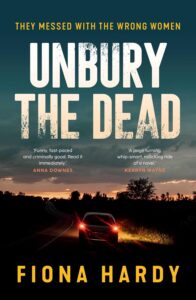
    Unbury the Dead

    Signs of Damage by Diana Reid

    Diana Reid’s third novel—which bullocked its way onto bookstore shelves back in March 2025–promises to be a psychological thriller for the ages.

    The narrative follows thirteen-year-old Cass.

    Cass disappears during a family holiday in France, but then she’s discovered only a matter of hours later… in an old Icehouse no less without a mark or scratch on her body.

    Now dig this… sixteen years later, Cass collapses in a seizure… at a family funeral of all the places.

    This is a storyline which bounces between 2008 and 2024, and all the while it’s slowly and methodically uncovering all these hidden secrets which connect the Icehouse incident with the collapse, sixteen years after the fact.

    Reid claims her latest drop is nothing more than a summer noir. However, readers will quickly notice how the narrative is all to do with the myriads of ways in which violence disrupts the status quo of life.
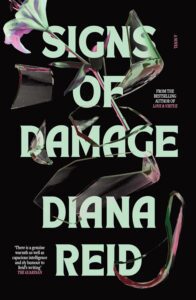
    Signs of Damage, by Diana Reid

    Elegy, Southwest by Madeleine Watts

    Madeleine Watts’: Elegy, Southwest hits the shelves as nothing short of a poignant exploration of love, grief, and environmental decline.

    Set against a devastating Camp Fire, the novel follows married couple Eloise and Lewis on a journey across America’s Southwest… all while wildfires are consuming the state of California.

    Lewis is busy processing his mother’s recent death, and Eloise scratches her own itch by researching the diminishing Colorado River… for a dissertation she’s working on.

    Now it’s no coincidence to Eloise, but she suspects there might be a bun in her oven. But while all this is going on, she also begins seeing her husband’s own mental health decline.

    And what sets this narrative apart, I suppose is its perspective.

    Told Eloise’s eyes, the reader sees firsthand how Eloise is addressing Lewis—which is quite directly, but it places an impetus upon a specific point in time, which in their case is after an unnamed catastrophe forcibly separates them.

    Ultimately… what Watts has crafted here is a tragic love story—albeit one with an intelligent and profound spin of the way we’re currently living alongside our own environments’ breakdown.

    The result is an authentic work of self exploration.
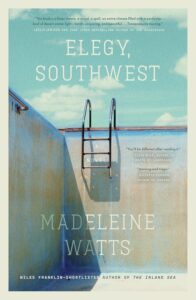
    Elegy Southwest

    Always Home, Always Homesick by Hannah Kent

    Hannah Kent is already a bestselling author… thanks to Burial Rites, so it should come as no surprise she’s hitting us with another banger’. However, in this climb up the literary mountain, she has ventured into the echelons of non-fiction.

    And what readers will find, encapsulated within the book bindings is a captivating memoir about belonging… across multiple continents.

    Always Home, Always Homesick finds its stride across three book sections.

    The first is Kent’s own arrival… in Iceland as a seventeen-year-old exchange student, way back in 2003–when the planet was a little different.

    The middle explores her return, some years later, to the very same country—albeit on a very planet now—and it’s here where she goes on a bit of a research journey to learn a little about Agnes Magnúsdóttir—the last woman executed in Iceland.

    And consequently, or maybe not so consequentially, we all get to learn how Agnes became the foundation for Kent’s acclaimed novel.

    The final part covers her most recent visit to Agnes’ execution site, where she now discovers a set of plaques that display lines from the aforementioned novel.

    But what Kent’s achieved here is an elegantly crafted memoir that explores heimþrá (longing for home) and how one can belong simultaneously to two distinct places.

    Kent also delves into Iceland’s literary culture and the longstanding traditions like Jólabókaflóð—the Christmas Eve book-giving custom that’s gained international recognition.
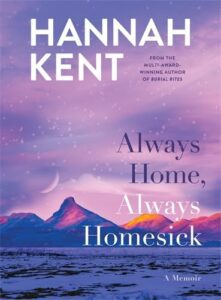
    Always home, always homesick

    The Theory of Everything by Yumna Kassab

    Yumna Kassab’s fifth book: The Theory of Everything promised to transcend literary conventions when it arrived back in March. And I reckon it well and truly hit this one out of the park.

    But critics are already doing what critics love to do, and that’s assign some labels. And in this case, they’re describing The Theory of Everything as a fictional theory (for whatever that’s intended to mean), and as a rant or… a manifesto that defies conventional.

    The book is effectively an anthology of five mini-novels or post-novels, all with their own unique titles: Game, Gender, Modern, Silver, and Absurd.

    It opens with a powerfully violent allegory as it follows Ibrahim (an elite footballer), Lucille/Nour (a film star), and Jamal as they navigate questions surrounding and abounding in identity and belonging.

    This work will appeal to readers who appreciate the intellectual challenge of literary innovation.
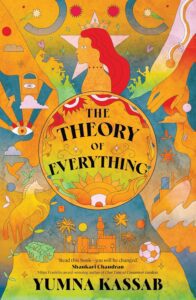
    The Theory of Everything

    The Immigrants by Moreno Giovannoni

    Moreno Giovannoni’s: The Immigrants: Fabula Mirabilis combines both fiction and memoir to bring home an authentic story of Italian migration… in post-WWII Australia, and the narrative begins with a young Italian migrant’s death in a petrol drum explosion… on a tobacco farm no less.

    The focus then shifts to Ugo and Morena Giovannoni who are each working in tobacco fields north of Melbourne but end insight into their childhood via transcribed interviews where we learn about, courtship in Italy, and the challenges of immigrant life in Australian.

    Giovannoni began writing in his sixties after a distinguished career as a translator and this work digs in deep to examine the overlooked costs of migration. The difficult agricultural conditions. Cultural discrimination, and the profound homesickness that goes along with it… if only to display his character’s resilience throughout a sense of displacement.
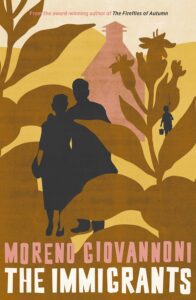
    The Immigrants, by Moreno Giovannoni

    Do We Deserve This? by Eleanor Elliott Thomas

    Do we deserve this… well bloody oath we do, and in Eleanor Elliott Thomas’s nuanced family drama we get a deep dive into questions of fortune, privilege, and dessert when a multimillion-dollar lottery ticket gets dropped into the melting pot.

    Bean Halloway describes herself as the lone nobody in a family of ambitious somebodies, but she goes off and buys this lottery ticket, which was… intended to be for her glamorous mother Nina.

    But an accident leaves Nina in a coma, and she never ends up receiving said ticket.

    So, Bean and her siblings—which includes a dramatic pop star and a meticulous lawyer—decide to keep the ticket until their mother regains consciousness.

    The situation gets a little tricky when an old romantic interest enters the frame.

    Enter the gambling debt.

    A vindictive former partner.

    And the family secrets which are always waiting to appear.
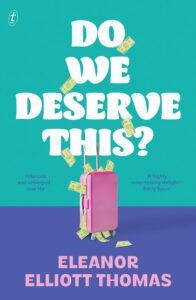
    Do We Deserve This, by Eleanor Thomas

    Time Together by Luke Horton

    Luke Horton’s: Time Together is nothing short of a refined examination into the long-term friendship. But in between the covers, there’s so much more… such as midlife reflections…all brought to the reader through the lens of a beach holiday reunion.

    Sound familiar? Well, it isn’t

    And picture this if you will: a group of friends… all in their forties… meeting at Phil’s parents’ beach house—after his mother’s passing.

    The gathering includes pragmatic Jo and her younger, and undeniably politically minded husband.

    There’s high-strung Bella, who is joined by her partner Tim.

    And then there’s the recently single Annie.

    All have their children in-tow… including a pre-adolescent girl who mirrors most aspects of her mother’s temperament.

    What Horton creates here is relatable, but will a restorative retreat… which gradually descends into a revelation of longstanding tensions challenge everyone’s long-held beliefs?

    One can only imagine what happens next—
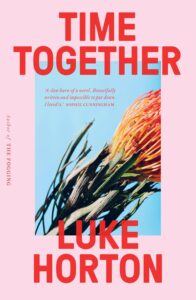
    Time Together

    Cure by Katherine Brabon

    Katherine Brabon’s fourth novel hit the shelves via an insightful, if not exploratory perspective on chronic illness.

    And when we peek deep inside of what that could mean, we soon find Vera and her teenage daughter Thea—who both share the same medical condition.

    Each resolve to seek therapeutic intervention—in Italy.

    But it’s here where the narrative veers off the predicted path and we begin to re-witness Vera’s past adolescent journey to Italy… all neatly juxtaposed against her daughter’s parallel experiences—all these years later.

    But while Thea records her observations in a journal, Vera finds her own community in online forums where she can anonymously share her experiences.

    Cure deeply complements Brabon’s earlier novel: Body Friend.

    And while each novel examines women’s experiences with autoimmune conditions (circumstances Brabon understands personally) the atmospheric prose and shifting narrative in Cure moves to investigate the stories we construct about our own, individual wellness, healing, and memory—

    The ultimatum lands in questioning whether narratives require factual accuracy to merit belief… or so the story goes!
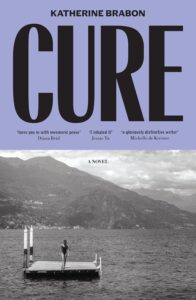
    Cure, by Katherine Brabon

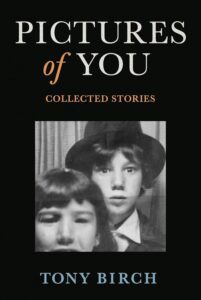
    Pictures of You by Tony Birch

    Our final choice showcases Pictures of You: Collected Stories by Tony Birch

    This is, without any doubt the most comprehensive anthology which represents Birch’s twenty-year career.

    Each narrative, and the overarching narratives capture extraordinary moments within ordinary lives… all to create an unexpected connection between strangers.

    But it’s Birch’s commitment to marginalised communities which will captivate readers the most—a fact that will become clear throughout this collection. Yet… all in the same breath, the said commitment is equally complemented by his advocacy for environmental justices.

    Pictures of You won’t last long on your TBR list, and because Birch’s writing moves seamlessly between poignant, melancholic, and the humorously profound moments, it demands to be read.

    As a respected Aboriginal Australian author, academic, and activist, Birch made history as the first Indigenous recipient of the prestigious Patrick White Award in 2017. His stories continue his significant examination of colonial oppression and intergenerational trauma while illuminating humanity within overlooked lives.
    Pictures of You

    The Evolution of Australian Literature

    Australian literature continues its impressive run in 2025, and what this selection illustrates is our remarkable range of narrative approaches from a variety Australian writers.

    It contains stories of sophisticated crime fiction to experimental literary forms and even the deeply psychological.

    But what all ten titles represent most is a carefully curated sample of Australia’s vibrant literary output.

    And, whether you’re into psychological suspense, climate fiction, or just a good old family narrative—with some emotional depth—then this collection aims to offer a little bit of something for everyone.

    [if you’re interested in reading some of my work, then please check out AFGHANI. It’s available at all major online retailers]

    Afghani by Brendon Patrick

  • 10 Must Read Australian Books 2025

    10 Must Read Australian Books 2025

    Hello book lovers, readers, and even writers alike. Australian literature has been pumping out some absolute thumpers… world beaters in fact, for more than a century now. And with that said, it might be time for you to give the following 10 must read Australian books from 2025 a look.

    If not, you’re missing out on some absolute ripper reads, and every single book on this list deserves a spot on any Australian bookshelf.

    That said, I’ve gone and handpicked 10 must read Australian books for 2025.

    These splendid tomes not only showcase our country’s best yarn-spinning talent. But they’ve also gone on to become award-winning classics. In their own rights. And transformed, over time into modern gems that have punched well above their weight class in the literary world.

    Further to that, these books capture what makes the Australian experience so unique while tackling universal themes that’ll truly nail the essence of this country, and the people who make it special.

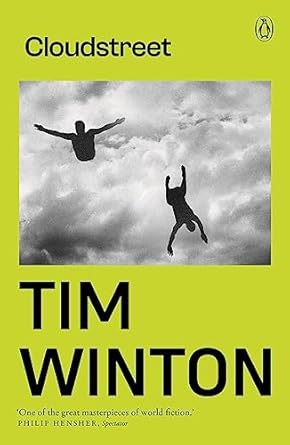
    Cloudstreet by Tim Winton: Australia’s Most Beloved Novel

    Tim Winton’s masterpiece stands for more than just the beating heart of Australian literature.

    Following two working-class families. The Lambs and Pickles who share a massive house in Perth from the 1940s through to the ’60s. This novel digs deep into our national quest for belonging.

    And what makes this book so special is how Winton challenges the classic Aussie myths: The battler. The ANZAC hero. Rural identities, and Australia as the lucky country[m1] .

    His writing shifts between poetic descriptions to the fair dinkum Aussie slang. Thus creating something that’s become more than just your average novel. Or, as Alex Miller put it, it’s Australia’s most popular novel that’s leapt the fence to become part of the nation’s bloodstream.

    Cloudstreet, by Tim Winton

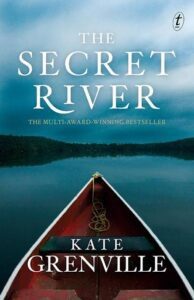
    The Secret River by Kate Grenville: Confronting Australia’s Colonial Past

    Kate Grenville’s unflinching look at our colonial past follows William Thornhill.

    William’s a Thames boatman who gets transported to New South Wales, then claims his ‘selection’. Which just happens to be on Aboriginal land, along the Hawkesbury River.

    And rest assured, this novel doesn’t sugarcoat a single thing.

    Instead it dives straight into the violent clash between European settlers and Indigenous Australians. And it’s here where characters go on to represent different colonial attitudes.

    These attitudes trend from extreme violence to idealistic cooperation.

    The title itself comes from anthropologist W.E.H. Stanner’s reference to a secret river of blood flowing through Australian history. Thus acknowledging colonisation’s hidden violence.

    Therefore, it isn’t any wonder the book sparked multiple heated debates among Australia’s so-called history wars!

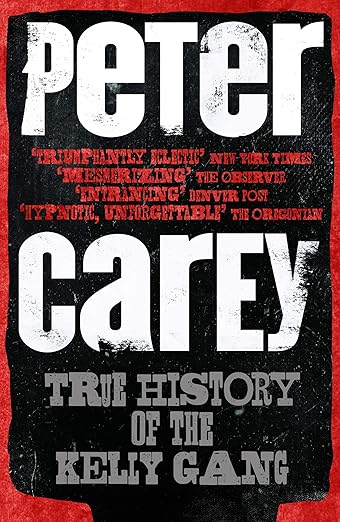
    True History of the Kelly Gang by Peter Carey: Award-Winning Bush Legend

    I bloody loved this book. And growing up among the throngs of kids equally enamoured by the Ned Kelly ideal, Carey’s Booker Prize-winning novel hands us a version of Ned Kelly’s story that was so unique that critics even dubbed it Kellyspeak

    It was ungrammatical 19th-century writing with minimal punctuation. And, in fact it mirrors Kelly’s actual Jerilderie Letter. But the  novel’s title is a dead giveaway about its fictional nature.

    Even Carey himself said, Anyone who says true history is obviously writing a novel… No historian would ever say that. Yet that’s the juxtaposition exposed in Carey’s story. It’s uncannily faithful to the facts of Kelly’s life while weaving in fictional elements that give the bushranger some emotional depth.

    That said, it isn’t any wonder it swept up thirteen major awards across different countries—so bloody brilliant!

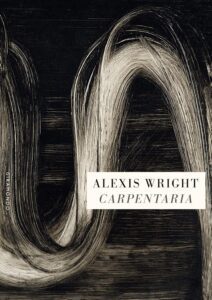
    Carpentaria by Alexis Wright: Indigenous Australian Storytelling

    Now this one will smack you like a wet trout to the face.

    And I mean that, too. Because when Alexis Wright’s epic hit bookshelves in 2006, it changed Australian literature… forever.

    So, make no bones about it, this Miles Franklin Award-winner comes from Wright, a Waanyi woman who does more than just bring Aboriginal perspectives of modern Australia to life. But it also delivers readers a fresh portrayal of Indigenous life in the Northern regions of Australia.

    Further to my point. Wright’s novel taps into the power of Indigenous oral traditions through three key Lawmen characters who act as keepers of cultural knowledge.

    Many critics label it magical realist. But Wright pushes back against this, refusing to let Indigenous beliefs be seen as magic just because they’re different.

    The storytelling voice sounds like some good yarn around a campfire. It makes you feel like you’re listening to an elder share some true wisdom!

    Carpentaria, by Alexis Wright.

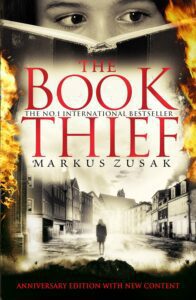
    The Book Thief by Markus Zusak: International Bestseller

    Markus Zusak’s haunting bestseller is set in Nazi Germany. But this rip-snorter of a tale has also sold more than 17 million copies worldwide and been translated into 63 languages.

    But what exactly makes it stand out?

    Is it because Death itself narrates the story… speaking directly to readers with lines like here is a Small Fact… you are going to die.

    The story follows nine-year-old Liesel Meminger, whose basement becomes a haven for Max Vandenburg, a Jewish man hiding from the Nazis.

    Their connection arrives through books… and stories which create moments of humanity in times of unspeakable cruelty.

    Then there is Death’s final line, I am haunted by humans. Perhaps the most endearing line of the entire novel.

    The Book Thief, by Markus Zusak

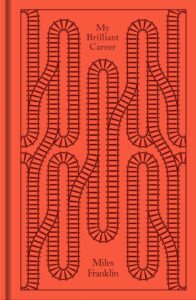
    My Brilliant Career by Miles Franklin: An Australian Feminist Classic

    Miles Franklin was only 19-year-old when she penned this classic in 1901.

    Plus, she wrote the better part of it at night… after finishing her farm chores.

    The protagonist, Sybylla Melvyn, rails against 19th-century society’s expectations of women, bluntly calling traditional marriage the most horribly tied-down and unfair-to-women existence going.

    Franklin championed women’s rights long before anyone decided to label it feminism.

    And ultimately, in doing so she created a character who declares: It came home to me as a great blow that it was only men who could take the world by its ears and conquer their fate.

    The book earned her a measly £24 despite positive reviews, and she later pulled it from publication because too many people described several similarities to her own life.

    But then the 1970s feminist movement rediscovered this forgotten gem, and Gillian Armstrong’s acclaimed 1979 film adaptation cemented its place in our cultural consciousness.

    My Brilliant Career, by Miles Franklin

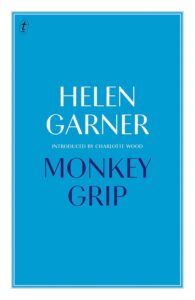
    Monkey Grip by Helen Garner: Melbourne’s Counterculture Masterpiece

    Helen Garner’s raw debut did more than merely transform Australian literature when it dropped in 1977.

    Drawing directly from her personal diaries, it captures the vibrant yet chaotic world of 1970s inner-city Melbourne—a community of free spirits embracing drugs, making films, playing rock music, and championing women’s rights.

    But beneath the cultural observations lies something more personal. A single mum Nora’s destructive relationship with Javo, who so happens to be a heroin addict.

    Their bond becomes somewhat of an addiction of its own.

    And, with Nora struggling with what she calls this crazy habit . One equally as damaging as Javo’s, she considers giving it all away. But ultimately, the story goes on to deliver a dead-honest look at how romantic obsession can become just as consuming as drug dependency.

    Monkey Grip, by Helen Garner

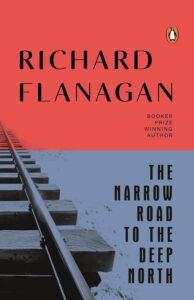
    The Narrow Road to the Deep North by Richard Flanagan: Booker Prize Winner

    Richard Flanagan’s Man Booker Prize-winning novel was inspired by his father’s experiences as a POW on the Burma Death Railway.

    It centres on Australian surgeon Dorrigo Evans, who fights impossible odds to protect his fellow prisoners, who are being forced to build the railway, which was a dreadful war-time project that killed one in three workers.

    Throughout the story, the prisoners’ bodies deteriorate until they become little more than black-shadowed sockets waiting for worms.

    Flanagan doesn’t just show the horrors—he explores how some societies normalise atrocities and how goodness and a lack of empathy can become one and the same, pushing ordinary people towards a great evil.

    This a story which is as confronting as it is an essential read.

    The Narrow Road to the Deep North, by Richard Flanagan

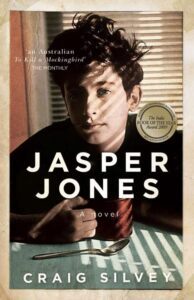
    Jasper Jones by Craig Silvey: Coming-of-Age in 1960s Australia

    Often called an Australian To Kill a Mockingbird, Craig Silvey’s coming-of-age novel tackles racial prejudice in 1960s rural Australia, and during the Vietnam War era this is a brilliantly written novel.

    Set in Corrigan, a town where racism flows deep, and where a half-Aboriginal teenager Jasper Jones becomes the town’s scapegoat.

    The Vietnamese Lu family also face similar treatment when locals destroy their garden and attack An Lu.

    There’s a brief moment of acceptance when Jeffrey Lu excels on the cricket field, but hours later, a mob bashes his father—showing how fleeting such tolerance can be.

    Silvey demonstrates how racism stems from ignorance and how friendship might be our best weapon against it.

    Jasper Jones, by Craig Silvey

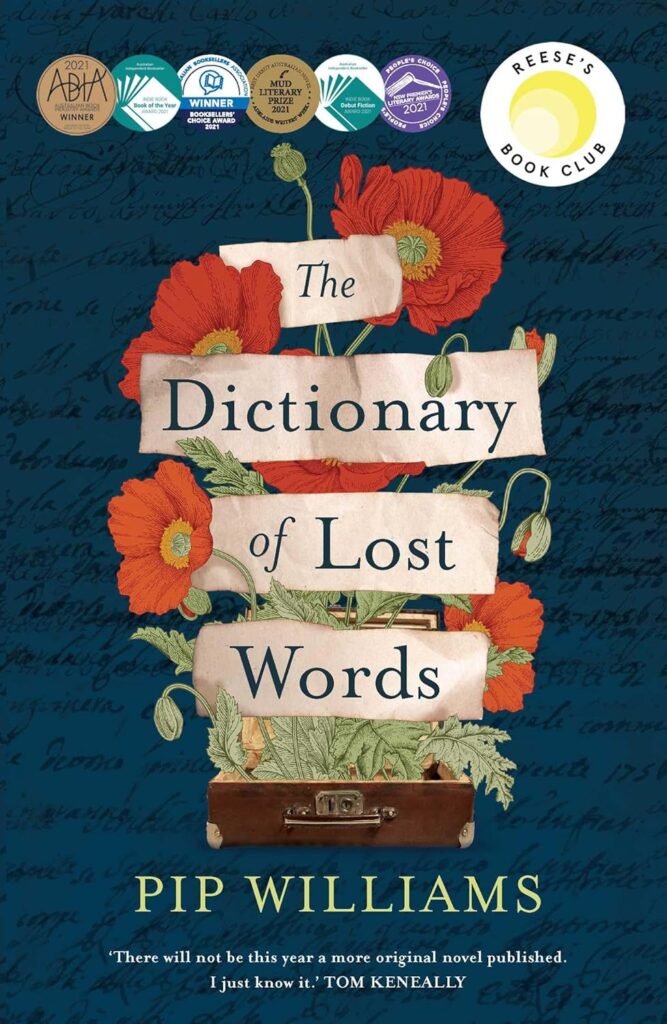
    The Dictionary of Lost Words by Pip Williams: Modern Australian Bestseller

    Pip Williams’ 2020 bestseller shows us the creation of the Oxford English Dictionary from a woman’s perspective. And it’s quickly become one of the most thought-provoking Australian novels in recent years.

    The protagonist, Esme, discovers that words women commonly use… words often dismissed as vulgar or simply overlooked… rarely make it into the dictionary.

    So she starts collecting these lost words in her treasure chest, gathering expressions from women who worked at Oxford’s Covered Market.

    Williams brilliantly shows how language shapes our view of reality, while also noting that the first OED used quotations mostly from books written by blokes.

    Therefore, Esme makes it her mission to save these forgotten expressions because she knows they’re just as important as the words of men.

    Conclusion: Australian Literature’s Global Impact

    Australian literature proves we can spin a yarn with the best of them.

    These ten books showcase our nation’s storytelling excellence, from Tim Winton’s deep dive into belonging. To Alexis Wright’s groundbreaking Indigenous perspectives. Then beyond—

    These 10 novels reflect Australia’s evolving identity, from over more than a century of writing.

    Miles Franklin challenged gender norms when Federation was just kicking off, and while contemporary authors like Hannah Kent show we can confidently write about settings beyond our shores.

    Our books have made waves internationally too. Markus Zusak’s: The Book Thief has reached over 17 million readers worldwide, and Richard Flanagan took home the prestigious Man Booker Prize.

    Not bad for a bunch of Aussies!

    So don’t come the raw one here—grab one of these literary gems before the years out, and maybe even make it a Chrissy present.

    And, whether you’re drawn to Kate Grenville’s unflinching look at our colonial past or Helen Garner’s raw portrayal of 1970s counterculture, these books offer unique perspectives that’ll endure many more years of literary greatness.

    [if you’re interested in reading some of my work, then please check out AFGHANI. It’s available at all major online retailers]
    Afghani by Brendon Patrick

  • 10 Must-Read Australian Indigenous History Books

    10 Must-Read Australian Indigenous History Books

    Uncovering Hidden Narratives (2025 Guide)

    Think you know Aboriginal Australian historical literature?

    Think again.

    The story of this land wasn’t simply one of discovery.

    No, it was carefully crafted over millennia by Aboriginal peoples who used sophisticated techniques like firestick farming to shape ecosystems and manage resources with remarkable precision.

    I’ve spent years diving into Indigenous Australian Indigenous History Books, and what strikes me most is how these voices push far beyond the tired colonial tropes of convicts, and early explorers.

    In 2024 we watched as the nation embraced the theme of Reconciliation.

    But now… more than ever, and in the aftermath of failed referendum… there’s never been a better time to seek out these perspectives that have been sidelined for too long—

    Ready to expand your book collection and your mind?

    Ready to discover powerful Aboriginal perspectives that challenge colonial narratives and reveal Australia’s true history through these essential reads?

    Well… here’s 10 game-changing Australian Indigenous history books you won’t find on many (if any) mainstream reading lists:

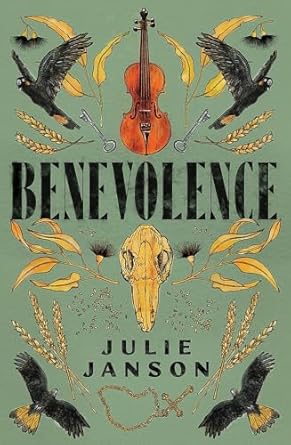
    Benevolence by Julie Janson (2020): First Aboriginal Perspective on Colonial NSW

    Why it’s significant: The first novel to present early colonial New South Wales entirely from an Aboriginal perspective.

    Benevolence begins by flipping the colonial narrative on its head.

    Published in 2020 and rereleased in 2024 alongside its sequel Compassion, this groundbreaking novel takes us into early colonial New South Wales through a lens rarely seen in our history books.

    We follow Darug woman Muraging (renamed Mary James by colonizers) as she navigates the treacherous cultural borderlands of 1816-35 around the Hawkesbury River.

    Julie Janson, herself a Burruberongal woman of the Darug Aboriginal Nation, crafted this as her Aboriginal answer to The Secret River.

    And what an answer it is.

    Instead of depicting Aboriginal people as helpless victims, she reveals their fierce resistance and a remarkable resilience that resided among her people.

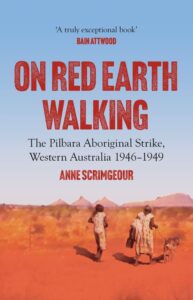
    On Red Earth Walking by Anne Scrimgeour (2020): The Pilbara Aboriginal Strike

    Why it’s significant: Documents a watershed Aboriginal workers’ strike that changed Australian labor relations forever.

    Ever heard of the Pilbara strike?

    Most Australians haven’t, and that’s precisely the problem Anne Scrimgeour addresses in her eye-opening 2020 book.

    For three years, Aboriginal workers (known as marrngu) walked off Western Australia’s pastoral stations in 1946, refusing to continue working under slave-like conditions.

    Their courage dealt a decisive blow to a colonial control system that had exploited them for generations.

    What makes Scrimgeour’s account so refreshing is her reliance on Aboriginal oral stories.

    The strikers aren’t passive characters in someone else’s story; they’re the protagonists and strategic actors who grabbed destiny with both hands.

    On Red Earth Walking, by Anne Scrimgeour

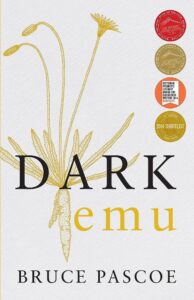
    Dark Emu by Bruce Pascoe (2014): Redefining Pre-Colonial Aboriginal Society

    Why it’s significant: Challenges the hunter-gatherer myth with evidence of sophisticated Aboriginal agriculture and engineering.

    Few books have stirred as much conversation—or controversy—as Bruce Pascoe’s Dark Emu.

    With over 360,000 copies sold, it’s become a cultural phenomenon that’s impossible to ignore.

    The genius of Pascoe’s approach?

    He lets European explorers’ own journals do the talking.

    These first-hand accounts describe Aboriginal people harvesting crops, living in permanent settlements, and engineering complex aquaculture systems. Which is all a far cry from the simplistic hunter-gatherer label most Australian’s grew up believing.

    While some academics have disputed specific claims, there’s no denying that Dark Emu has forever changed how we discuss Aboriginal history and land management.

    Dark Emu, by Bruce Pascoe

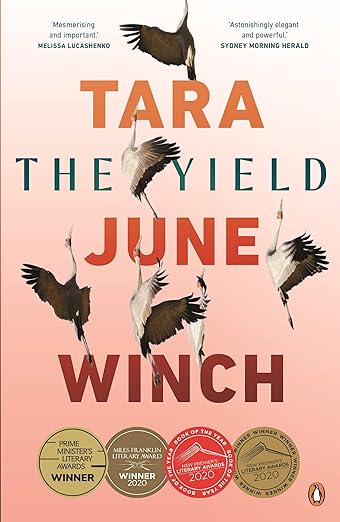
    The Yield by Tara June Winch (2019): Language as Cultural Resistance

    Why it’s significant: Demonstrates how Indigenous language preservation becomes an act of cultural memory and resistance.

    Words carry worlds within them.

    That’s the powerful truth at the heart of Wiradjuri author Tara June Winch’s The Yield, which swept the 2020 NSW Premier’s Literary Awards, taking home Book of the Year and two other major prizes.

    Winch weaves together three narrative threads:

    August Gondiwindi returning to Australia after her grandfather Albert’s death;

    Albert’s loving compilation of Wiradjuri words;

    and Reverend Greenleaf’s 1915 letter reflecting on his time among the Wiradjuri people.

    The dictionary entries scattered throughout aren’t just linguistic curiosities; they’re portals into a civilisation that colonisers systematically attempted to erase.

    When Albert defines the Wiradjuri word for yield, we learn it means both what the land gives us and what we give to it; which is a relationship of reciprocity utterly foreign to colonial extractive mindsets.

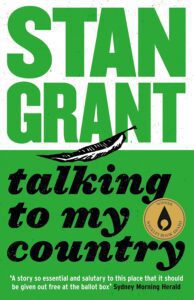
    Talking to My Country by Stan Grant (2016): Confronting Australia’s Historical Amnesia

    Why it’s significant: Directly addresses Australia’s failure to acknowledge its colonial past and ongoing racism.

    For journalist Stan Grant, watching Indigenous AFL star Adam Goodes being booed by crowds in 2015 was the catalyst for this powerful book that reads like an intimate letter to all Australians.

    Grant moves seamlessly between personal stories and penetrating historical insights, showing how yesterday’s colonial violence reaches into today’s society.

    When Grant asks why Indigenous Australians might feel hollow singing Australians all, let us rejoice, the question lands like a stone in still water, rippling outward to touch shores many prefer to leave undisturbed.

    Yet his voice never becomes preachy—it’s more like that trusted friend who tells you the cold hard truth you need to hear.

    Talking to my country, by Stan Grant

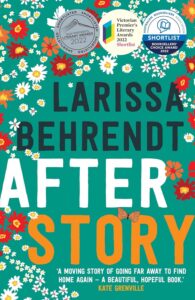
    After Story by Larissa Behrendt (2021): Indigenous Knowledge Meets Western Literature

    Why it’s significant: Explores how Indigenous cultural knowledge exists alongside western literary traditions.

    What happens when an Indigenous mother and her lawyer daughter embark on a literary pilgrimage through England?

    The 2022 Voss Literary Prize-winning After Story answers this question with surprising depth and aplomb.

    As Della and Jasmine visit the hallowed grounds of canonical British literature, another story shadows their journey. And it’s the haunting disappearance of Jasmine’s sister Brittany—years earlier—which reveals a wound that stands in for a much larger, cultural trauma.

    Behrendt, an Eualeyai/Kamilaroi woman, creates moments of beautiful recognition when Della connects seemingly disparate worlds.

    Standing in an English garden, she recalls her Aunty Elaine’s wisdom about plant uses.

    And while touring historic buildings, she reflects on Aboriginal construction techniques.

    Through these parallels, Behrendt shows how western literary traditions have systematically undervalued Indigenous knowledge systems.

    After Story, by Larissa Behrendt

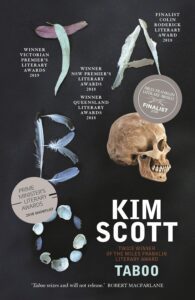
    Taboo by Kim Scott (2017): Australia’s First Post-Treaty Novel

    Why it’s significant: Sits on the frontier of truth-telling about massacres and reconciliation in Australian literature.

    How do communities heal from historical trauma?

    Kim Scott’s haunting novel tackles this question through the story of Noongar people visiting a taboo place.

    Which in this case is a massacre site where their ancestors once killed a white man who’d stolen an Aboriginal woman.

    Taboo emerged from a community that had recently negotiated a settlement with the Western Australian government, earning it the distinction of Australia’s first post-treaty novel.

    Scott blends genres masterfully, and incorporates elements of fairy tale, gothic horror, social realism and creation stories.

    But beneath the literary craftsmanship beats a heart of conviction: that language itself contains healing power for communities fractured by historical violence.

    Taboo, Kim Scott

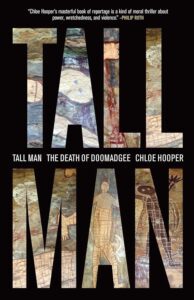
    The Tall Man by Chloe Hooper (2008): Aboriginal Deaths in Custody

    Why it’s significant: Meticulously examines systemic racism in law enforcement through one tragic death in custody.

    Chloe Hooper’s unflinching investigation into Cameron Doomadgee’s 2004 death in police custody on Palm Island reads with the narrative grip of a thriller and the moral weight of the best social justice journalism.

    The story unfolds through four acts:

    The Death

    The Riot

    The Inquest

    The Trial

    All This while weaving in Palm Island’s troubled colonial history.

    Critics compared it to Capote’s: In Cold Blood.

    But Hooper achieves something even more remarkable—

    She humanises both Doomadgee and Senior Sergeant Chris Hurley without excusing the system that brought them together—with fatal consequences.

    The book’s title comes from Indigenous mythology: the Tall Man who’s a fearsome spirit that only comes out at night.

    This creates an eerie parallel to the police presence in Aboriginal communities.

    Tall Man, by Chloe Hooper

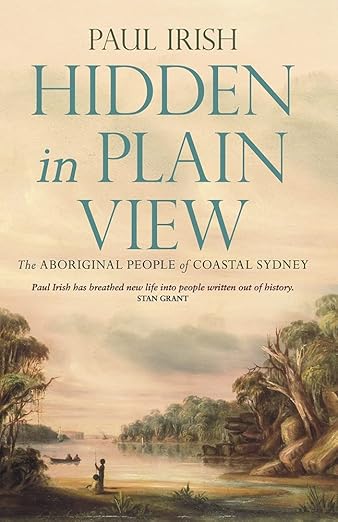
    Hidden in Plain View by Paul Irish (2017): Aboriginal Sydney Never Disappeared

    Why it’s significant: Challenges the myth that Aboriginal people vanished from Sydney after colonization.

    We’ve all heard the narrative—

    Aboriginal people disappeared from Sydney shortly after European arrival.

    But what if that story was simply convenient fiction?

    Paul Irish’s meticulously researched book shatters this misconception, showing how Aboriginal people maintained their presence and connection to country throughout Sydney’s colonial period.

    From the harbour foreshores to the coastal headlands, Irish documents how Aboriginal communities adapted to colonial encroachment while maintaining cultural connections to place.

    Winner of the 2018 NSW Premier’s Award for Community and Regional History, this book literally redraws the map of Sydney’s past.

    Or, as Stan Grant noted: Irish has breathed new life into people written out of history—people who were always there, hidden in plain view.

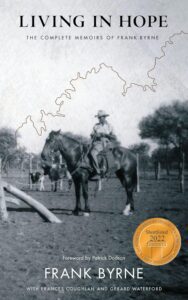
    Living in Hope by Frank Byrne (2017): Firsthand Stolen Generations Testimony

    Why it’s significant: Provides intimate personal testimony countering denial about the Stolen Generations.

    Frank Byrne’s slim memoir packs more emotional truth than books three times its length.

    With unadorned prose that cuts to the bone, Byrne recounts being torn from his mother at age six on November 17, 1943.

    Loaded up like cattle and transported to Moola Bulla, his childhood became a casualty of government policies designed to sever Aboriginal children from their families and culture.

    What makes this 2018 Most Underrated Book Award winner so compelling is Byrne’s refusal to sugarcoat or sensationalise.

    He wrote specifically to counter what he called the denial of truth about the Stolen Generations. A denial which persists… even today.

    Living in Hope, by Frank Byrne

    Why These Aboriginal History Books Matter in 2025

    As we move deeper into the third decade of the 21st century, these ten books offer something increasingly precious—

    Perspective.

    They peel back the comfortable myths my generation were taught in school. But they also reveal a history both more painful and more extraordinary than conventional narratives allow.

    These works remind us that Australian history spans beyond the brief timeframe since European arrival.

    They also challenge us to see the land differently—

    Not as a wilderness tamed by colonial ingenuity, but as a landscape already deeply shaped by human intelligence and care—prior to the First Fleets arrival.

    Most importantly, they invite all readers into a more honest conversation about who we are and where we might go from here.

    That’s why the 2024 Reconciliation theme Now more than ever resonated with so many.

    And, with these books, we can see they’re not just about the past, but about building a shared future on foundations of truth.

    Key Takeaways from These Essential Australian Indigenous Books:

    Challenge mainstream narratives: These books reveal untold stories that amplify Indigenous voices often excluded from traditional historical accounts

    Reframe colonial history: Aboriginal perspectives show sophisticated systems and resistance stories rather than simplistic victim narratives

    Preserve cultural knowledge: Language preservation and storytelling become powerful acts of resistance against colonial erasure

    Document systemic injustices: Personal testimonies expose ongoing impacts of policies like the Stolen Generations and deaths in custody

    Foster reconciliation: Understanding uncomfortable truths while celebrating Indigenous resilience creates pathways to genuine healing

    Uncover hidden histories: From Aboriginal presence in Sydney to successful labor strikes, these books make visible what was “hidden in plain view”.

    [if you’re interested in reading some of my work, then please check out AFGHANI. It’s available at all major online retailers]
    Afghani by Brendon Patrick

    Looking for more Indigenous Australian literature?

    Torres Strait Islander authors, and Indigenous perspectives on environmental history

    Aboriginal autobiography

    Torres Strait Islander authors